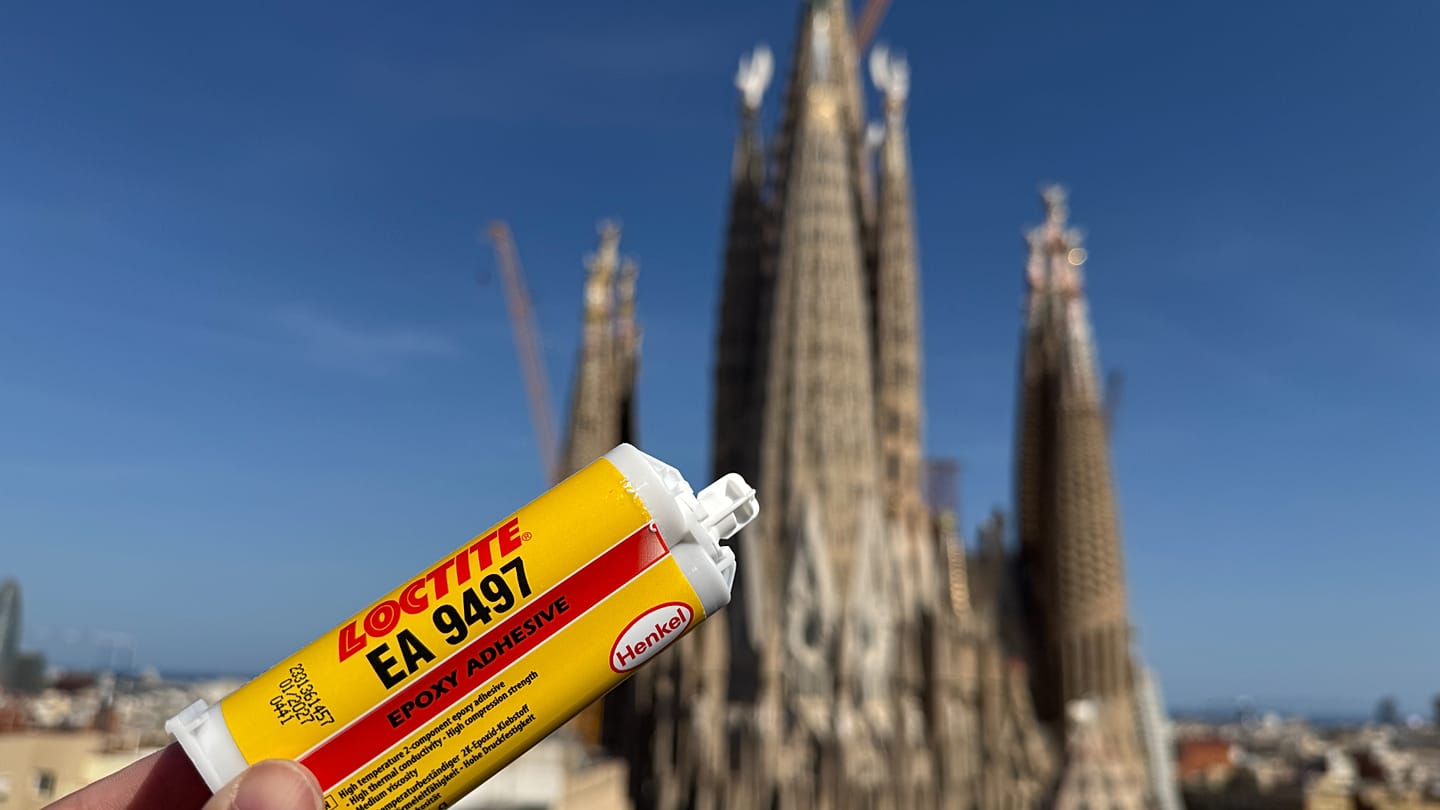
The Sagrada Família in Barcelona, Antoni Gaudí's unfinished masterpiece, reached a new milestone last week with the blessing of its central towers by Pope Leo XIV. At 172 metres, it is now the world's tallest church. But behind the architectural triumph lies an unexpected hero: industrial adhesive.
Loctite technology, a brand of the German company Henkel headquartered in Düsseldorf, played a key role in bonding the 826 stone and steel panels that form the towers. The adhesive ensures structural integrity while allowing the intricate, organic forms Gaudí envisioned to rise without traditional mortar in many sections.
The project, overseen by the Barcelona-based foundation, has long relied on modern engineering to complete a design that Gaudí left only in models and drawings when he died in 1926. The use of high-strength adhesives is part of a broader trend in European construction, where materials science meets heritage restoration.
A European Collaboration
Henkel's involvement highlights how European industrial expertise supports cultural landmarks. The company's Loctite brand, known for consumer and industrial adhesives, provided custom formulations to withstand Barcelona's coastal climate and the immense loads of the towers. Engineers from Germany and Spain worked together to test bonds under stress, ensuring the panels remain secure for decades.
The completion of the central towers, including the Tower of Jesus Christ, marks a turning point for the basilica, which has been under construction since 1882. The event drew 120,000 people to the streets of Barcelona, as reported in our coverage of the inauguration. Pope Leo XIV's blessing, a rare honour for a building still under construction, underscores its significance as a global Catholic landmark.
Yet the adhesive's role is not merely functional. It allows the stone to appear seamless, preserving Gaudí's vision of a structure that grows organically from the ground. The panels, each unique in shape, are fixed with a combination of mechanical anchors and Loctite epoxy, a technique that has been refined over years of trial.
For a deeper look at the hidden details, see our rare tour of the basilica, which uncovered Gaudí's symbolic carvings and sacred relics embedded in the stonework.
The use of adhesives in monumental architecture is not new, but the scale here is unprecedented. The Sagrada Família's towers required bonding materials that could handle temperature swings from 0°C to 40°C, as well as the salt-laden air from the Mediterranean. Henkel's engineers in Düsseldorf developed a proprietary formula that cures slowly to allow precise alignment, then hardens to a strength exceeding that of the stone itself.
This approach has implications beyond Barcelona. As European cities restore historic buildings, from cathedrals in Cologne to palaces in Prague, adhesive technology offers a way to reinforce structures without visible intervention. The Sagrada Família project serves as a case study for how modern chemistry can serve ancient craftsmanship.
The blessing of the towers also drew attention to the broader European context of religious architecture. The basilica, a UNESCO World Heritage site, attracts millions of visitors annually, contributing significantly to Barcelona's economy. Its completion, expected by 2030, will add a final tower dedicated to Jesus Christ, reaching 172.5 metres. The adhesive that holds it together is a quiet testament to European innovation.
For those planning a visit, the basilica remains open amid ongoing construction. The towers offer panoramic views of Barcelona, and the museum below details Gaudí's methods. The adhesive story, though less visible, is a reminder that even the most sublime art relies on practical ingenuity.