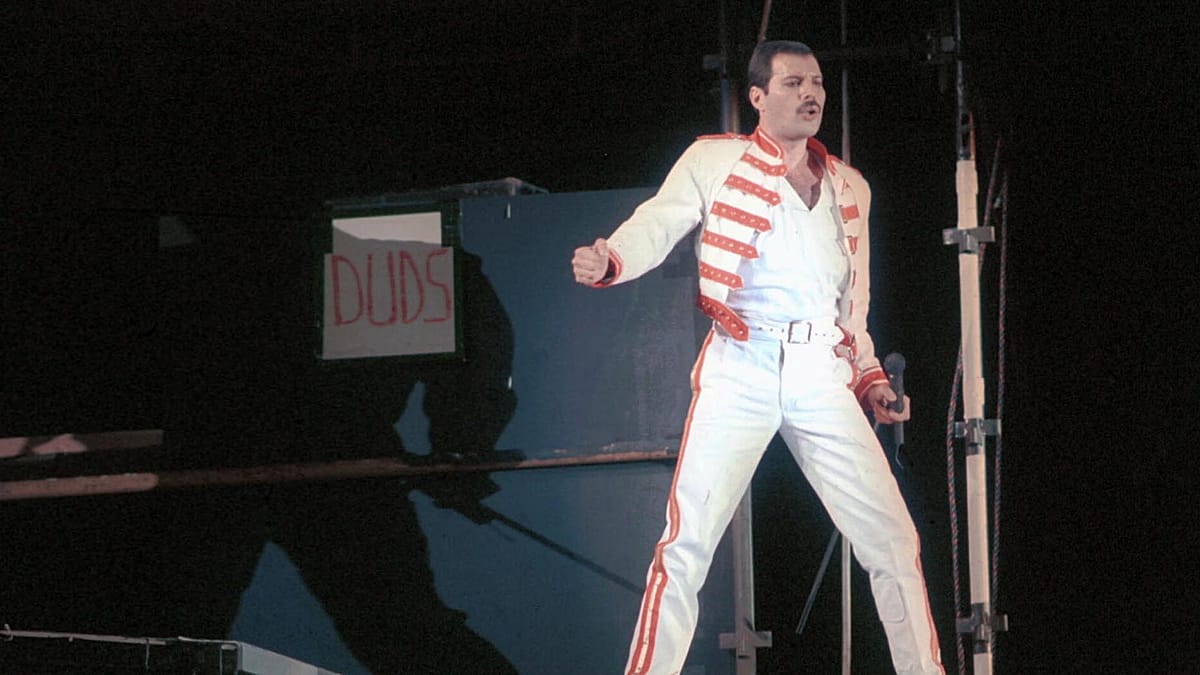
On 27 July 1986, the British rock band Queen performed at the Népstadion in Budapest, a concert that transcended music to become a symbol of cultural and political change. For 80,000 Hungarians, many of whom had only experienced Western pop culture through crackling radio broadcasts or smuggled vinyl records, the show was a glimpse of a world beyond the Iron Curtain.
The concert was the only stop on Queen's Magic Tour inside the Eastern bloc, and it required extraordinary logistical and political maneuvering. The Hungarian authorities, wary of the subversive power of Western rock, initially hesitated. But after approval from the highest levels of the ruling party, the stadium's gates had to be rebuilt and the ground excavated to accommodate the band's massive trucks.
Queen accepted a fee of roughly €110,000—about half their usual rate—because Hungary could not pay in hard currency. In exchange, the band secured the rights to film the concert, using nearly all of Hungary's available film production capacity. The resulting movie, Hungarian Rhapsody, became a global commercial success.
A night of catharsis and defiance
The concert was more than a musical performance; it was a collective social catharsis. The flawless sound and lighting, hallmarks of a Western pop culture officially branded as decadent, mesmerized the audience. Young Hungarians, who had previously encountered this world only through Radio Free Europe or bootleg tapes, suddenly felt connected to the global mainstream.
Denis O'Regan, Queen's official photographer at the time, recalls the unique atmosphere. 'It was very different; everyone knew it was going to be special,' he told European Pulse at a 40th-anniversary event hosted by the British Embassy in Budapest. 'We came for six days, which was very unusual—on tour we usually only stay one or two days. Budapest became a legend in Queen's story.'
The band traveled from Vienna by hydrofoil, a boat named Gorbachev, and were greeted by large crowds on the riverbank. Queen's manager, Jim Beach, noted that the Hungarian authorities could have sold tickets for multiple nights but chose not to, fearing the music might become 'too popular and subversive.'
O'Regan emphasized the contrast with other tour stops. 'In London, people go to see a lot of big bands and maybe start to take it for granted. But here there was something obviously very, very special. You could feel it that night.'
The concert's legacy endures. The British Embassy in Budapest marked the 40th anniversary with an exclusive event, featuring a wax figure of Freddie Mercury from Madame Tussauds Budapest and a tribute band. O'Regan and Peter Freestone, Mercury's former personal assistant, attended.
For Hungary, the concert was a crack in the Iron Curtain, a moment when the state's control over culture briefly loosened. It foreshadowed the broader changes that would sweep across Central and Eastern Europe in the following years. As O'Regan put it, 'That one night became a genuine cultural milestone for Hungary.'
For those interested in exploring Budapest's cultural scene further, a recent travel feature offers insights into the city's hidden gems. Meanwhile, a retrospective of Hungarian pop artist György Kemény highlights the country's vibrant artistic heritage.