Think of a familiar street corner undergoing renovation. You can recall the old building, the construction chaos, and the sleek new facade—all without confusing them. How does the brain keep these distinct memories separate? A new study from Spanish researchers offers a clue.
The Institute of Neurosciences, a joint centre of the Spanish National Research Council (CSIC) and Miguel Hernández University in Elche, has identified a mechanism in the hippocampus that helps the brain integrate new information without erasing older memories. The findings were published in PLOS Biology.
The role of the dentate gyrus
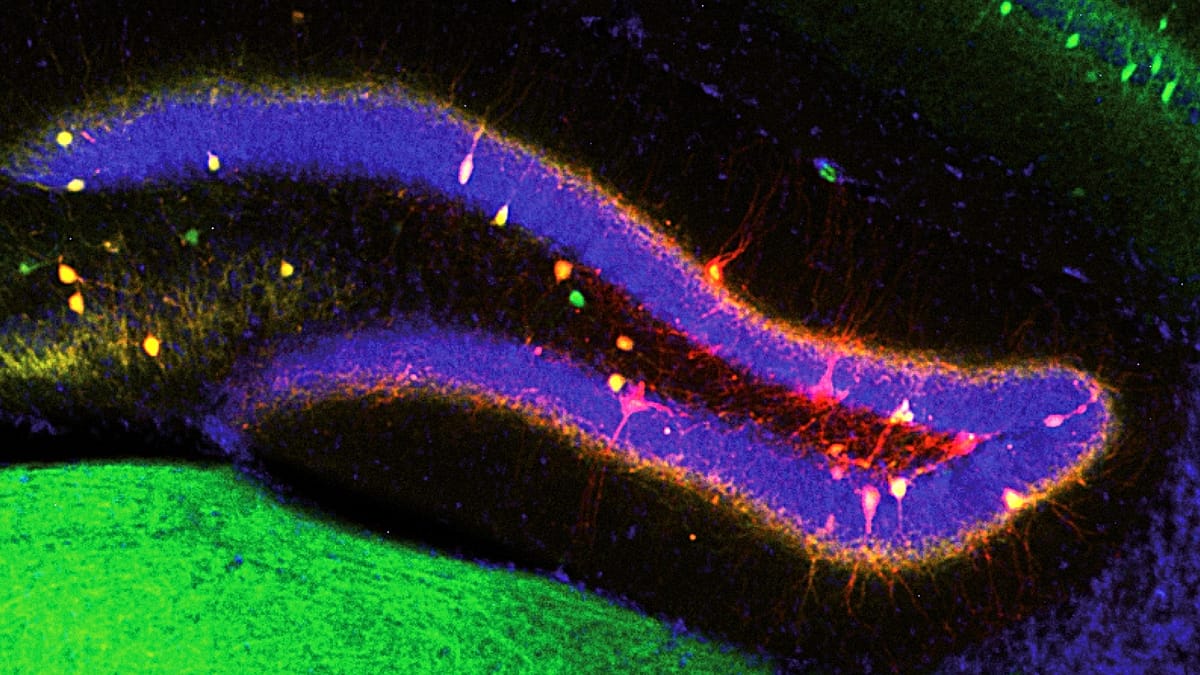
The team, led by Encarni Marcos, focused on the dentate gyrus, a region of the hippocampus long known for its role in forming new memories. Within this region, a specific type of neuron—an inhibitory interneuron—acts as a gatekeeper, suppressing the activity of other cells. This inhibition, the researchers argue, is what allows the brain to incorporate new experiences while preserving the integrity of existing memories.
To test this, the team manipulated the level of inhibition in mice. When they reduced inhibition, the animals showed better memory retrieval and more detailed recall. "With lower-than-usual levels, their behaviour was more consistent with better memory retrieval and a more detailed recollection," Marcos explained.
But the relationship is not straightforward. The computational model used in the study revealed that reduced inhibition is beneficial only when the memory load is light. When the amount of new information increases substantially, lower inhibition becomes counterproductive, and the brain needs to switch back to a more protective mode.
A dynamic balancing act
The study suggests that the dentate gyrus can operate in two modes: one that favours incorporating new inputs, and another that keeps existing memories firmly in place. The switch between these modes depends on what the researchers call "task demands"—essentially, how important it is to remember the old versus the new.
"What we infer from these results is that there is a mechanism that dynamically adjusts the mode of operation by using inhibition," Marcos concluded.
This flexibility is crucial for everyday life. Without it, every new experience might overwrite the past, or conversely, the brain might become too rigid to learn. The findings could have implications for understanding memory disorders, such as post-traumatic stress disorder or age-related cognitive decline, where this balance may be disrupted.
The research adds to a growing body of work from European institutions on how the brain manages memory. For instance, speech patterns may signal early brain ageing, another study found, highlighting the importance of early detection. And while this study was conducted in mice, the underlying mechanisms are likely similar in humans, offering a promising avenue for future therapies.
As the team continues to explore how inhibition adjusts in real time, the hope is that these insights could one day help people with memory problems—from those with traumatic memories to those simply trying to hold onto the details of a changing neighbourhood.