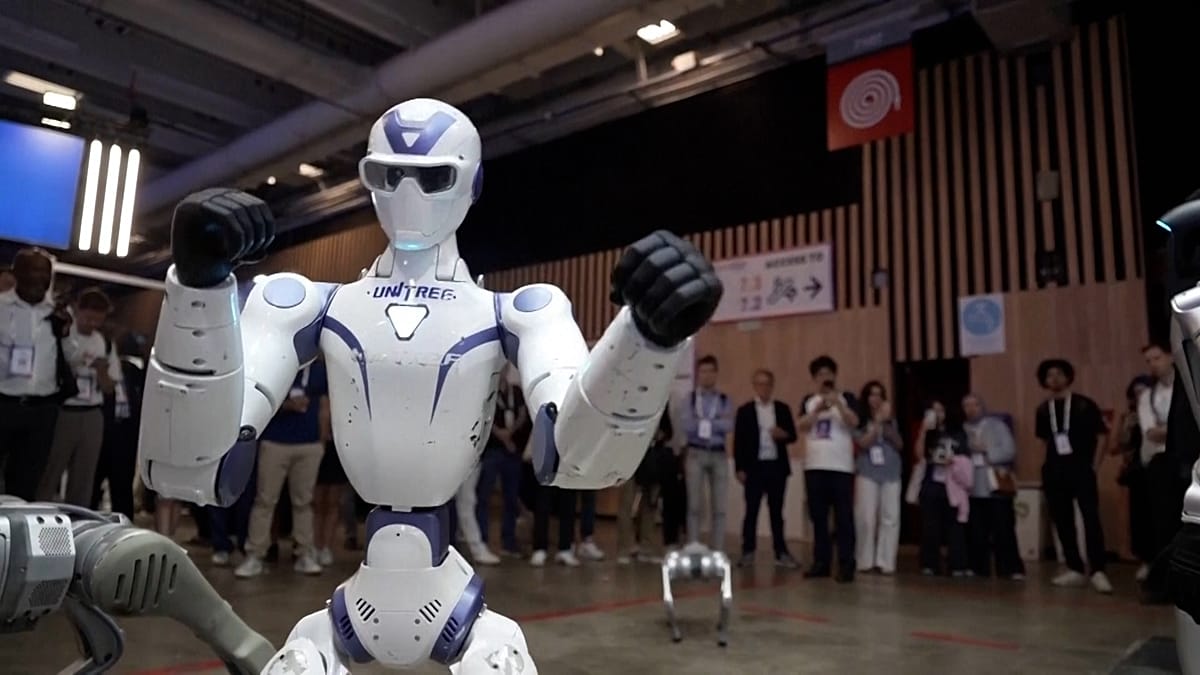
Paris Expo Porte de Versailles played host to VivaTech 2026, which opened on 17 June, with humanoid robots and AI-driven smart homes capturing the imagination of visitors and industry leaders alike. The annual technology conference, now in its tenth edition, has become a key platform for Europe's digital ambitions, drawing over 200,000 attendees from across the continent and beyond.
Humanoid Robots Take the Spotlight
Several European startups and established firms unveiled humanoid robots designed for both domestic and industrial use. French company Robo sapiens demonstrated a bipedal robot capable of navigating cluttered home environments, while a German consortium presented a model tailored for warehouse logistics. These robots, powered by advanced AI, can perform tasks ranging from cleaning to assisting elderly individuals, reflecting a growing trend toward automation in everyday life.
“We are seeing a convergence of robotics and AI that will redefine how Europeans live and work,” said Dr. Elena Müller, a robotics researcher from the Technical University of Munich, during a panel discussion. “The key is to ensure these technologies are accessible and safe for all.”
Smart Homes Go Mainstream
Smart home technology also featured prominently, with companies from Sweden, the Netherlands, and France showcasing integrated systems that use AI to manage energy consumption, security, and daily routines. A standout exhibit from a Dutch startup showed a home that can learn residents' habits and adjust lighting, heating, and even grocery orders automatically. This aligns with the EU's push for energy efficiency and digital sovereignty, as outlined in recent policy frameworks.
The event also included discussions on data privacy and ethical AI, with European Commission representatives emphasizing the need for robust regulations. “Europe must lead in setting standards for trustworthy AI,” said a spokesperson from the Commission's digital unit. “VivaTech shows that innovation and responsibility can go hand in hand.”
For more on the broader implications of AI at VivaTech, see our coverage of France and Germany Push for European AI Sovereignty at VivaTech.
Business and Investment Momentum
The conference also served as a hub for deal-making, with several European venture capital firms announcing new funds dedicated to AI and robotics. A notable partnership between a French robotics startup and a German automotive supplier was unveiled, aiming to integrate humanoid robots into manufacturing lines. This reflects a broader trend of cross-border collaboration within the EU, leveraging the single market to scale innovations.
In a related session, L'Oréal and PwC discussed how vitality and resilience are becoming competitive advantages in the tech sector. Read more in our article VivaTech 2026: L'Oréal and PwC on Vitality and Resilience as Competitive Edge.
European AI Sovereignty in Focus
VivaTech 2026 underscored the continent's determination to reduce reliance on non-European AI platforms. With initiatives like the European AI Alliance and funding from Horizon Europe, member states are investing heavily in homegrown solutions. The presence of policymakers from Paris, Berlin, and Brussels signaled a coordinated effort to build a competitive ecosystem.
“We cannot afford to be mere consumers of AI developed elsewhere,” said a French minister during a keynote. “Our sovereignty depends on our ability to innovate and produce our own technologies.” This sentiment was echoed by attendees, many of whom saw the event as a rallying point for European tech independence.
For a broader perspective on the event's significance, check out our analysis AI Dominates VivaTech's 10th Edition in Paris as 200,000 Visitors Debate Promise and Peril.
As VivaTech continues through the week, the focus remains on how these innovations will shape daily life across Europe. From Paris to Stockholm, the message is clear: AI and robotics are no longer futuristic concepts but present-day tools that demand careful stewardship.