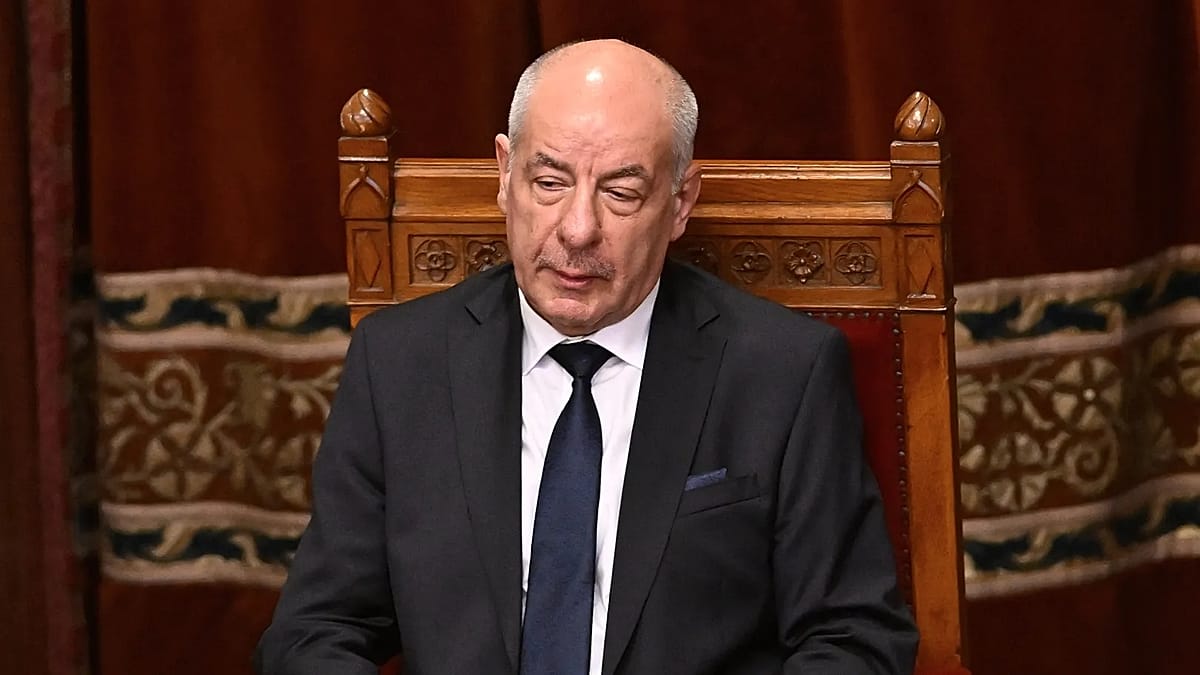
President Tamás Sulyok of Hungary signed the seventeenth amendment to the country’s Fundamental Law on Saturday, a constitutional change that immediately terminates his own mandate. In a statement posted on Facebook, Sulyok described the amendment as “unprecedented and shameful,” accusing the ruling majority of trampling on the rule of law and the separation of powers.
“With a single sentence this amendment terminates the mandate of the sitting President of the Republic,” Sulyok said. “That sentence joins the ranks of those forced Gordian-knot fixes that will remain for posterity as grave and shameful historical examples of abuse of political power.”
The outgoing head of state sharply criticised the law that compelled his departure, calling it an open attack on the rule of law and the independence of institutions. He acknowledged, however, that refusing to sign the amendment would itself be unlawful, and therefore he signed it. “My signature is the final seal of my presidential obligations and of my full and unconditional respect for the institution of the presidency,” he added. “Yet it will also stand as lasting proof that the core values of a free society — the rule of law, democracy and the principle of the separation of powers — have been trampled underfoot for reasons of power.”
Interim Presidency and Broader Constitutional Changes
Under the new law, Sulyok’s mandate ends the day after the amendment enters into force. From that moment until a new head of state is elected, the Speaker of the National Assembly, Ágnes Forsthoffer, will serve as interim president. Parliament will then elect a new president within five years, under the terms of the revised constitution.
The seventeenth amendment introduces several other significant changes. It imposes a 12-year (or three-term) limit on parliamentary mandates, sets a maximum age of 70 for constitutional judges, and allows judges to initiate the recall of the presidents of the Kúria (Supreme Court) and the National Judicial Office (OBH). It also establishes a National Asset Recovery and Asset Protection Office, tasked with tracing and recovering public assets that have been handled or used unlawfully.
The amendment also restores the Constitutional Court’s review powers, which had been curtailed by a 2013 change that limited the court’s ability to review legislation on the central budget, taxes, fees, and social contributions. The president of the Constitutional Court, Péter Polt, and three other judges will be affected by the new age limit; the court’s president will now be elected by its members rather than by parliament.
In a move that reverses a 2023 change by the Orbán government, the amendment restores the term “megye” for counties, replacing the “vármegye” designation. The transition will take effect from 1 October. The Parliamentary Guard will also be abolished on that date.
Prime Minister Péter Magyar, who won a two-thirds majority in the 12 April vote with his Tisza Party, has repeatedly called for Sulyok and other state institution heads to resign, arguing they acted as puppets of the Orbán government. The amendment was signed by Justice Minister Márta Görög.
The changes mark a dramatic shift in Hungary’s political landscape, with critics warning that the constitutional overhaul undermines democratic checks and balances. For more on the broader context, see Hungary's Prime Minister Magyar Moves to Oust President Sulyok, Triggering Constitutional Crisis and Hungarian Parliament Ousts President Sulyok After Constitutional Amendment.