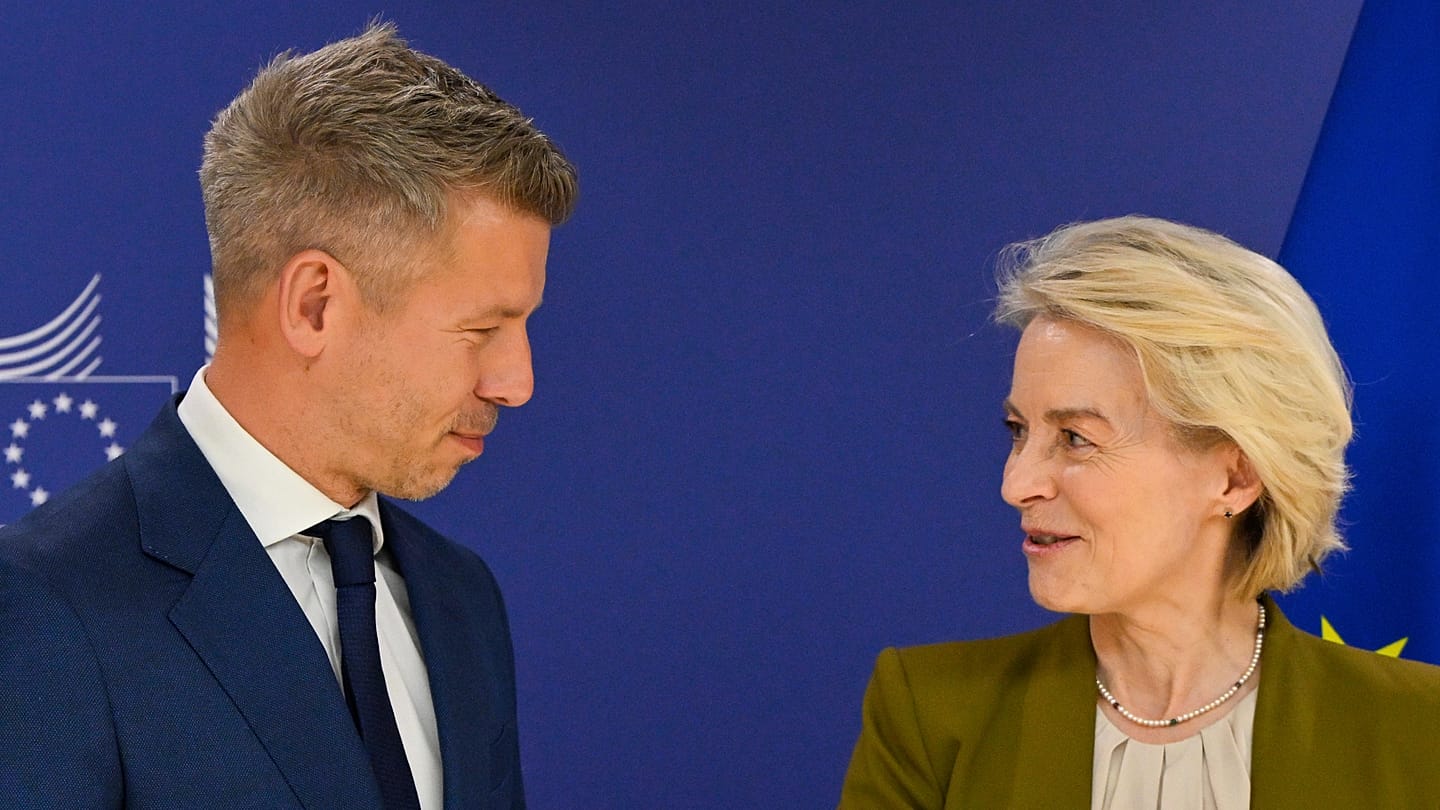
Hungary and the European Commission appear to be on the verge of a breakthrough that could unlock up to €17 billion in frozen EU funds, just days before a high-stakes meeting between Hungarian Prime Minister Péter Magyar and Commission President Ursula von der Leyen in Brussels.
According to sources close to the negotiations, Budapest has made significant concessions on rule-of-law reforms, judicial independence, and anti-corruption measures, which have been the main sticking points for the release of the funds. The money, part of the EU’s cohesion and recovery budgets, has been withheld since 2022 under the bloc’s conditionality mechanism.
Last-Minute Diplomacy
Magyar, who took office in April after a snap election, has made resetting relations with Brussels a cornerstone of his premiership. His government has already passed several laws aimed at strengthening the judiciary and creating an independent anti-corruption authority, moves that have been cautiously welcomed by EU officials.
“We are close to a deal that will benefit the Hungarian people and demonstrate our commitment to European values,” Magyar said in a statement ahead of the Friday meeting. The prime minister is expected to present a detailed roadmap for further reforms during his talks with von der Leyen.
The frozen funds include €10.5 billion from the EU’s cohesion policy and €6.5 billion from the Recovery and Resilience Facility, which were blocked after the European Commission found that Hungary had failed to address systemic corruption and threats to judicial independence under the previous government of Viktor Orbán.
For a deeper look at the broader context of Hungary’s rule-of-law progress, see our earlier analysis: Hungary's Rule of Law Progress Opens Door to €17 Billion in Frozen EU Funds.
What’s at Stake
The release of the funds would provide a major economic boost to Hungary, which has been grappling with high inflation and a slowing economy. The money is earmarked for infrastructure projects, digitalization, green energy transitions, and social programs, all of which have been delayed due to the freeze.
However, the deal is not without its critics. Some MEPs and civil society groups argue that the reforms do not go far enough and that the Commission should maintain pressure on Budapest. “The EU must not rush into releasing funds without concrete, verifiable changes on the ground,” said a spokesperson for Transparency International Hungary.
Magyar’s meeting with von der Leyen is part of a broader diplomatic push to rebuild trust between Hungary and the EU. The prime minister has also held talks with German Chancellor Olaf Scholz and French President Emmanuel Macron in recent weeks, signaling a shift away from the confrontational stance of his predecessor.
For more on how this fits into Hungary’s broader EU strategy, read our coverage: Magyar's Brussels Visit, Energy Crisis, and EU's Russia Dilemma.
The outcome of Friday’s meeting could also have implications for other EU member states facing similar conditionality procedures, such as Poland under its new government. A successful deal with Hungary might set a precedent for how the bloc balances enforcement of democratic standards with the need for solidarity.
As the clock ticks down, all eyes are on Brussels. If an agreement is reached, it would mark a significant thaw in EU–Hungary relations and provide a much-needed win for both Magyar and von der Leyen, who have both staked political capital on the negotiations.