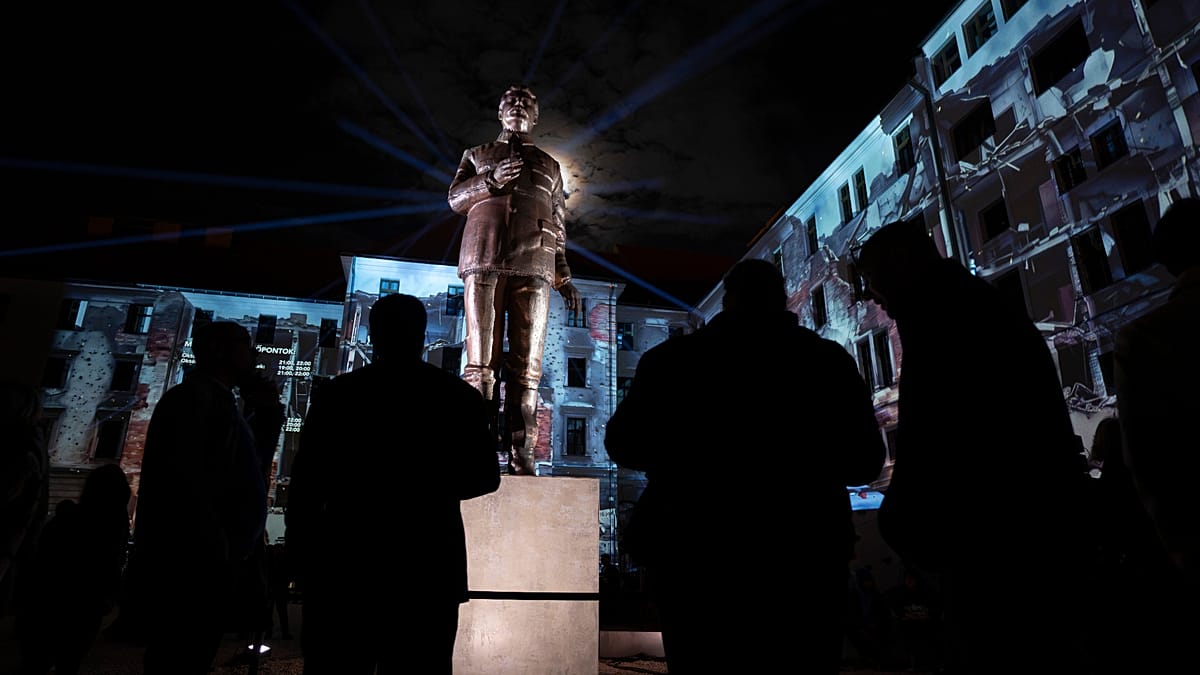
Seventy years after Hungarians rose against Soviet domination, the country's leaders gathered in Budapest on Wednesday to honour the memory of those who died in the 1956 revolution. The commemorations carried particular weight this year, as Hungary's political landscape has shifted and the European Union seeks a fresh start with Budapest.
Prime Minister Péter Magyar, who took office after his party's victory in the 2022 elections, laid a wreath at the monument to the uprising and spoke of the courage shown by ordinary Hungarians who defied a superpower. "Their sacrifice reminds us that freedom is never given, it is taken," he said, addressing a crowd that included veterans and families of the fallen.
European Commission President Ursula von der Leyen also attended the ceremony, using the occasion to underline the values that bind the EU's member states. "The 1956 uprising was not just a Hungarian struggle; it was a European struggle for the right to self-determination," she said. "Today, we must guard those democratic principles with the same resolve."
The presence of von der Leyen in Budapest was notable given the recent strains between Brussels and the Hungarian government over rule-of-law concerns. However, the tone of the event was conciliatory, reflecting a broader effort to reset relations. As our analysis of the Budapest reset notes, both sides appear willing to move past the acrimony of recent years.
A day of remembrance and reflection
The 1956 uprising began on October 23 as a student-led protest in Budapest, which quickly grew into a nationwide revolt against the Soviet-backed government. The revolution was crushed by Soviet tanks within weeks, leaving thousands dead and prompting a wave of refugees to flee westward. For many Hungarians, the event remains a defining moment of national identity.
This year's commemoration was more subdued than in previous years, with fewer EU leaders attending. As our report on the sparse EU leadership at the event highlights, diplomatic strains have kept some heads of state away. Yet the symbolism of von der Leyen's presence was not lost on observers.
In his speech, Magyar also drew a line from 1956 to the present day, urging Hungarians to remain vigilant against any erosion of their sovereignty. "We remember the heroes who stood up to tyranny, and we renew our commitment to a Europe that is free, democratic, and united," he said.
The anniversary comes at a time when Hungary's economic prospects are improving, with recent reports suggesting the country could adopt the euro by 2030. According to Fitch's assessment, Hungary is on track for euro adoption, a development that could further integrate the country into the European mainstream.
For many Hungarians, however, the day was less about politics and more about remembrance. Wreaths were laid at the memorial on Móricz Zsigmond Square, and candles were lit across the capital. In a poignant moment, a group of elderly survivors, some in their nineties, were given a standing ovation as they took their seats at the main ceremony.
As the sun set over the Danube, the Hungarian flag flew at half-mast over the Parliament building. The echoes of 1956, it seems, still resonate strongly in a country that has travelled a long road from Soviet rule to EU membership.