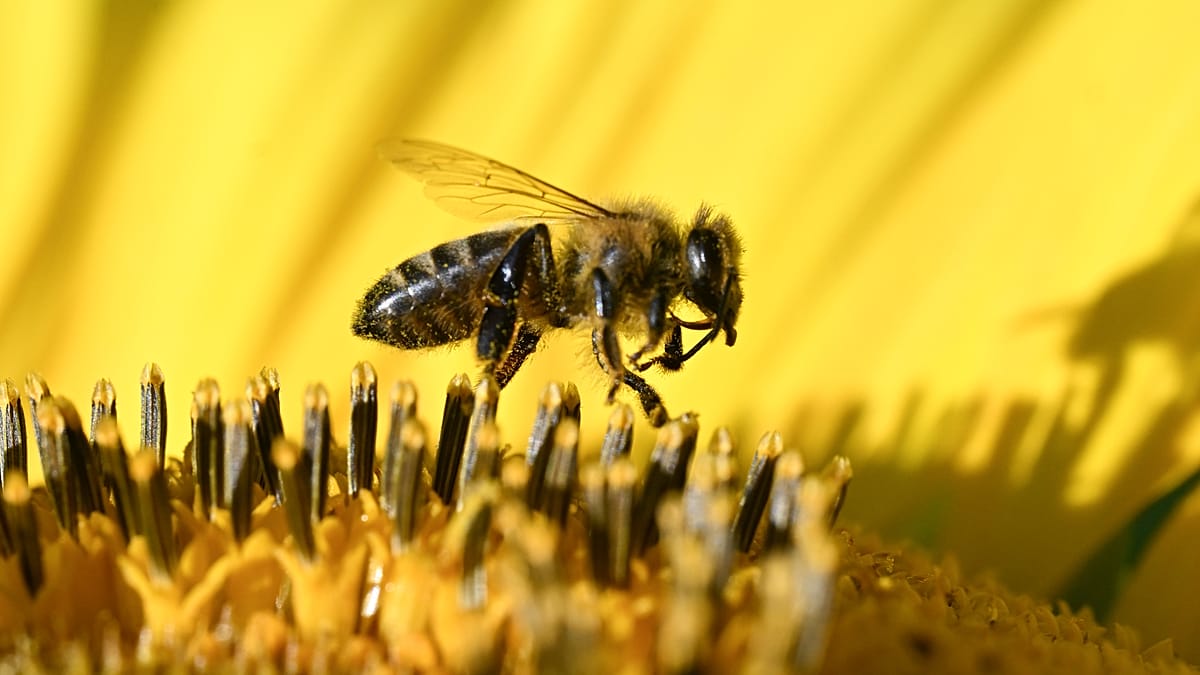
Hungary's bee population is facing a severe crisis as prolonged drought and successive heatwaves have decimated natural sources of nectar and pollen, according to the National Hungarian Beekeeping Association (OMME). The organisation warns that up to 80% of the country's bees could be affected, with many colonies already showing signs of starvation.
Pollen is the primary protein source for bee colonies, essential for rearing young bees and ensuring their proper development. Without it, honey yields drop and colonies' chances of surviving the winter are directly compromised. For weeks, around 80% of Hungary's bees have had little or no access to natural pollen, and the drought has exacerbated the situation: even the damp areas and riverbanks that typically provide late-summer forage have dried up this year.
Water shortage compounds the crisis
To keep a hive alive, worker bees must carry at least a litre of water back to the queen and her larvae to prevent dehydration. The worsening drought forces bees to fly farther in search of food and water, burning more energy and dying at higher rates. A lack of nectar can also trigger aggressive behaviour within colonies, leading to increased mortality.
OMME has alerted the ministry responsible for agriculture and food policy, warning that the crisis could result in significant colony losses by spring 2027. This matters beyond beekeeping: honey bees play a vital role in pollinating crops, and their decline poses a direct threat to the food supply.
In a letter to Szabolcs Bóna, the minister responsible for agriculture and food policy, OMME has asked authorities not to automatically penalise beekeepers for expected losses. Beekeepers are normally required to maintain a set number of colonies, but many will be unable to meet that requirement due to circumstances beyond their control. The association is urging the ministry to take into account the extreme weather and the unprecedented shortage of natural food sources.
The effects of the drought and heat will not end with the season. The availability of pollen now will determine whether colonies survive the winter, how well they recover next spring, and ultimately, how much honey Hungary produces next year. The crisis also echoes similar challenges across the continent, as climate change intensifies pressure on pollinators.
For more on the broader impact of drought in Hungary, see the recent mass die-off at Hungary's largest fish farm. The situation highlights the interconnectedness of ecosystems and the urgent need for adaptive measures.