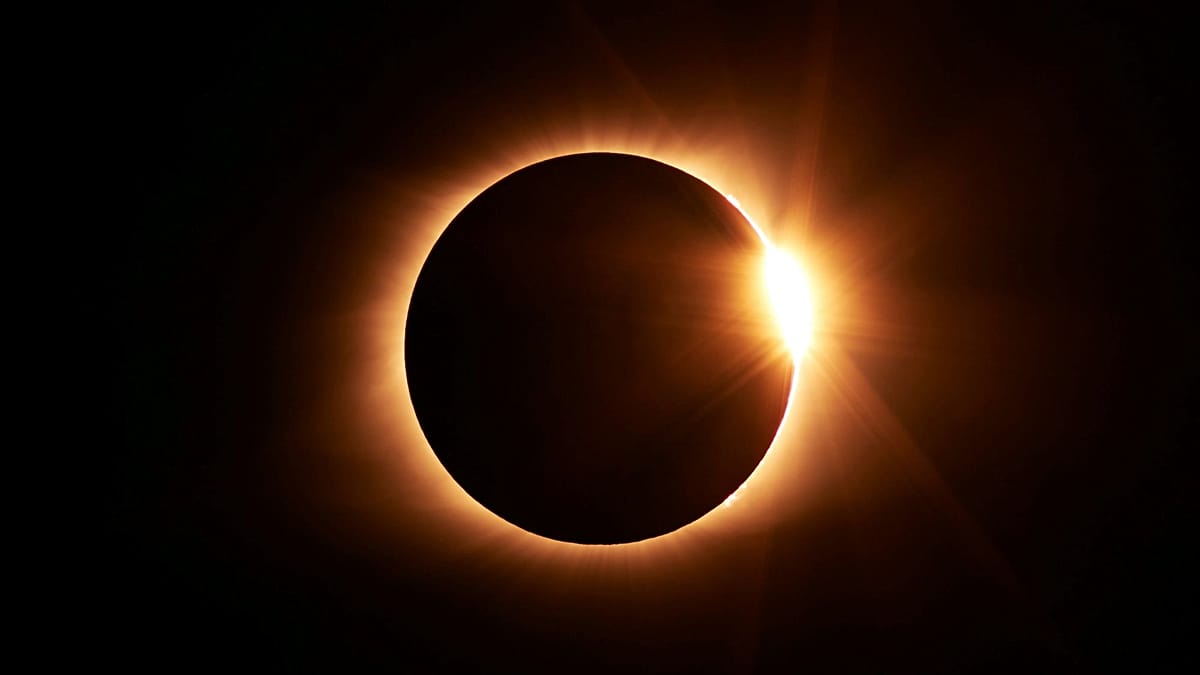
On 12 August, a total solar eclipse will sweep across the North Atlantic, with the Iberian Peninsula experiencing its first totality since 1912. Spain, particularly the northern regions, offers some of the best vantage points as the sun sets. For those unable to travel, Iberia has arranged a dedicated flight that will allow passengers and online viewers to witness the celestial spectacle from 30,000 feet.
A flight named for Copernicus
The special service, designated IB1473 in homage to the birth year of Nicolaus Copernicus, will depart from Adolfo Suárez Madrid-Barajas Airport and follow a custom route over Palencia, placing it directly in the path of totality. The Spanish flag carrier will livestream the entire flight across its social media channels, enabling a global audience to experience the eclipse from a unique perspective without leaving home.
On board will be a team of researchers from the Shelios project, an international collaboration dedicated to studying solar eclipses. The scientists will take advantage of the unobstructed view at cruising altitude, where the absence of atmospheric phenomena that can distort ground-based observations allows for clearer imaging of the solar corona.
“We are very pleased to collaborate on an initiative that brings together aviation, science, and innovation,” said Diego Fernández, Iberia’s director of strategy, transformation, and sustainability. “This flight allows us to leverage the advantages of observing from cruising altitude to contribute to the study of an exceptional astronomical phenomenon.”
Path of totality and viewing opportunities
The path of totality will cross Greenland and Iceland before reaching the Iberian Peninsula, with totality lasting approximately two minutes for observers directly in its path. NASA has published detailed maps of the eclipse’s trajectory, which also shows partial phases across much of Europe.
Major cities such as London, Paris, Brussels, and Lisbon will experience a partial eclipse, while Madrid and Barcelona, though just outside the path of totality, will see up to 99% coverage. This has sparked a surge in travel and accommodation bookings in prime viewing locations, as noted in our recent coverage of the eclipse tourism boom.
For those planning to observe the eclipse from the ground, experts advise using proper eye protection and finding a location with a clear western horizon. The event will occur close to sunset, adding a dramatic backdrop to the phenomenon.
Iberia’s initiative is part of a broader trend of using aviation for scientific purposes, and it highlights the growing interest in eclipse tourism across Europe. As Spain prepares for this historic event, the flight offers an alternative for those who cannot secure a spot in the narrow path of totality.
The livestream is expected to attract a large audience, given the rarity of the event and the unique vantage point. It also underscores the role of technology in making such phenomena accessible to a wider public, a theme that resonates with Europe’s slow adoption of solar innovations.
As the eclipse approaches, anticipation is building across the continent. Whether from the ground or from the sky, this celestial event promises to be a memorable experience for Europeans and global viewers alike.