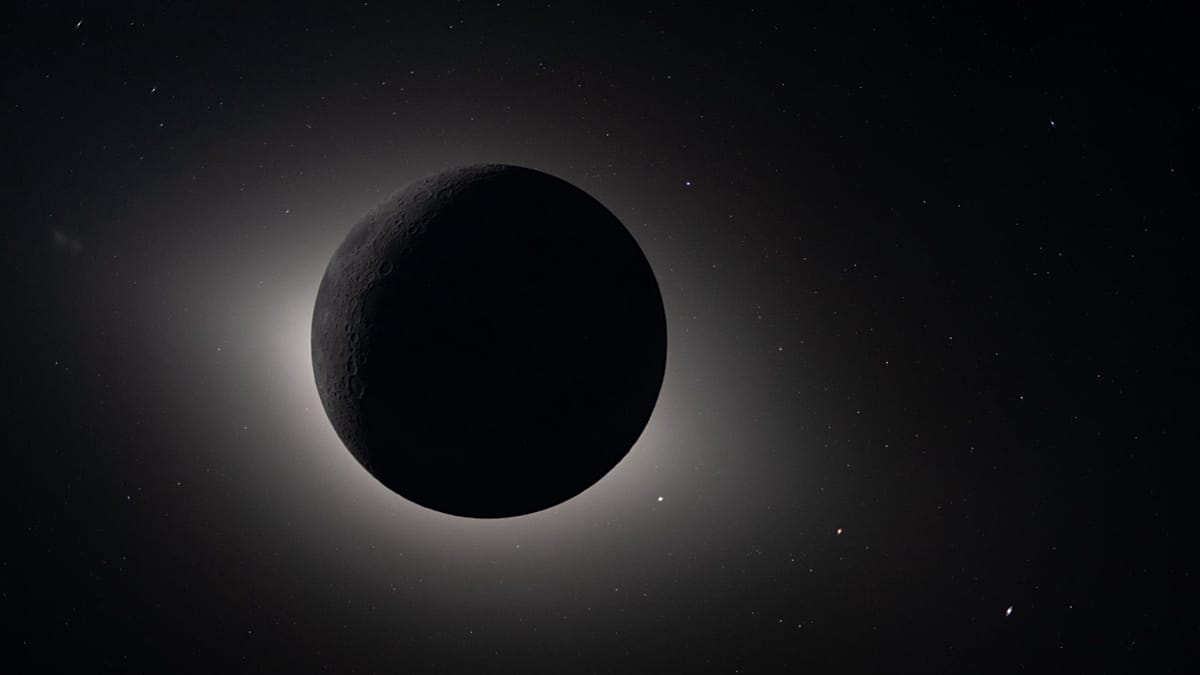
On 12 August, mainland Spain will experience its first total solar eclipse in more than a hundred years, a celestial event that will also cast its shadow over parts of Iceland and Greenland. The last time the Spanish mainland witnessed such a spectacle was in 1912, just two days before the Titanic sank, and that event was a hybrid eclipse that offered only a few seconds of totality for some regions. Many enthusiasts therefore look back to 1905 as the last truly complete solar eclipse visible from the country.
The upcoming eclipse will be a dramatic affair, unfolding as the sun sets over the Iberian Peninsula. The moon's shadow, known as the umbra, will travel roughly 8,260 kilometres in about an hour and a half, mostly across the Atlantic Ocean. Totality will last up to two minutes and 18 seconds, with the maximum duration occurring off Iceland's west coast. The shadow will begin its journey near the North Pole and sweep southward, ending in the Mediterranean.
While the full eclipse will be visible only along a narrow path, a partial eclipse will be seen across a vast region, including Alaska, Siberia, Canada, the northern United States, much of Europe, and West Africa. In Dublin, 94% of the sun will be covered, while Oslo will see 83%. Even New York will witness a small bite of 9%, and Norfolk, Virginia, a mere 2%. Observers are reminded to use proper eclipse glasses to protect their eyes.
The day promises an extra cosmic treat: before dawn, six planets will form an arc in the sky, and after nightfall, the Perseid meteor shower will peak under a new moon, ensuring dark skies for optimal viewing.
Scientists and spectators gear up
The European Space Agency (ESA) will host a live webcast from Spain's Astrophysical Observatory of Javalambre and a public celebration in León. NASA and the Italy-based Virtual Telescope Project will also provide coverage. Carole Mundell, ESA's director of science, described the event as more than a scientific moment: "It's also a very human moment. It's a real human connection between us, with our feet planted on the Earth and the cosmos."
US university research teams are launching more than 60 high-altitude balloons from Spain and Iceland to study the atmosphere during the eclipse, when temperatures briefly drop. This is ten times the number launched during the 2024 total solar eclipse that captivated North America. Angela Des Jardins of Montana State University, who leads the NASA-funded balloon project, noted that even a few minutes of darkness can affect the atmosphere, creating a "cold, dark shadow of the moon on Earth."
For those planning to travel, Spain offers a prime vantage point, and the country's infrastructure is well-equipped to handle the influx of eclipse chasers. The event also highlights the growing interest in solar phenomena across Europe, from solar energy projects to scientific research.
More celestial shows ahead
Spain's celestial luck continues: on 2 August 2027, the southern tip of the country will experience an exceptionally long total solar eclipse, with up to six minutes and 23 seconds of totality, extending into North Africa and the Middle East. Then, on 26 January 2028, a ring-of-fire eclipse will complete a rare trifecta for Spain, a coincidence that ESA's Mundell calls "a lucky coincidence."
Andrei Zhukov of the Royal Observatory of Belgium, who leads the Proba-3 science mission, has already simulated more than 60 total solar eclipses over the past two years, the longest lasting five hours and 38 minutes, using two satellites flying in formation. His work underscores the enduring fascination with these events, whether natural or artificially created.
As the date approaches, astronomers and casual observers alike are preparing for a spectacle that connects the heavens with the ground beneath our feet. For Spain, it is a rare opportunity to witness the universe's grand choreography, and for Europe, a reminder of the shared wonder that transcends borders.