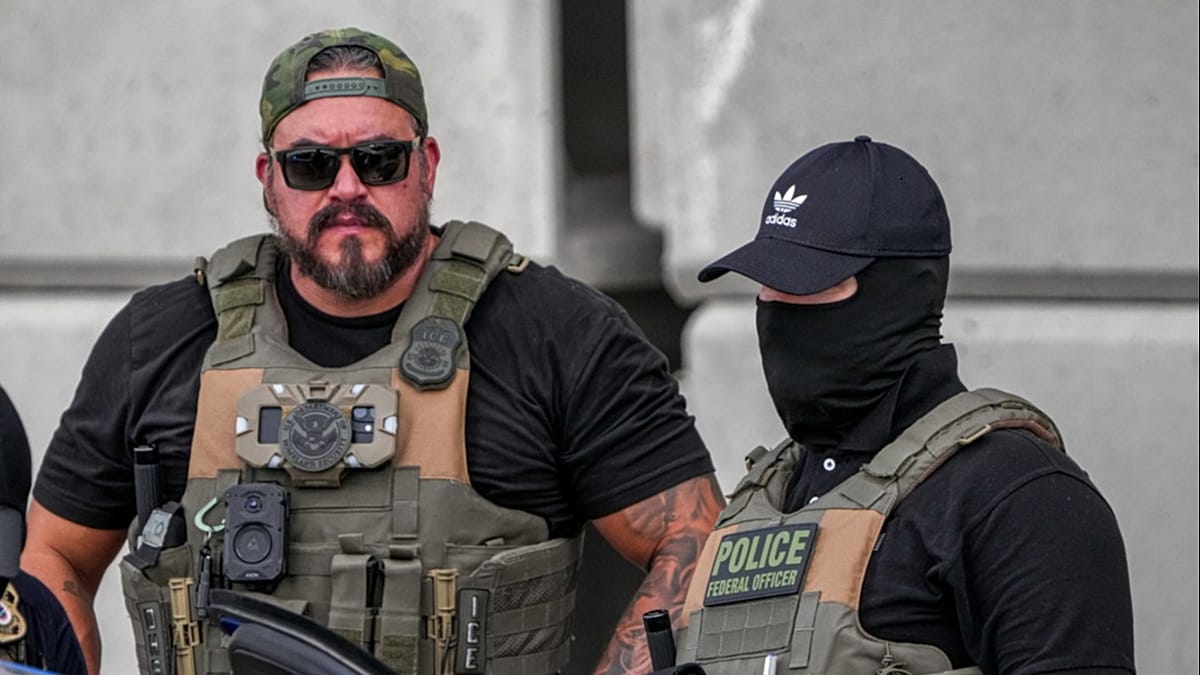
US Immigration and Customs Enforcement (ICE) has issued new internal guidance that bars officers from engaging in high-speed car chases and restricts vehicle stops to those who have completed specific training. The move follows a string of deadly encounters that have drawn sharp criticism from civil liberties groups and raised questions about the agency's enforcement tactics.
The memo, signed by ICE's executive associate director Marcos D. Charles and dated Wednesday, instructs officers in the Enforcement and Removal Operations division that they are not authorised to pursue vehicles that fail to pull over under any circumstances. Instead, officers should record the vehicle's details for later investigation, according to the document.
The guidance comes after a series of incidents in which ICE-initiated vehicle stops escalated when drivers refused to cooperate or attempted to flee. Since last year, ICE agents have fired their weapons in more than a dozen such encounters, killing at least four people and wounding several others. The most recent case involved a delivery driver in Austin, Texas, who was shot in the back after an agent chased him at high speed through residential streets.
White House pressure and internal tensions
The Trump administration has been under intense pressure to increase deportations, and ICE arrests have reached record levels. But the agency's rapid hiring spree has led to concerns about the quality of training and vetting of new officers. The new guidance is seen as an attempt to address these concerns while maintaining the administration's aggressive enforcement posture.
In a statement, ICE downplayed the significance of the memo, describing it as a routine reminder of existing protocols. “Occasionally, ICE leadership issues guidance reminders to law enforcement officers,” the statement said. “Vehicle stops and arrests of illegal aliens continue.”
The memo outlines several measures aimed at improving safety for officers, drivers, passengers, and the public. Field office directors must ensure that vehicles used for traffic stops are equipped with lights and sirens, and all officers on the scene must wear and activate body cameras. Only officers who have completed one of five specific training courses are permitted to conduct vehicle stops; others can only participate in a support capacity as passengers.
Notably, the guidance allows the continued use of a controversial technique known as “pinning,” which involves using a vehicle or physical barrier to trap or stop a car, but only if the officer has received special training. Similarly, only trained officers may deploy spike strips to deflate tires and prevent drivers from fleeing.
The memo was issued the same day that courtroom testimony in Austin highlighted how two ICE officers involved in a recent vehicle stop, pursuit, and shooting would not have complied with the new rules. Prosecutors presented surveillance video showing an agent chasing Wilber Rafael Garces Perez at high speed through residential streets after he fled an initial stop. The agent, who was not wearing a body camera, eventually caught up and shot Perez, who now faces federal assault charges after allegedly striking an officer with his side mirror.
Garces Perez's lawyers have called the charges “retaliation” and argue that the camera footage was inconclusive because it did not fully capture the moment he allegedly tried to flee. The case has become a flashpoint in the broader debate over ICE's use of force and the balance between enforcement and public safety.
The new guidance is a step toward addressing some of the concerns raised by these incidents, but critics argue that it does not go far enough. The ban on high-speed chases is a positive development, but the continued allowance of pinning and the reliance on training that may not be uniformly enforced leave room for further incidents. As the administration pushes for record deportations, the tension between aggressive enforcement and the need for accountability remains unresolved.