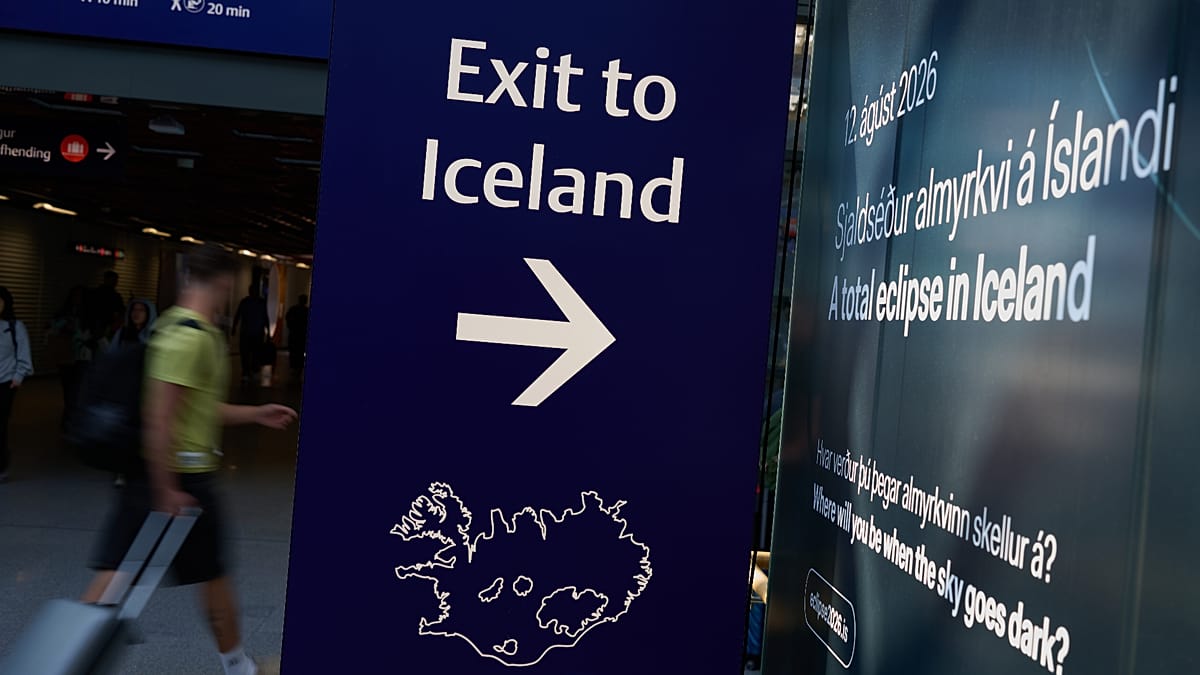
Ten years after the United Kingdom's referendum on EU membership, Brussels once again watched from the sidelines as a nation voted on its European future. On Sunday, Icelanders narrowly rejected resuming EU accession negotiations, with 52.8% voting against and 47.2% in favour. The EU's response was, at best, restrained.
European Commission President Ursula von der Leyen issued no public statement. An anonymous spokesperson merely said that Brussels had taken "note" of the outcome. European Council President António Costa was among the few to break the silence, stating through his office that "the EU fully respects the democratic choice of the Icelandic people" and that Iceland remains a close and trusted partner.
This reticence mirrored the Commission's low-key approach throughout the campaign, prompting questions about whether the EU's institutional instinct for neutrality is politically self-defeating when the vote concerns the EU itself. As Dagur Eggertsson, a member of the Icelandic parliament and former mayor of Reykjavík, told Europe Today: "We had a very harsh campaign. A lot of money. You could almost hear the echoes of Brexit, and the whole Brexit playbook was part of it."
A deliberate low profile
The Icelandic government had explicitly asked Brussels not to interfere. In a parliamentary response in June, Prime Minister Kristrún Frostadóttir stressed that the matter was domestic and that Icelanders alone would decide. She added, however, that if citizens had questions about the EU, it would not be unusual for Brussels to answer them. That balancing act was part of the pro-EU camp's strategy to keep the temperature down.
Hulda Þórisdóttir, a professor at the University of Iceland, noted that the Eurosceptic campaign successfully framed the referendum as a straight choice on membership, while the pro-European side tried to lower the stakes, emphasising that the vote was only about resuming negotiations. Frostadóttir reiterated this point to the Washington Post before the vote: "This is not an election about membership... there will be another referendum on an accession agreement if the result is yes."
Senior EU officials followed a similar script. Enlargement Commissioner Marta Kos gave interviews to Icelandic media, including public broadcaster RÚV, focusing on the practicalities of the enlargement process. But the overall message was one of non-interference.
MEP Sandro Gozi (France/Renew) offered a blunt assessment: "The Icelandic vote is a warning for Europe. Fears about fishing and emotional arguments, sometimes false, have defeated the reasons for the 'Yes'. We respect the vote, but the message is clear: the EU must change."
Sovereignty at the core
The campaign centred on economics. The 'Yes' side argued that EU membership would lower interest rates and reduce currency volatility, potentially paving the way for euro adoption. The 'No' camp countered that membership would force changes to Iceland's fisheries and farming sectors—vital interests in rural regions where the Eurosceptic vote was strongest.
But the debate went deeper than economics. "It wasn't only about economic interests. It was deeper than that. The arguments of the 'No' campaign resonated much more because they were closer to the Icelandic identity," Þórisdóttir said. For many Icelanders, the vote touched on existential sovereignty: having won independence from Denmark in 1944, they were wary of ceding authority to another large power.
Björn Bjarnason, a former minister from the Eurosceptic Independence Party, wrote in a blog post: "The referendum on August 29th is not just about the European Union. It is about whether we believe the Icelandic people themselves are best placed to determine their future." The successful 'No' campaign framed the EU not as a shield against larger powers, but as one of the powers Iceland must remain independent from to preserve its full sovereignty.
Echoes of Brexit
Brussels' decision to stay out of the campaign recalls its approach to the Brexit referendum, when then-Prime Minister David Cameron also urged EU institutions not to intervene. In both cases, Brussels respected the request—and in both cases, the result went against EU membership.
Charles Tannock, a former UK Conservative MEP who campaigned for Remain, told Euronews: "I understand the political principle of non-interference in a constitutional referendum of a member state. But I do think it was a mistake, though, not to correct lies and misinformation." Tannock also noted that Brussels' silence during Brexit was particularly striking given allegations of foreign financial support for the Leave campaign, though no definitive evidence was ever found. In Iceland, the 'No' campaign was significantly better funded than the 'Yes'.
Jean-Claude Juncker, Commission president at the time of Brexit, later admitted: "It was a mistake not to intervene and not to interfere because we would have been the only ones to destroy the lies which were circulated. I was wrong to be silent at an important moment."
Hindsight makes it easy to criticise, and it is debatable whether vocal EU officials would have swayed voters or merely provoked a backlash. Yet the pattern is clear: by staying silent, the EU allowed misinformation to go unchallenged and failed to make its case. The result in Iceland, as in the UK, was a vote that set back the European project. The EU's enlargement strategy, already under strain, now faces another setback, as this analysis explores. The question is whether Brussels will finally learn the lesson that silence is not neutrality—it is abdication.