In the Grésivaudan Valley, a stone's throw from Grenoble, a region often called the "Silicon Valley of the Alps," millions of highly engineered silicon wafers roll off production lines each year. They are the work of Soitec, a French firm that, despite its low public profile, has become a global leader in advanced substrates for the semiconductor industry.
Founded 33 years ago on the back of a breakthrough from CEA-Leti, France's premier tech research institute, Soitec began with a handful of employees. Today it employs over 2,000 people, holds more than 4,700 active patents, and operates production sites in France and Singapore. Its technology is embedded in mobile phones, connected devices, cars, household appliances, and the data centres that power the digital economy.
From Grenoble to the world
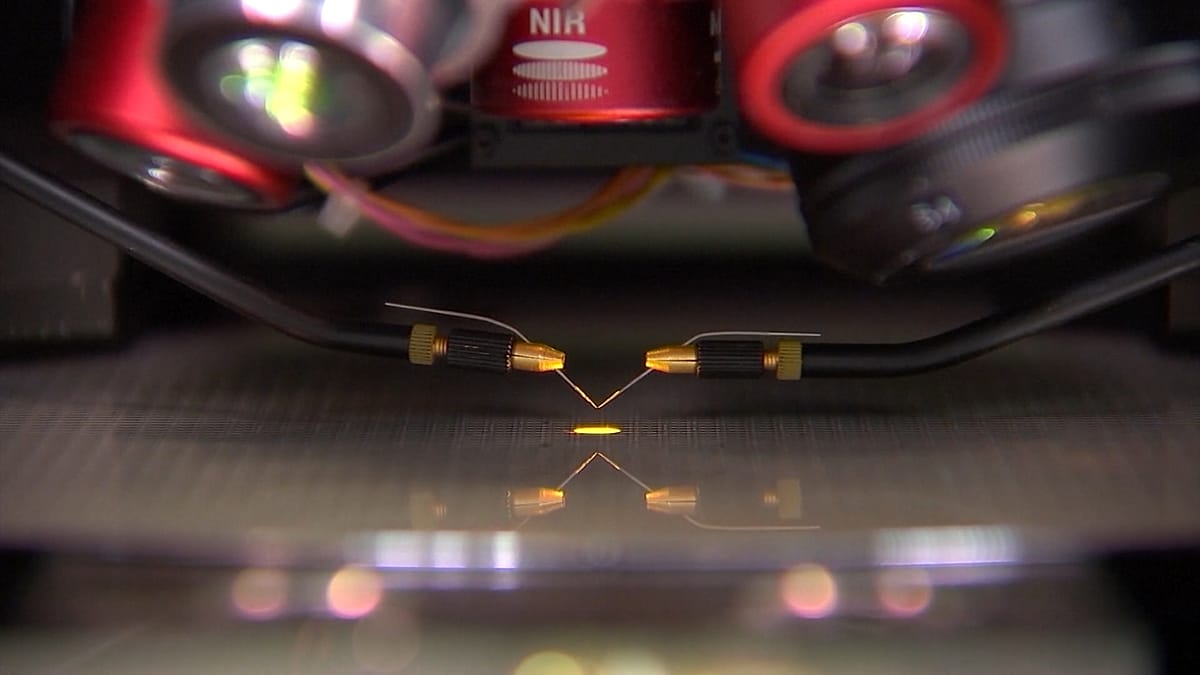
Soitec's core product is a high-tech silicon wafer that serves as the foundation for the most powerful microchips. The company's chief technology officer, Christophe Maleville, puts it simply: "Our roots are French, our reach is global. Our job is to run faster than the competition." That speed is evident in the company's clean rooms, where wafers undergo between 30 and 50 processing stages, including the transfer of ultra-thin layers of material at the atomic scale.
The choice of Grenoble is no accident. Cyril Menon, chief operations officer, points to the region's unique ecosystem of research labs, universities, and industrial players as a key to Soitec's success. "Today, we are the world leader in advanced substrates for semiconductors," he says.
Soitec's global footprint is striking: around 60% of its revenue comes from Asia, 30% from Europe, and 10% from the United States. Yet its strategic importance to Europe is growing, especially as the continent seeks to bolster its semiconductor sovereignty.
Investing in innovation
Maintaining a technological edge requires relentless investment. Soitec devotes a fifth of its revenue to research and development. "The speed of innovation becomes absolutely key, because we have to maintain the distance with the competition," Maleville explains.
That innovation is now being channelled into photonics, a technology that transmits data faster while consuming less energy. It is a timely move, given the explosive growth of artificial intelligence and the corresponding surge in demand for powerful, energy-hungry data centres.
Menon acknowledges the double-edged nature of AI. "How this AI is used is a debate that is worth having," he says. "How we regulate it, how we make the best use of this AI, is an important issue for society. And this AI consumes a lot of energy, a lot of resources. So it is also important to provide products that help address this issue."
For Soitec's leadership, mastering these technologies is not just a business imperative; it is about Europe's place in the global industrial order. "It is also by having these advanced technologies that we can have an impact on Europe's future," Menon concludes. "And have a seat at the table."
As Europe grapples with questions of strategic autonomy, from defence readiness to supply chain resilience, Soitec offers a rare example of a European company setting the pace in a critical high-tech sector. Its success, however, also raises questions about how the continent can nurture more such champions.