For two years, Hungary's veto had paralyzed Ukraine's path toward European Union membership, a blockade that frustrated successive EU presidencies. Poland and Denmark, which held the rotating Council presidency before Cyprus, had each vowed to break the impasse as a priority—and each failed. Then, on a Wednesday evening in late May, after nearly twelve hours of uninterrupted negotiations in Brussels, the Cypriot ambassador posed a simple question to the room: "Does anybody have any objections?" The silence that followed was, in diplomatic terms, deafening—and it ended the longest veto in recent EU enlargement history.
This account, based on interviews with multiple officials and diplomats who spoke on condition of anonymity, reconstructs the intense back-and-forth that led to the breakthrough. The seeds were planted in early May, when Hungary and Ukraine launched consultations on minority rights—a long-standing source of friction rooted in the legacy of the Treaty of Trianon, which left more than three million ethnic Hungarians outside the country's borders after World War I. Budapest had harshly criticized Kyiv's post-2014 language and education laws, which strengthened the use of Ukrainian in schools and public administration. In 2023, Ukraine amended its Law on National Minorities to align with EU accession criteria and recommendations from the Council of Europe's Venice Commission, allowing the use of EU languages in political advertising, private schools, and media. Yet tensions remained high.
A Change in Budapest
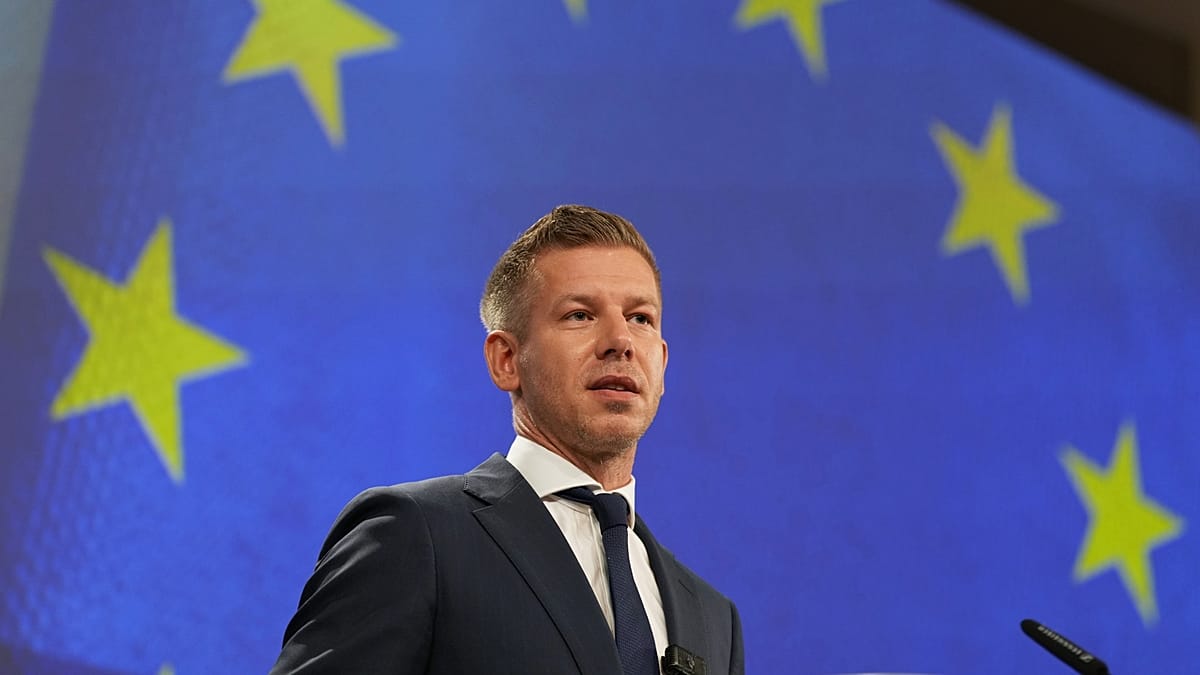
The decisive moment came after Hungary's 12 April elections, which unseated Viktor Orbán—the architect of the veto—and brought Péter Magyar to power. The transition triggered a flurry of closed-door negotiations across Brussels, Budapest, and Kyiv. Cyprus, determined to avoid the fate of its predecessors, launched a separate track of discussions between the presidency, the European Commission, and Hungary to lay the groundwork for opening the first cluster of accession negotiations, known as "fundamentals," which covers the rule of law, human rights, and the judiciary.
On 26 May, Taras Kachka, Ukraine's deputy prime minister for European integration, told Euronews that Kyiv was offering Magyar the same terms it had offered Orbán. "Ukraine treats the Hungarian community in Ukraine with full respect. All their needs are satisfied now," Kachka said. "So this is not a commitment. This is reality." A few days later, on 29 May, Magyar met with European Commission President Ursula von der Leyen in Brussels to release €16.4 billion in recovery and cohesion funds that had been frozen because of democratic backsliding. Both denied that the cash was linked to the veto, but Magyar said he expected "guarantees" from Kyiv over minority rights.
The formal opening of the first cluster is scheduled for 15 June in Luxembourg. There was no applause inside the room when the veto was lifted, but the relief was palpable. "All Brussels was waiting for this," a diplomat said. "It's unbelievable. It's good news." The deal also clears the way for Moldova, which received a similar letter of readiness. For Ukraine, the breakthrough ends two years of paralysis and marks a significant step toward eventual membership—though the road ahead remains long and fraught with further negotiations.
Read more: Hungary Ends Veto on Ukraine's EU Accession Talks After Two-Year Standoff and Magyar Signals Imminent Deal on Hungarian Minority Rights to Unlock Ukraine's EU Accession Talks.