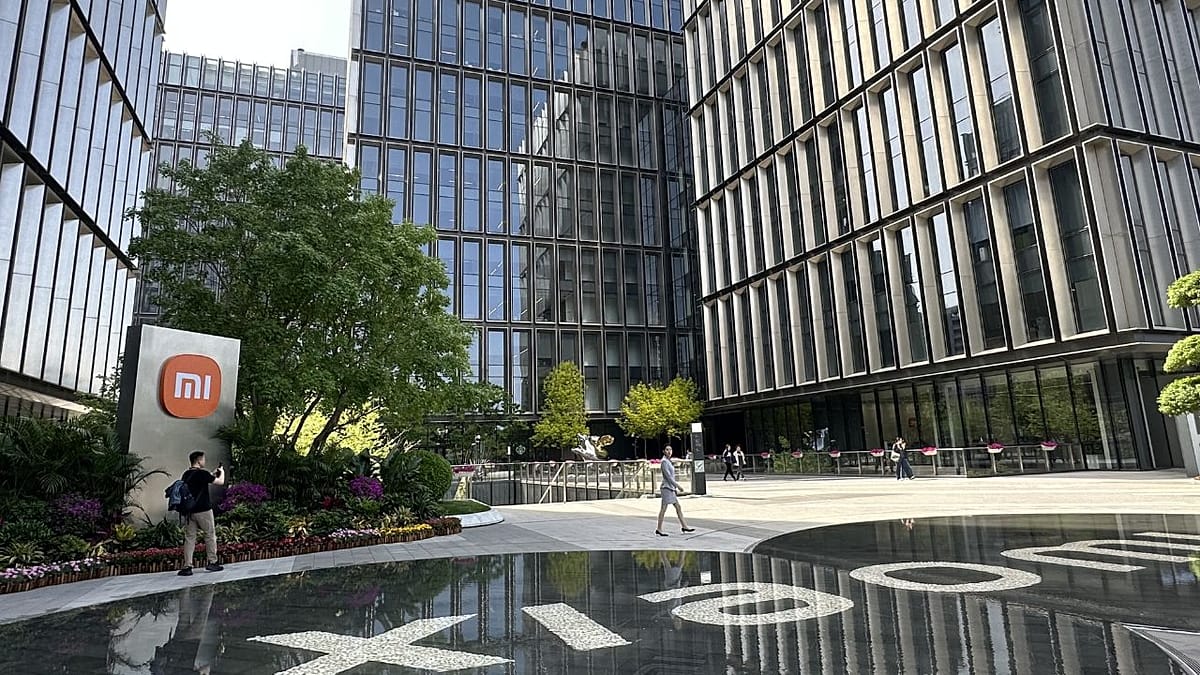
On the outskirts of Beijing, the Xiaomi campus sprawls across landscaped courtyards dotted with rabbit mascots and a flying-pig sculpture—a symbol of ambitions realised. But the real engine of the company's smartphone business lies in a separate facility: the Xiaomi Smart Factory, a nearly fully automated plant that churns out a new device roughly every six seconds.
Covering 81,000 square metres with room to expand, the factory is a testament to Xiaomi's manufacturing muscle as it pushes into the premium segment against Apple and Samsung. The company, which also makes cars and home appliances, now sees Europe as a bright spot: its market share on the continent rose one percentage point to 20% in 2025, according to Omdia, bucking a global decline to 13%.
From Simulated Streets to Clinical Assembly
The production process begins not on the factory floor but in a 50-metre corridor that feels more like a lived-in neighbourhood than a test facility. A Chinese-style restaurant, a Starbucks corner, a staged living room, an indoor amusement area, and a museum with glass-case exhibits recreate real-world lighting conditions—from high-contrast daylight to dim interiors. Here, camera systems are tuned for everyday use, a process that directly feeds into Xiaomi's imaging work.
The 17 Series flagship, unveiled in Barcelona in February and co-engineered with Leica, underwent evaluations across these simulated scenes to refine detail preservation, reduce flicker, and minimise optical interference. Company representatives say the tests help deliver cleaner light to the sensor and more consistent results across challenging conditions.
Leaving the creative testing spaces, the assembly halls feel clinical by contrast: bright, white, and geometrically precise. Automated carts—referred to by staff as “delivery boys”—glide along tracks carrying components, while larger robotic arms perform repetitive tasks with machine precision. Xiaomi reports an overall automation rate of 81% and claims full automation for several critical processes.
But humans remain essential. About 220 workers oversee a 310-metre production line, performing inspections, intervening when anomalies arise, and ensuring quality control. The plant now assembles roughly 600 phones per hour.
Orchestrated Precision and Quality Checks
The manufacturing choreography is tightly orchestrated. Surface-mount technology lines place components onto circuit boards; motherboards undergo dozens of simultaneous functional checks to detect defects; and structural reinforcements—foam, steel plates, and cushioning pads—are added to protect fragile parts. Each back panel is fitted, then devices pass water-resistance checks and aesthetic inspections.
Finished units face exhaustive performance testing—power consumption, antenna performance, audio, camera, display, and sensors—and extended “aging” in chambers, each capable of testing over 2,400 smartphones simultaneously. Only after clearing every test are phones boxed and dispatched.
This level of automation and quality control is part of a broader trend in manufacturing, where companies like Siemens and Nvidia are testing humanoid robots in German factories to push AI-driven production further. Yet Xiaomi's approach remains grounded in a hybrid model that blends machine efficiency with human oversight.
For European consumers, the implications are clear: Xiaomi's investment in manufacturing precision and real-world testing is paying off in market share. As the company continues to challenge the dominance of Apple and Samsung, its Beijing factory stands as a symbol of how far it has come—and how fast it can move.