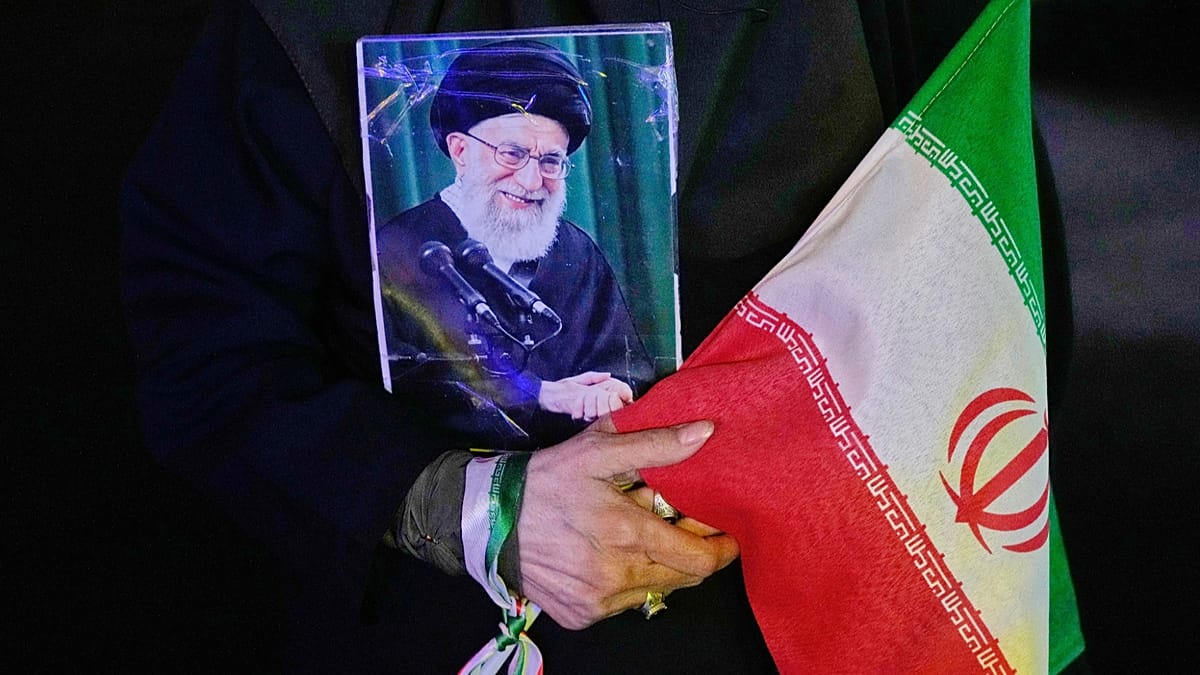
Nearly four months after the death of Ayatollah Ali Khamenei in the opening US-Israeli strikes of the war on 28 February, Iran is preparing what officials describe as the largest state funeral in the history of the Islamic Republic. The ceremonies will stretch over six days, beginning Saturday, and will take place across five cities in Iran and Iraq.
Khamenei, who served as the Islamic Republic's supreme leader for 37 years, was the second-longest-serving holder of the position since the 1979 revolution. Born in 1939 in Mashhad, he served as Iran's president from 1981 to 1989 before being selected as ayatollah by the Assembly of Experts following the death of Ayatollah Ruhollah Khomeini.
Schedule and Scale
The funeral will commence in Tehran on Saturday and Sunday at the Mosalla prayer complex, the city's main venue for large-scale state religious gatherings. The main procession is scheduled for Monday, covering a 10-kilometre route from Imam Hossein Square to Azadi Square — a site that has witnessed defining moments in Iranian history, from the 1979 revolution to the country's largest protests. Tehran's mayor has estimated that roughly 20 million people will attend, calling it "the largest gathering in the city's history."
On 7 July, the procession will move to Qom, the centre of Shiite Islamic learning in Iran, running between the shrine of Fatima Masoumeh and Jamkaran Mosque. Temperatures there are expected to reach around 45 degrees Celsius. The body will then be transferred to Iraq for ceremonies in Najaf and Karbala, the two holiest cities in Shiite Islam. Iranian Foreign Minister Abbas Araghchi visited both cities to advance preparations. The final burial will take place on 9 July in Mashhad, Khamenei's birthplace and Iran's holiest city, home to the shrine of Imam Reza and the Astan Quds Razavi foundation. Authorities estimate eight to ten million people will attend the burial.
Security and Logistics
The Basij paramilitary organisation is coordinating logistics, with Tehran's highways converted into temporary parking areas and mosques, schools, sports halls, and universities turned into accommodation. Each of Tehran's 22 districts will host mourners from one of Iran's 31 provinces. Flights are expected to be cancelled, and entry into major cities will be tightly controlled. The IRGC has been assigned security and crowd control in the main cities, with a committee chaired by First Vice President Mohammad Reza Aref overseeing preparations for weeks.
It remains unclear whether Mojtaba Khamenei — Iran's new ayatollah, who has not appeared in public since his appointment — will attend the ceremonies. US media outlets have reported, citing Iranian officials, that he sustained serious injuries in the strikes that killed his father and has undergone multiple surgeries; Iran has not confirmed those accounts. Pakistani President Asif Ali Zardari and Prime Minister Shehbaz Sharif have confirmed an official delegation will attend, but it is unclear which leaders from Gulf Arab states, Russia, or China will participate.
Historical Precedents
The scale of the funeral invites comparison with three previous moments of mass state mourning. The 1989 funeral of Ayatollah Khomeini descended into chaos when the procession was overwhelmed by crowds, the body nearly lost, parts of the shroud torn away, and a helicopter eventually needed to complete the transport. Out of that disarray, Ali Khamenei was selected as successor. The current ceremonies are being planned with far tighter security to avoid similar disruptions.
The four-month delay in holding the funeral was a direct result of the war, the ceasefire, and the subsequent negotiation process. Authorities have now set the timing for a period of relative de-escalation, with both Iran and the US pausing exchanges of fire as talks on a memorandum of understanding continue. Tehran is keen to ensure the ceremony proceeds without disruption in front of an international audience.
For European observers, the funeral underscores the fragility of the region's stability and the ongoing negotiations that have implications for energy security and migration flows. The event also highlights the complex interplay between religious authority and state power in Iran, a dynamic that continues to shape the country's domestic and foreign policy.