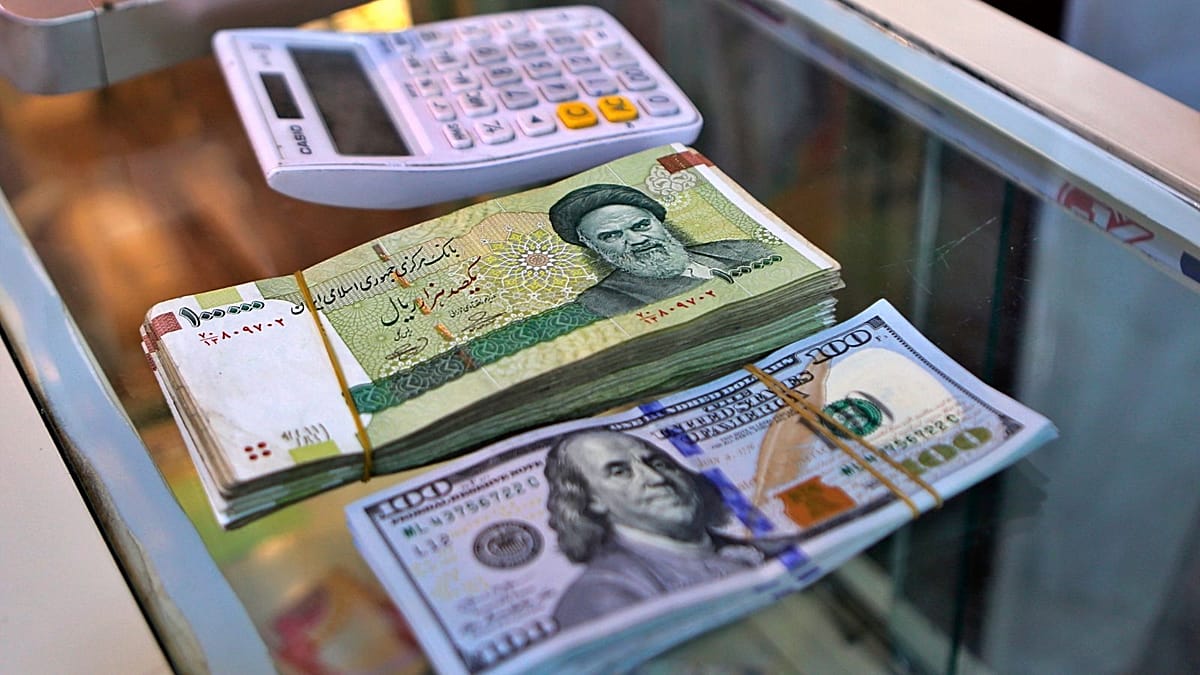
On Saturday, the US dollar hit an unprecedented high against the Iranian rial in Tehran's free market, trading at 1.941 million rials. This marks a 1.67% increase from the previous day's unofficial close and reflects mounting military and political tensions that have triggered a fresh wave of currency depreciation.
The euro also climbed, reaching 2.22 million rials, up 1.64% from Friday's unofficial rate. The rial has now lost roughly 43.7% of its value against the dollar since the start of the year, when the greenback traded at around 1.35 million rials.
Conflict-Driven Volatility
The currency's decline has been closely tied to the trajectory of US-Iran hostilities. Following US and Israeli air strikes on Iran on February 28, the dollar surged to 1.72 million rials. A brief lull in fighting saw it retreat to around 1.46 million rials as economic activity slowed and demand for foreign currency temporarily eased.
However, former President Donald Trump's threat on April 7 to launch strikes on Iran's critical infrastructure pushed the dollar back to 1.63 million rials. A subsequent ceasefire announcement brought it down to roughly 1.525 million rials, but the resumption of economic activity and government estimates of $300 billion in wartime damage renewed pressure on the foreign exchange market, driving the dollar close to 1.9 million rials.
A memorandum of understanding between Tehran and Washington briefly restored confidence, sending the exchange rate back to 1.53 million rials. Yet renewed political tensions quickly reversed those gains, lifting the dollar to around 1.7 million rials.
The latest escalation—a naval blockade of Iran and fresh US air strikes on southern regions, which Washington says aim to degrade Iran's military capabilities and secure shipping through the Strait of Hormuz—has intensified expectations of further depreciation and faster inflation.
Soaring Inflation
Official data paints a grim picture. Annual consumer price inflation, which stood at 52.6% in December 2025, rose to about 68% in February 2026 before reaching 88.6% last month—the highest level since the Second World War. Persistently high inflation and rapid monetary expansion continue to erode the rial's purchasing power, while geopolitical instability accelerates its decline.
The conflict has broader implications for global markets and European interests. Oil prices have surged as the crisis disrupts shipping through the Strait of Hormuz, a critical chokepoint for energy supplies. European economies, already grappling with energy costs, face additional uncertainty. Meanwhile, solar power has saved Europe €20 billion in gas imports since the conflict began, highlighting the continent's push for energy independence.
The humanitarian toll is also mounting. The World Food Programme warns of rising global food insecurity as regional disruptions affect aid delivery. For Iranians, the combination of currency collapse and inflation is devastating, with basic goods becoming increasingly unaffordable.
As the standoff continues, the rial's trajectory will depend on diplomatic developments and the scale of military operations. For now, the currency remains under severe pressure, with no relief in sight.