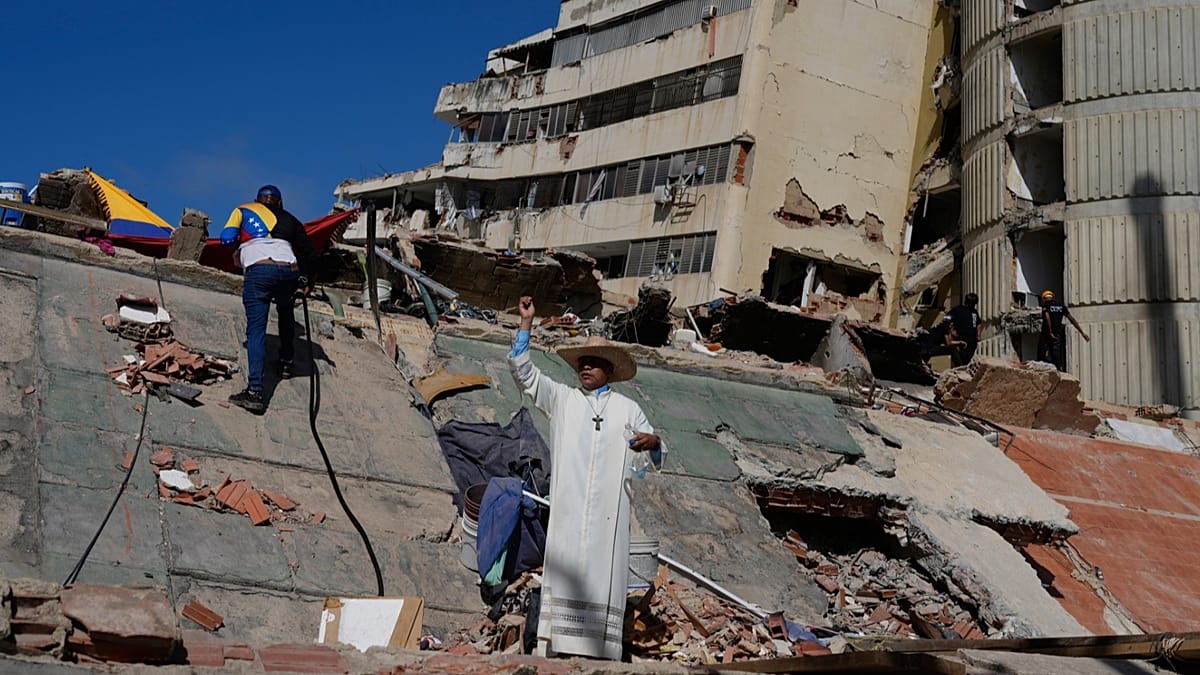
The death toll from the two devastating earthquakes that hit Venezuela's northern coast on 24 June has climbed to 5,069, as rescue workers continue to clear debris and search through rubble. The figure has risen steadily over the past weeks, with international rescue teams joining thousands of Venezuelan emergency personnel in the effort.
Interim President Delcy Rodríguez described the disaster as the “most brutal natural catastrophe” in Venezuela's history. The earthquakes, measuring 7.2 and 7.5 in magnitude, struck within 39 seconds of each other, followed by more than 1,300 aftershocks.
Widespread Destruction in La Guaira
The worst-hit area is the northern coastal state of La Guaira, where entire neighbourhoods have been reduced to rubble. The Venezuelan government reports that 856 buildings were damaged, 190 of which collapsed completely. Hundreds of other structures, including bridges and roads, have also been affected, hampering relief efforts.
More than 20,000 people have been displaced, many now living in overcrowded temporary camps. Aid organisations have warned that some shelters lack reliable supplies of safe drinking water and adequate sanitation, increasing the risk of disease outbreaks. Portugal has airlifted 8.7 tonnes of medicines to the stricken region, as reported in our earlier coverage.
IMF Funding Unlocked After Political Shift
Rodríguez announced that Venezuela has secured $346 million (€302 million) in previously frozen resources from the International Monetary Fund to support recovery and reconstruction. The IMF and World Bank resumed relations with Venezuela in April, following the US military intervention that removed Nicolás Maduro from power in January. Relations with both institutions had been frozen since 2019.
The release of funds marks a significant shift in Venezuela's international standing, though the scale of the disaster means far more resources will be needed. The country's infrastructure, already weakened by years of economic crisis, has been further devastated by the quakes.
European governments and institutions have been closely monitoring the situation. The European Union has pledged humanitarian aid, and several member states, including Spain and France, have offered technical assistance. The disaster also comes as the EU considers broader engagement with Venezuela's post-Maduro government.
Meanwhile, the human toll continues to mount. Rescue workers are still pulling bodies from the rubble, and the final death count may rise further. The international community has been urged to step up support, as the country faces a long and difficult reconstruction process.