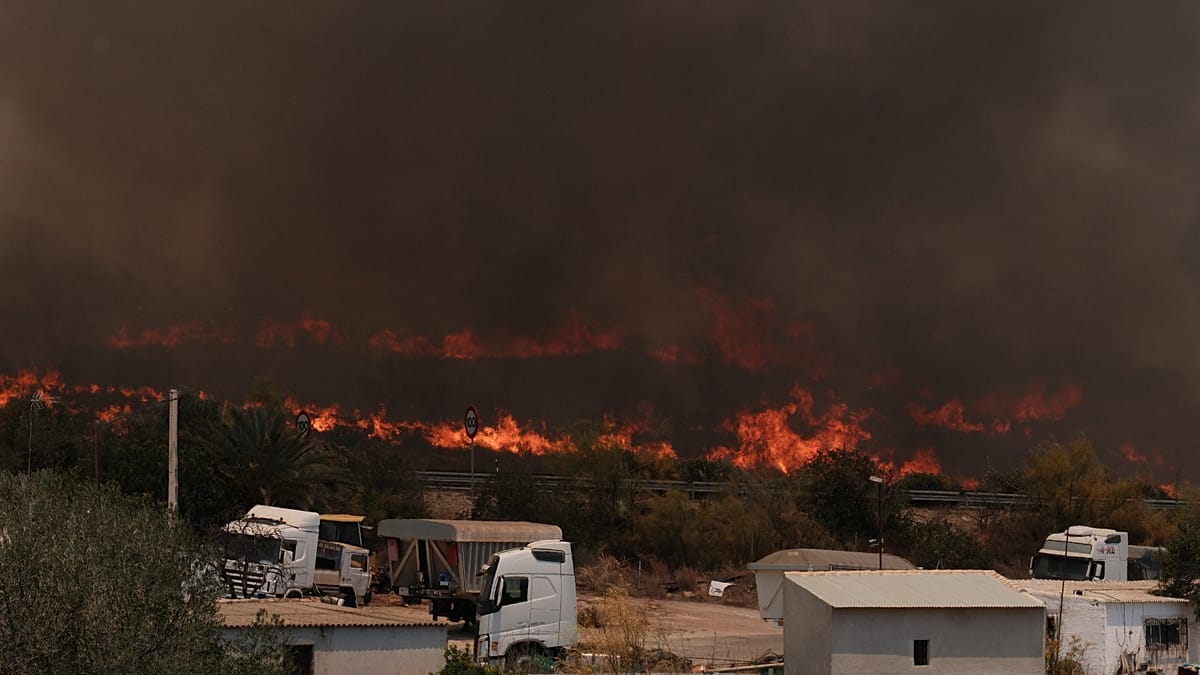
Two major wildfires in northeastern and central Spain continue to challenge firefighting crews, with neither blaze yet under control. In the autonomous community of Aragon, a fire that began Wednesday near the village of Orés has expanded dramatically, becoming the most destructive forest fire on Spanish soil in 2026. Preliminary estimates place the burned area at roughly 15,400 hectares, with a perimeter stretching approximately 60 kilometres.
The flames have approached the town of Luesia, where firefighters managed to halt their advance just before reaching the town centre. However, the front remains active, and concern is now shifting toward Biota, another municipality in the province of Zaragoza. The behaviour of the fire continues to depend heavily on wind shifts, as was the case in Orés, Asín, Malpica de Arba, Uncastillo, and the Navarrese enclave of Petilla de Aragón.
Guadalajara: Hundreds Evacuated
In the neighbouring region of Castilla-La Mancha, a separate wildfire near La Mierla, in the Sierra Norte of Guadalajara, has forced 529 residents to evacuate from eleven municipalities. Several thousand hectares have already been consumed. One of the most closely watched flanks is advancing toward Semillas, where crews are prioritising the protection of homes before the flames reach built-up areas.
Roads in the vicinity remain closed as a precautionary measure. Civil Protection authorities are sending ES-Alert warnings to mobile phones of nearby residents, instructing them to stay away from the fire perimeter. The situation echoes the challenges seen in Zaragoza's earlier wildfire this year, which burned 12,000 hectares.
Adverse Conditions Hamper Firefighting
Both fires are being exacerbated by difficult meteorological conditions. High temperatures, shifting winds, and steep terrain in parts of the affected areas are complicating the work of ground crews and aerial assets. The outlook for the coming hours offers little optimism, according to officials leading the response.
Spain has been grappling with a series of heatwaves this summer, with temperatures reaching up to 45°C in some regions, as reported in our earlier coverage. Such conditions increase the risk of wildfires and hinder containment efforts.
The fires in Aragon and Castilla-La Mancha underscore the broader vulnerability of southern Europe to climate-driven extremes. While the immediate focus remains on protecting lives and property, the scale of the destruction—over 15,400 hectares in Zaragoza alone—raises questions about long-term forest management and preparedness for increasingly severe fire seasons.