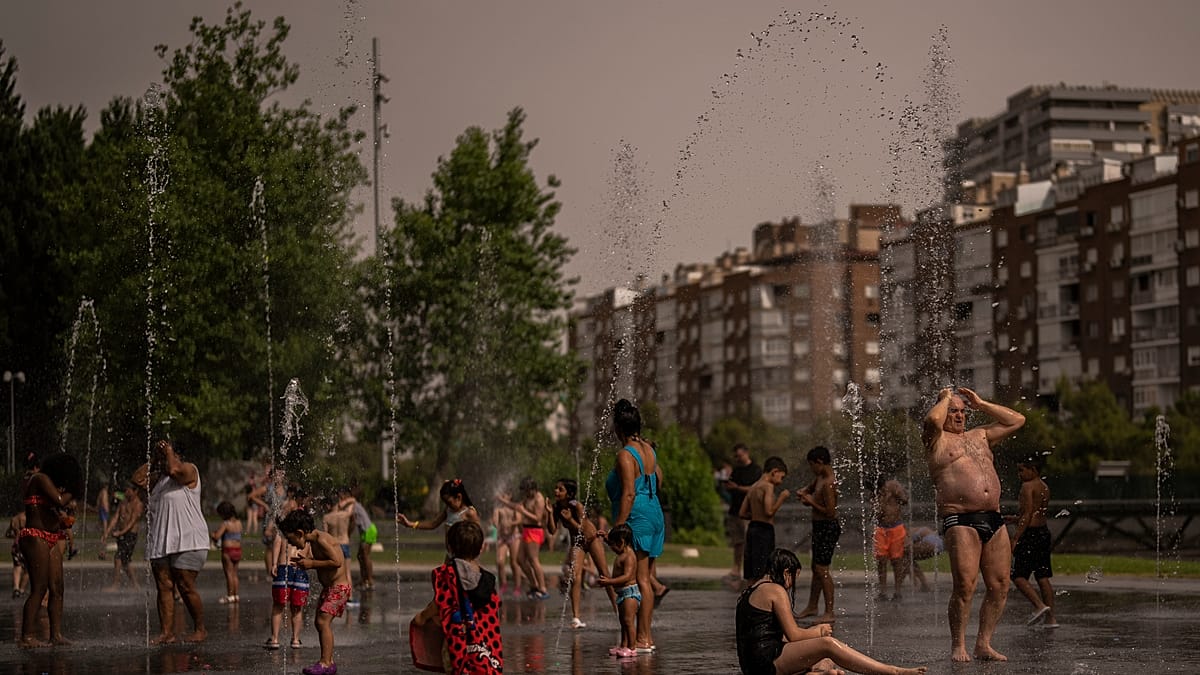
Spain is preparing for its most intense heatwave of the summer, with the State Meteorological Agency (Aemet) forecasting temperatures that could locally reach or exceed 45°C in the south-eastern third of the mainland. The episode is expected to begin on Saturday, intensify from Tuesday 22 July, and persist at least until Thursday 23 July, with Monday potentially included if data confirm the criteria for an official heatwave.
This would be the third heatwave of the season, following a summer that is already breaking records. Between 1 June and 15 July, the average temperature across Spain was 3.3°C above the norm, surpassing the previous record set in 2024 by 0.4°C, according to Aemet.
Meteorological Drivers and Regional Impact
Aemet explains that the heatwave is caused by an atmospheric blocking pattern combined with a cut-off low to the west of the Iberian Peninsula. This configuration is drawing a mass of warm, dry air from North Africa, laden with suspended dust, over much of Spain and the Balearic Islands. Temperatures will rise gradually, peaking on Thursday, with the highest readings expected in Andalusia, the Ebro valley, the north-eastern depressions, the Genil basin, and the interior of Mallorca. Several areas will see maximums above 40°C for consecutive days.
Particularly concerning are the tropical nights, where temperatures remain high overnight, preventing the body from recovering from daytime heat. Aemet highlights this as a significant health risk, especially for older people and those with cardiovascular conditions. The agency urges maximum precautions, particularly on Thursday when the heat is expected to peak.
Wildfire Crisis Intensifies
The heatwave arrives as two major wildfires continue to burn out of control. The most destructive, which started on Wednesday near Orés in Zaragoza, has already scorched approximately 15,400 hectares, making it the largest blaze in Spain this year. Several towns remain evacuated, and the vice president of the Aragon regional government, Mar Vaquero, noted that conditions on Saturday were slightly more favourable but that shifting winds keep the situation complex. For more details, see our earlier report on the Zaragoza wildfire.
A second fire in the Sierra Norte de Guadalajara, in the municipality of La Mierla, has already burned nearly 6,000 hectares. The government delegate in Castilla-La Mancha, José Pablo Sabrido, acknowledged that authorities are not optimistic about its evolution. The combination of dry thunderstorms in mountain areas—bringing lightning but little rain—is expected to further elevate the risk of new blazes.
The president of Aemet and secretary of state for the environment, Hugo Morán, told Radio 5 that Spain has entered a chain of successive heatwaves, complicating efforts to control wildfire risks. This pattern is consistent with broader European trends, as discussed in our analysis of summer seasonal depression linked to extreme heat.
Health and Economic Implications
The health dangers are compounded by the prolonged nature of the heatwave. Aemet warns that the level of danger around midday will be significant for outdoor workers and vulnerable groups. The agency recommends staying hydrated, avoiding strenuous activity during peak hours, and checking on elderly neighbours. The economic impact is also notable: Spain's inflation steadied at 3.2% in June, partly due to electricity costs offsetting cheaper fuel, but extreme weather could strain energy grids and agricultural output, as noted in our report on Spain's inflation.
As the heatwave unfolds, authorities across affected regions are coordinating emergency responses. The situation underscores the growing frequency of extreme weather events in southern Europe, a trend that demands both national and EU-level adaptation strategies.