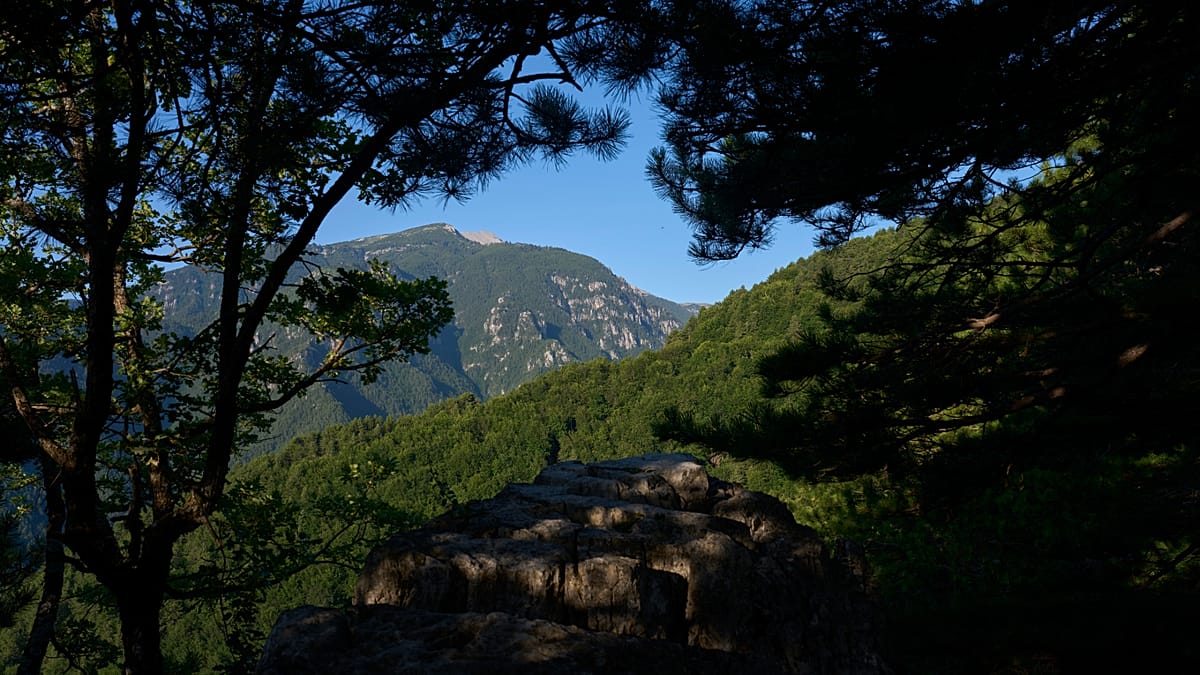
For centuries, Mount Olympus has loomed over the Greek landscape not only as the country's highest peak at 2,918 metres but also as the legendary abode of Zeus and the twelve Olympian gods. Now, this iconic mountain is one step away from receiving international recognition that would cement its status as a site of global importance.
Greece's nomination of Mount Olympus for inclusion on UNESCO's World Heritage List as a mixed site—encompassing both natural and cultural value—is set to be reviewed at the World Heritage Committee's annual session, scheduled for 19 to 29 July in Seoul. If approved, it would mark a major milestone for a place where mythology, history, and unique biodiversity converge.
A Long Road to Recognition
Athens first submitted the nomination for the wider mountainous massif of Mount Olympus back in 2014. However, international evaluators from the International Union for Conservation of Nature (IUCN) and the International Council on Monuments and Sites (ICOMOS), UNESCO's advisory bodies, requested additional information to strengthen the dossier. Their observations highlighted the need for more evidence to substantiate the area's geological features, ecological processes, and biodiversity on a global scale. They also called for a clearer articulation of the mountain's cultural significance, proposing the inclusion of the archaeological site of Dion, located at the foot of Olympus, in the nomination.
The mayor of Dio-Olympos, Evangelos Geroliolios, described the deep connection between the local community and the mountain. "Mount Olympus is our life. It is the place where we grew up, the place we see every day. At the same time, though, it is a place that carries myth, history, biodiversity, unique natural beauty and enormous cultural significance," he said. Geroliolios emphasised that UNESCO recognition would transcend local and national boundaries, adding that "it would be something that concerns the entire world" while also bringing greater responsibilities for environmental protection.
Balancing Tourism and Conservation
The prospect of UNESCO listing has raised questions about how to manage the expected increase in visitors. Mount Olympus already attracts thousands of climbers and tourists from across Europe and beyond each year. Its rugged terrain, sudden weather changes, and demanding routes make it a mountain that demands respect and careful management.
Babis Marinidis, a mountaineer and president of the Litochoro Mountaineering Club, stressed that while UNESCO recognition could boost tourism, it would also require stricter oversight. "The question is how many people this mountain and this ecosystem can sustain," he said, pointing to existing problems with compliance, such as bans on camping and swimming in sensitive areas being ignored.
For residents of Litochoro, the town that serves as the main gateway to Olympus, the mountain is not a recent discovery. Hotel owner Stavroula Vourou put it simply: "Mount Olympus is not something we are discovering now. All these years it has been the source of life for Litochoro. Litochoro has lived from Mount Olympus."
The ecosystem of Olympus is home to rare species of flora and fauna, as well as important historical monuments that link the area to ancient Greek culture. The mountain's unique biodiversity and geological features are central to the case for its UNESCO listing as a mixed site.
As the World Heritage Committee prepares to deliberate in Seoul, the outcome is keenly awaited by Greek authorities, local communities, and conservationists alike. A successful inscription would not only honour the mountain's mythological and historical legacy but also place it under the international spotlight, with all the opportunities and obligations that entails.