An Irish man has been formally charged in the United States with causing extensive damage to a US military transport aircraft at Shannon Airport, an incident that prosecutors say left the plane effectively destroyed. The case, which has drawn attention to the ongoing use of Irish airports by the US military, now moves to the federal courts in New York.
Daithi O'Corrain, 48, also known as David Curran, was indicted by a grand jury in the Southern District of New York on Monday, with the charges unsealed the following day. He faces a single count of destruction of government property, which carries a maximum sentence of ten years in prison. According to the indictment, O'Corrain is expected to be brought to New York to face the charges.
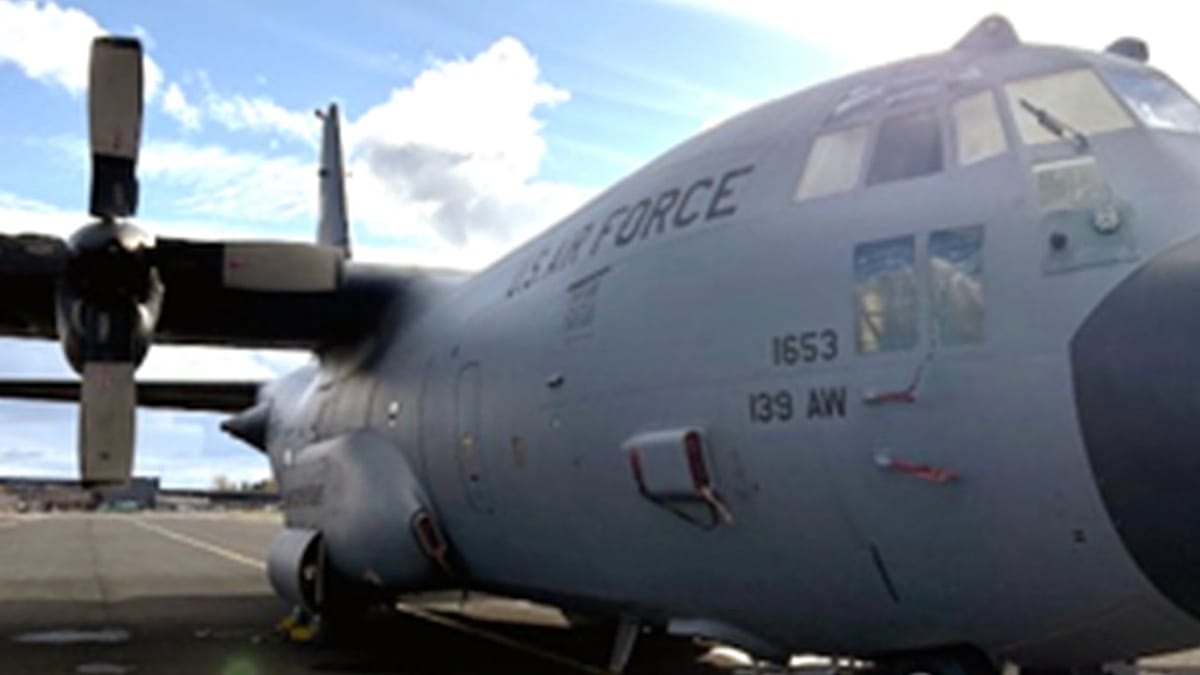
The incident occurred on 11 April, when O'Corrain allegedly breached security at Shannon Airport and barricaded himself inside a parked US Air National Guard C-130 Hercules. Prosecutors allege that he cut wires and hydraulic lines, smashed every gauge in the cockpit, and used an axe to damage the aircraft's exterior. He also reportedly poured ball bearings into the plane's fuel tanks, a move that would have caused catastrophic engine failure had the aircraft been flown.
In a statement, the office of the US Attorney for the Southern District of New York said: "As a result of O'Corrain's attack, the aircraft was effectively destroyed." The statement added that the damage rendered the aircraft inoperable and that the plane, valued at approximately $60 million (€54 million), will not return to active flight status.
No official motive has been given, but prosecutors described the attack as involving "months of planning and preparation." O'Corrain, who has been described by supporters as an independent peace activist, was arrested immediately after the incident by Ireland's police force, An Garda Síochána. He was initially charged with criminal damage and trespassing under Irish law.
The Limerick Post reported that O'Corrain is from Cork, a city about 97 kilometres southeast of Shannon. The choice of Shannon is significant: the airport has long been a refuelling stop for US military flights, a practice that has drawn protests from peace activists and political opposition in Ireland, which maintains a policy of military neutrality.
Shannon has seen several security breaches in the past 18 months. In one incident, three people were accused of spray-painting a US military plane, and in another, three individuals drove to a restricted area where a US military jet was parked. The airport was also used by President Donald Trump and Air Force One during his visit to Ireland in September.
The case raises questions about the legal status of US military personnel and assets on Irish soil, as well as the broader debate over Ireland's role in transatlantic security. While Ireland is not a member of NATO, it has long allowed US military aircraft to use Shannon for refuelling, a practice that has been criticised by those who argue it compromises Irish neutrality.
O'Corrain's supporters have framed his actions as a protest against US military operations, but the severity of the damage has led to widespread condemnation. The US Attorney's office has emphasised the financial and operational impact of the attack, noting that the aircraft was a valuable asset of the Air National Guard.
Legal experts say the case will test the limits of US jurisdiction over crimes committed on foreign soil, particularly when the suspect is a foreign national. The indictment in New York suggests that US authorities are determined to pursue the case, and O'Corrain could face extradition proceedings if he does not voluntarily travel to the United States.
As the legal process unfolds, the incident has reignited debate in Ireland about the presence of US military aircraft at Shannon. While some see it as a necessary part of international cooperation, others view it as a violation of Irish neutrality. The case also highlights the broader tensions in Europe over the balance between security and sovereignty, a theme that resonates across the continent.
For now, O'Corrain remains in Ireland, where he has been released on bail pending further proceedings. The US indictment is a significant escalation, and it remains to be seen how the Irish courts will respond to any extradition request. The outcome could have implications for how similar cases are handled in the future, both in Ireland and elsewhere in Europe.