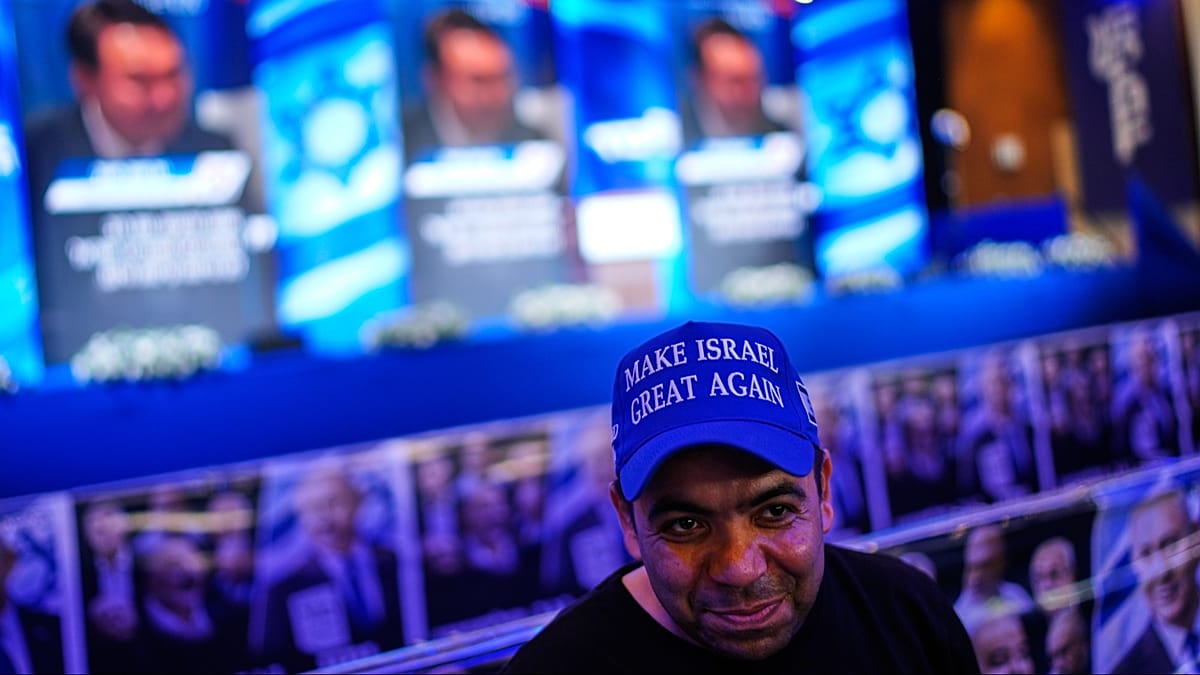
Israel's legislative election has produced an inconclusive result, with Prime Minister Benjamin Netanyahu's bloc projected to win 56 of the 120 seats in the Knesset, according to the Central Elections Committee. The opposition bloc is set to take 49 seats, while the Arab parties are projected to win 15. With no clear majority, the country now faces weeks of political wrangling.
Eylon Levy, a former Israeli government spokesperson, told Europe Today that the political elite face three options: form a unity government, form a minority government, or head to fresh elections. “All of those are going to require someone to surrender on some very serious coalition promises,” he said.
The election underscores a deeply divided nation, still reeling from the Hamas-led attacks on 7 October and the subsequent wars that have destabilised the Middle East. Netanyahu remains as interim caretaker prime minister while parties negotiate a governing coalition.
European diplomatic moves on Ukraine
Meanwhile, European leaders are stepping up diplomatic efforts to end Russia's war in Ukraine. Finnish President Alexander Stubb and Norwegian Prime Minister Jonas Gahr Støre held a 90-minute phone call with Russian President Vladimir Putin on Tuesday, urging him to end the full-scale invasion and engage in meaningful negotiations. The call was followed by a conversation with Ukrainian President Volodymyr Zelenskyy, who thanked them for their “active” support and called for de-escalatory steps.
The initiative comes as the European Commission and the European Council prepare to send a joint team of senior officials to the next round of talks. Polish Prime Minister Donald Tusk announced that Russia, Ukraine, and the US could meet in Abu Dhabi on 4 November, one day after the US midterm elections. The timing raises questions about Washington's future role in the peace process.
The midterms, which determine control of Congress, are seen as a referendum on President Donald Trump's trade wars, hostility towards Ukraine, and retreat from transatlantic security. Keith Brannum, a Truman National Security Project fellow, told Europe Today that this Congress has been “subservient” to Trump, but Democrats have been “very vocal” in holding the president to account. “We are in uncertain times,” he said.
Brussels personnel changes and energy security
In Brussels, Polish ambassador Agnieszka Bartol is leaving to take a cabinet position in Tusk's government in Warsaw, where she will also serve as his sherpa. She has been a popular figure among journalists in the Belgian capital. Andrzej Domański is expected to become Poland's next deputy prime minister.
EU energy and defence commissioners Dan Jørgensen and Andrius Kubilius are meeting today at the Berlaymont to discuss energy security, with NATO officials and industry leaders. A leaked agenda, obtained by my colleague Marta Pacheco, indicates talks will focus on EU fuel production for defence, particularly jet fuel output and logistics to meet a “potential demand surge”.
Caspar Hobhouse, a research analyst at the EU Institute for Security Studies, explained that Europe's militaries rely mainly on jet fuel and diesel. “In the case of a military conflict, the demand is enormous,” he said. The war in Iran and the closure of the Strait of Hormuz are making supplies harder to secure, leaving Europe's reserves “very, very short” in the event of armed aggression.
MEP Riho Terras, former commander of the Estonian Defence Forces, welcomed the talks, warning that aggression is imminent and stressing the need for planning. “We have to be prepared,” he said, including for plan Bs. “In 2007 I served in Iraq, then the whole country experienced a very big shortage of energy, and we dealt a lot with diesel generators there. In times of war, you need to have backups.”
A NATO spokesperson said it is “vital” that Europe's fuel production capacity supports both civil and military demands. In July, allies approved a €27 billion NATO Fuel Supply Chain Capability Programme Plan, including pipelines along the alliance's eastern and south-eastern corridors.
As Israel's political future hangs in the balance, Europe watches closely, mindful of the broader regional implications. The coming weeks will reveal whether Netanyahu can form a coalition or whether Israelis will head back to the polls.