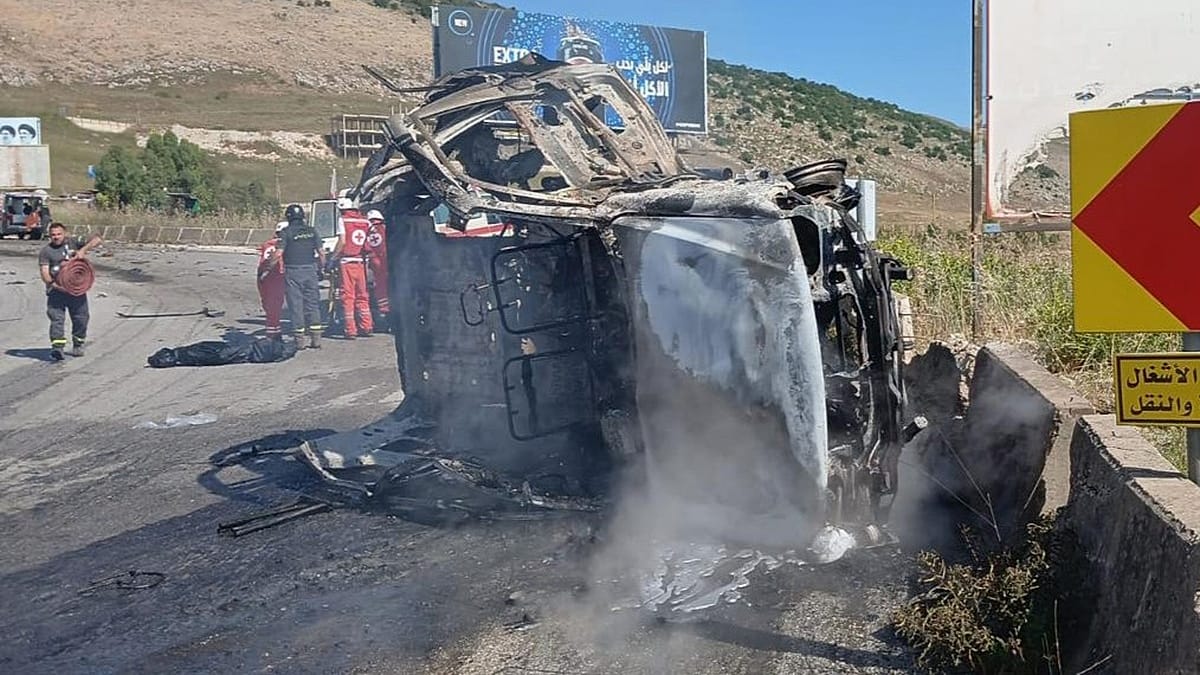
An Israeli airstrike in southern Lebanon on Saturday killed nine people, including three members of the Lebanese army, dealing a serious blow to efforts to maintain a newly announced ceasefire between Jerusalem and Beirut. The Lebanese army confirmed that a brigadier general, a captain, and another soldier died when their military vehicle was struck on a road between Khardali and Nabatieh.
The attack came just days after Lebanese and Israeli officials agreed to a US-brokered framework aimed at reducing hostilities along the border. The Israeli military stated that the vehicle was moving "suspiciously" in what it described as an "active combat zone," and that troops had previously ordered civilians to evacuate the area. It stressed that it "operates against the Hezbollah terrorist organisation, not against the Lebanese army," and said it was "reviewing the incident."
Lebanese Condemnation and Diplomatic Fallout
The Lebanese army condemned what it called "deliberate and repeated brutal Israeli aggression," accusing Israel of trying to "thwart all efforts to reach a solution." Lebanese President Joseph Aoun denounced the strike as a "flagrant violation of Lebanese sovereignty" and international law, noting that it occurred despite Lebanon's diplomatic efforts in Washington to end what he termed "continued Israeli aggression that goes unchecked."
The incident underscores the fragility of the truce, which formally took effect in April but has been repeatedly tested by clashes and mutual accusations of violations. Both Israel and Hezbollah have blamed each other for breaching the ceasefire while continuing military operations. The latest US-backed proposal would require Hezbollah to halt attacks, withdraw forces from the Israeli border, and allow the Lebanese army to deploy in designated areas. Hezbollah has rejected the arrangement, insisting on a complete Israeli withdrawal from Lebanese territory.
This tension is part of a broader debate in Lebanon over Hezbollah's role and disarmament, as highlighted by President Aoun's recent remarks to Iran asserting Lebanese sovereignty. Meanwhile, some Lebanese MPs argue that no real ceasefire exists as long as Hezbollah remains armed.
On Saturday, Israel renewed evacuation orders for villages in southern and eastern Lebanon and carried out additional strikes across the south. Hezbollah responded by targeting Israeli forces operating in the area. The escalation threatens to unravel diplomatic efforts and further destabilize the region.