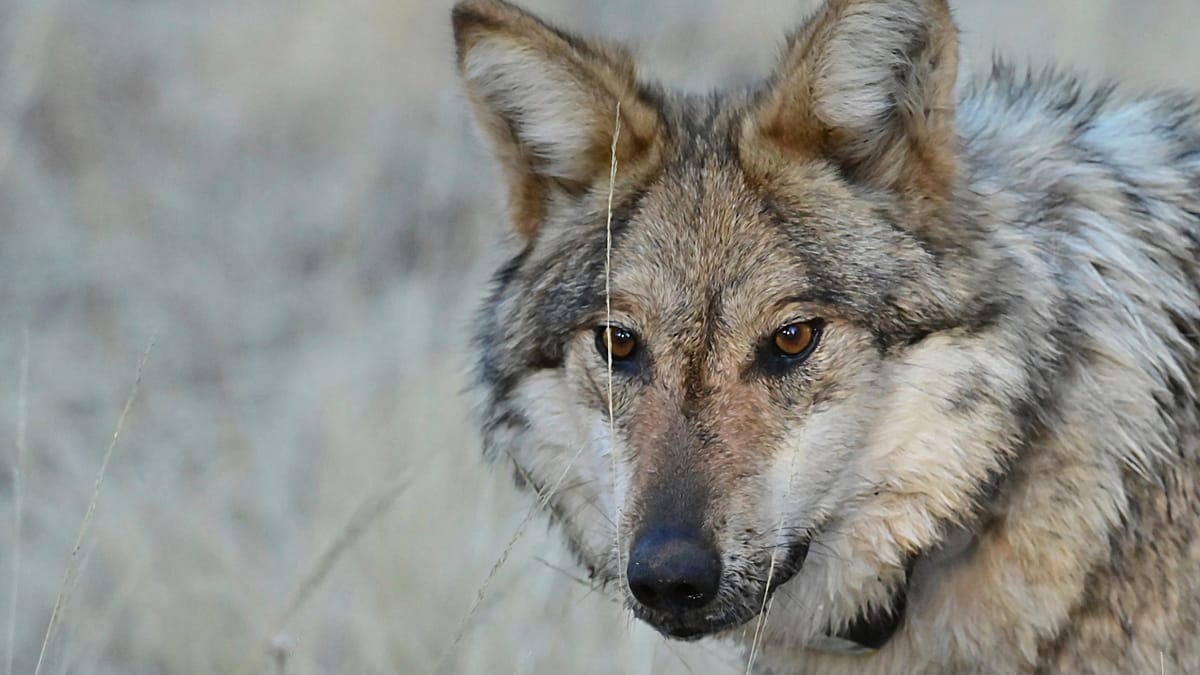
From livestock attacks in Puglia to sightings in Emilia-Romagna, Umbria and Lazio, the summer of 2026 was dominated by alarmism about wolves. But experts say the real story is more nuanced: Italy's wolf population is growing, yet the risk to humans remains minimal, and the challenge lies in managing coexistence.
According to the latest national monitoring by Ispra (the Higher Institute for Environmental Protection and Research), Italy had around 3,500 wolves in 2022. Since then, the population has increased by roughly 150 animals, mainly in the Alpine region. The study, conducted between 2018 and 2022, used a standardized protocol across the country and sophisticated statistical methods, making the figure a reliable estimate rather than a minimum.
Why wolves are appearing near cities
Wolves are territorial and live in packs, so their numbers do not explode exponentially. Instead, they expand into any available habitat. "The wolf has gone from being a species almost extinct 50 years ago to one that is now found virtually everywhere, from the beaches of Rome and Puglia to the Po Valley," says Piero Genovesi, head of the wildlife coordination service at Ispra. Their remarkable adaptability explains why sightings near urban areas are no longer rare.
But should people be afraid? "Wolf attacks remain an extremely rare phenomenon, so there is no real risk to people," Genovesi told European Pulse. Ispra data, collected with the EU-funded Life Wild Wolf project, recorded only 19 incidents of wolves attacking humans between 2017 and 2024. Notably, just seven animals were responsible for all cases, and a single female wolf committed 11 of them. These are exceptional cases involving animals that developed abnormal behavior.
Understanding 'confident' wolves
Marco Antonelli, a zoologist and large carnivore specialist for WWF Italy, explains: "In reality there is no need to be afraid of wolves: it is a species that keeps its distance; it is a shy, nocturnal animal that tends to avoid coming into contact with humans." Ispra has developed a protocol to classify wolf behavior by risk level, from harmless sightings to permanent settlements near people, predation of domestic animals, and ultimately aggressive reactions. "Certain human actions lead wolves to become used to and comfortable around people," Antonelli adds, noting that some cases stem from individual traits of specific animals.
EU downlisting and national responses
The major policy shift in 2026 is the downlisting of wolves from "highly protected" to "protected" under the EU directive, which Italy transposed in March. The change simplifies bureaucratic procedures for culls, but experts question its necessity. "It was a political choice, pushed by President von der Leyen. It was not necessary; wolves could already be culled under derogation," says Luigi Boitani, emeritus professor at La Sapienza University in Rome and a leading wolf expert. France, for example, culled 250 wolves annually under existing rules.
Germany has already transposed the new directive and is preparing to amend its national hunting law. In Italy, the downlisting may make it easier for authorities to authorize culls in problem areas, but experts caution that killing wolves is not a silver bullet. "Numbers tell only part of the story," Genovesi notes, emphasizing that territorial behavior naturally limits population growth.
For farmers and residents, the key is prevention: securing livestock with electric fences, guard dogs, and removing food sources that attract wolves. Public education is equally important to dispel myths and reduce panic. As Italy navigates this new legal landscape, the goal remains a balanced coexistence between humans and one of Europe's most iconic predators.