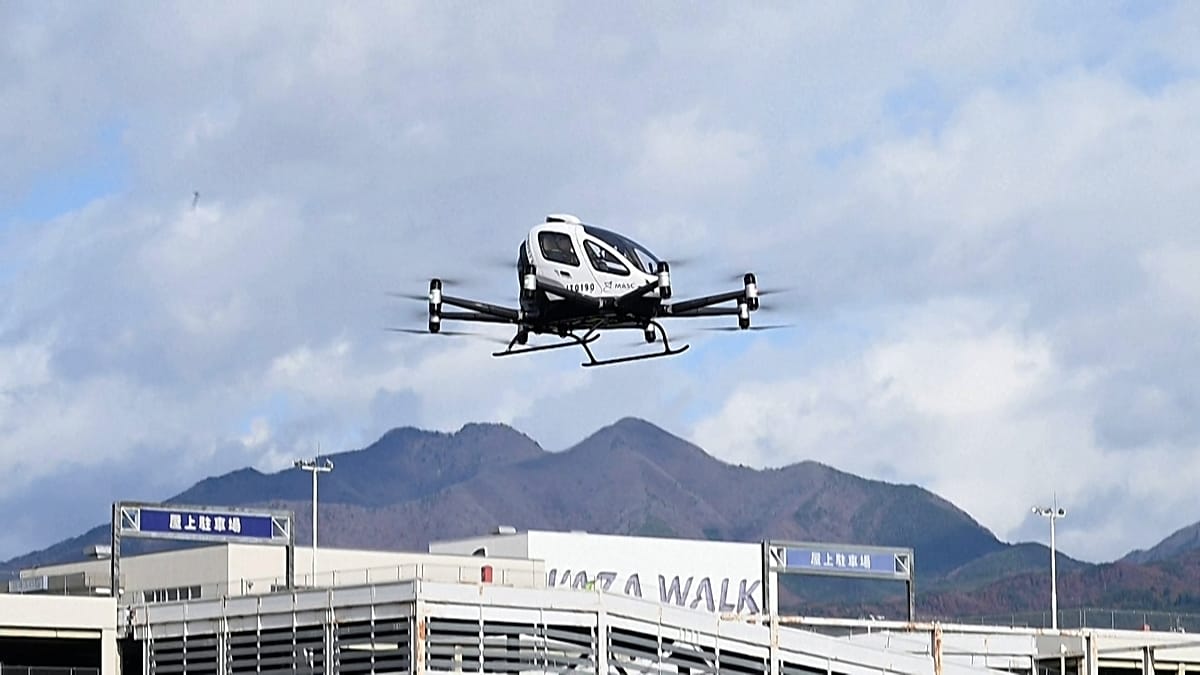
In a demonstration held on Friday, 20 November 2026, in Japan's Yamanashi Prefecture, a pilotless electric air taxi carried a passenger for the first time. The aircraft, manufactured in China, performed a vertical take-off and flew autonomously, offering a tangible glimpse of what urban air mobility could look like in the coming decades.
The flight marks a significant milestone for the autonomous aviation sector, which has been advancing rapidly across Asia. While Japan has been cautious in regulating such technologies, the successful demonstration suggests that public acceptance and regulatory frameworks may be catching up with the pace of innovation.
Global context and European parallels
The event comes amid broader global efforts to integrate autonomous vehicles into daily life. In China, autonomous transport has already expanded beyond air taxis, with robotaxis and medical drones scaling up in several cities. Meanwhile, European nations are closely monitoring these developments, as they weigh the potential benefits and risks of similar systems.
European regulators have been particularly focused on safety and security. The recent deadlock at the UN over autonomous weapons highlights the complex governance challenges that accompany such technologies. While air taxis are not weapons, the same principles of oversight and accountability apply.
For Europe, the prospect of autonomous air taxis raises questions about infrastructure, airspace management, and public trust. Cities like Paris, Berlin, and Amsterdam have already begun exploring drone delivery and air mobility concepts, but none have yet reached the stage of passenger-carrying autonomous flights.
Technical and regulatory hurdles
The Yamanashi demonstration involved a vertical take-off and landing (VTOL) aircraft, a design that is considered key to operating in dense urban environments. The flight was conducted without a pilot on board, relying entirely on onboard sensors and software to navigate.
Experts note that while the technology is advancing, significant hurdles remain. Battery life, noise pollution, and the risk of cyberattacks are among the concerns that must be addressed before such vehicles can become commonplace. Additionally, integrating these aircraft into existing air traffic control systems will require international cooperation and standardized regulations.
European aviation authorities, such as EASA, have been working on certification frameworks for electric vertical take-off and landing (eVTOL) aircraft, but progress has been slow. The Japanese demonstration could serve as a catalyst for accelerating these efforts, as it provides real-world data on safety and performance.
Implications for Europe
For European policymakers, the event underscores the need to stay competitive in the emerging field of urban air mobility. European companies, including startups in Germany and the UK, are developing their own eVTOL concepts, but they face stiff competition from Asian and American firms.
The demonstration also raises broader questions about the future of transport in Europe. As cities grapple with congestion and emissions, autonomous air taxis could offer a low-carbon alternative to road travel. However, the social and economic impacts—such as job displacement and equity of access—must be carefully considered.
In the meantime, Europe can draw lessons from Japan's approach, which has combined technological innovation with a cautious regulatory stance. The Yamanashi flight is a reminder that the future of mobility is being shaped now, and Europe must decide whether to lead or follow.