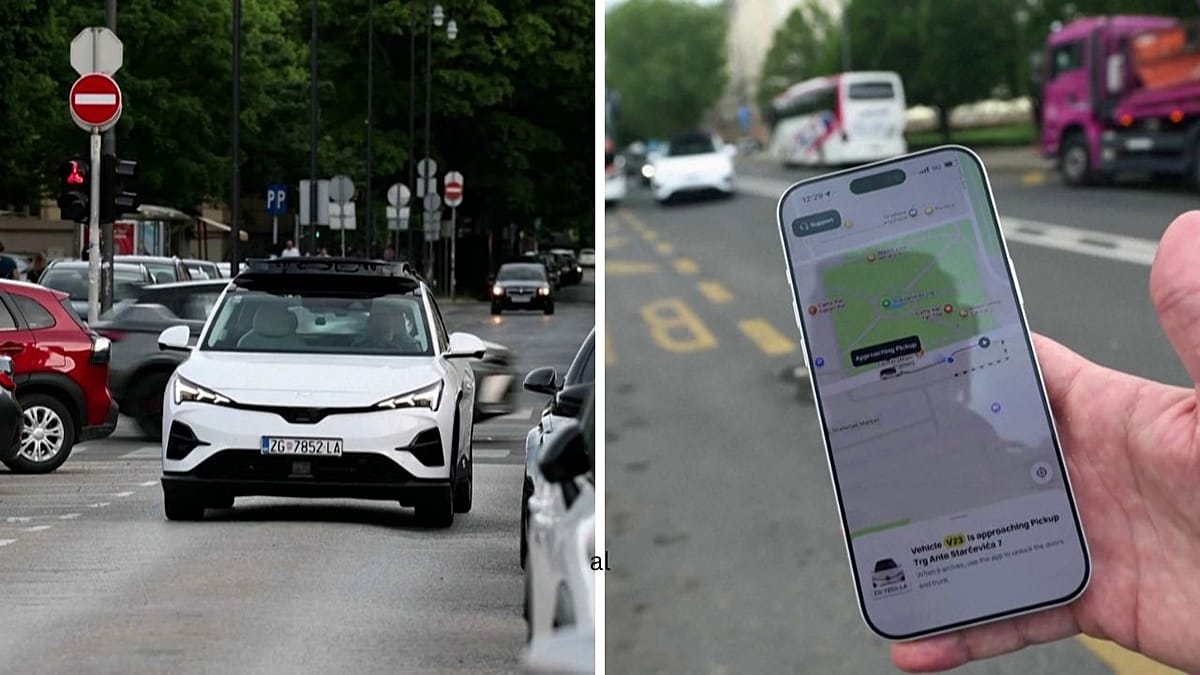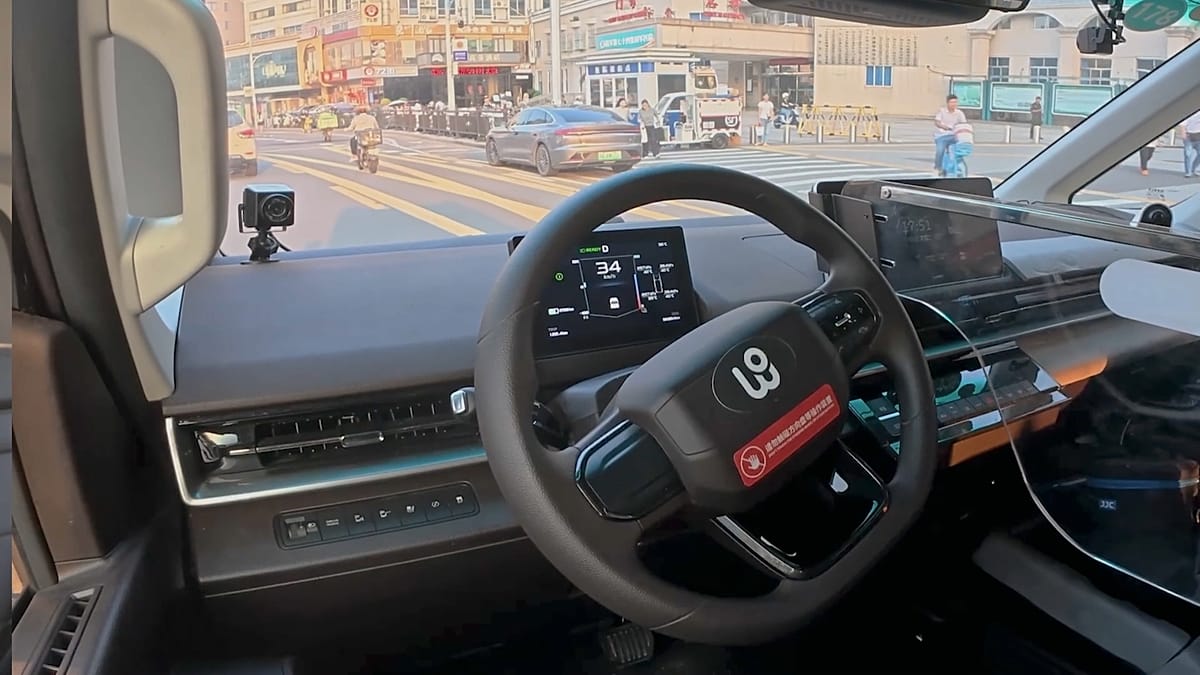
China's autonomous transport sector is shifting from pilot projects to commercial reality, with robotaxis now operating in Guangzhou and Shenzhen and drones delivering everything from coffee to medical supplies. The expansion marks a critical test of whether autonomous vehicles can move beyond controlled test zones and handle the complexity of busy urban environments.
In Guangzhou, WeRide has expanded its robotaxi service to cover more districts, a move that signals growing confidence in the technology. Li Yifan, Vice President of WeRide, told European Pulse that China's automotive and new energy vehicle industries provide a strong foundation for large-scale autonomous driving. "China's car industry and new energy vehicles lead the world – a strong hardware base for future large-scale autonomous driving," he said.
Drones take to the skies in Shenzhen
In Shenzhen, drones have become part of daily life. A park kiosk now receives coffee deliveries by drone, a convenience that impressed tourist Tyler Ng. "I think it's very convenient," he said.
But the more significant applications are in healthcare. LowAlt Technologies is testing drones that can deliver defibrillators and medicine, potentially cutting response times in emergencies. Meanwhile, Mengtai Aerolink is using drones to serve remote villages and islands, where traditional transport is slow or unavailable.
These developments are part of a broader Chinese push to scale autonomous transport, with companies racing to prove that the technology can be reliable and cost-effective outside of controlled environments. The challenge now is not just technical but operational: integrating autonomous vehicles into existing traffic, managing safety, and winning public trust.
For Europe, the Chinese progress offers both a benchmark and a warning. European cities and companies are also experimenting with autonomous vehicles, but the pace in China is faster, partly due to supportive regulation and heavy investment. As German auto suppliers pivot to drones and defence amid the car industry crisis, the contrast with China's aggressive scaling is stark.
The implications extend beyond transport. Autonomous vehicles generate vast amounts of data, raising questions about privacy and data governance. At the recent Shenzhen summit, Trump and Xi clashed on AI governance, highlighting the geopolitical dimension of these technologies. Europe, with its own digital regulations, will need to navigate these tensions while fostering innovation.
For now, the focus in China is on scaling. WeRide's expansion in Guangzhou is a sign that robotaxis are moving from novelty to utility. The company's confidence is echoed by other players in the sector, who see China's manufacturing base and urban density as advantages.
Yet challenges remain. Safety incidents, regulatory hurdles, and public acceptance are all potential stumbling blocks. The drone deliveries in Shenzhen, while impressive, are still limited in scope. Scaling to entire cities will require significant investment in infrastructure and software.
European observers are watching closely. The European Union has its own autonomous vehicle strategies, and cities like Berlin and Paris are testing similar technologies. But the scale of China's ambition is unmatched. As Berlin hosts Ukraine security talks, the contrast between European geopolitical preoccupations and China's focus on technological advancement is notable.
For European businesses, the Chinese model offers lessons in speed and scale. But it also raises questions about competitiveness. If China succeeds in deploying autonomous transport at scale, European companies may find themselves lagging in a sector that could reshape urban mobility and logistics.
The next few years will be crucial. China's autonomous transport push is not just about technology; it's about setting global standards. Europe, with its regulatory frameworks and industrial base, has the potential to be a major player. But it will need to act decisively.