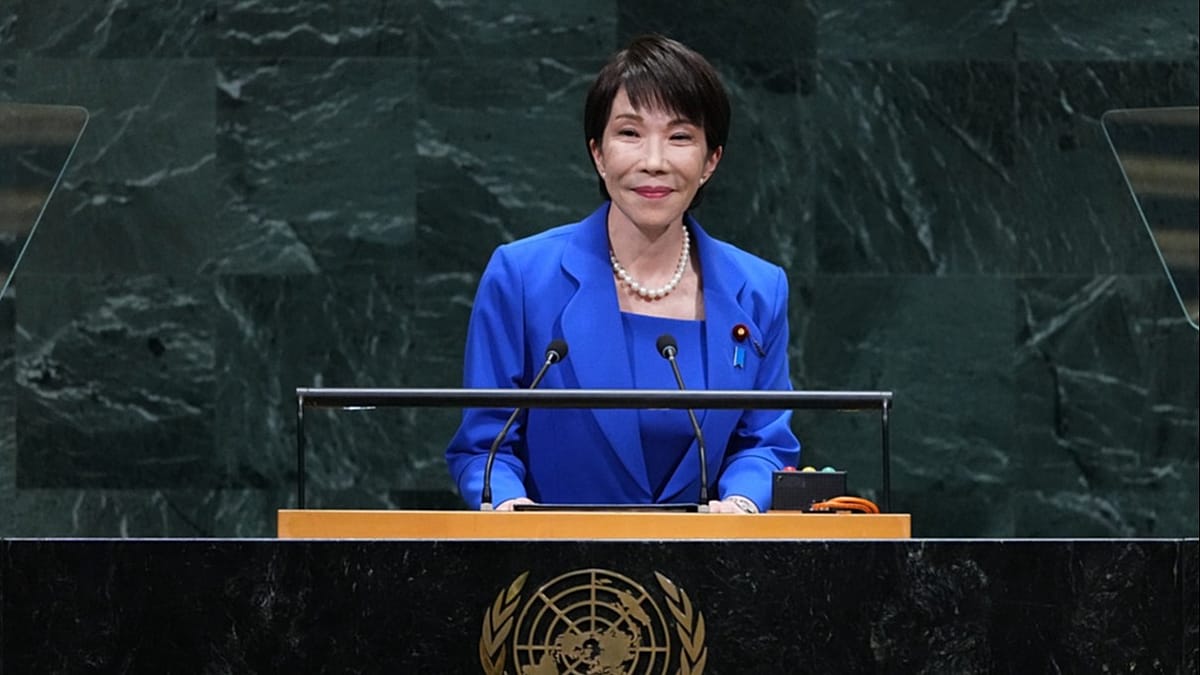
Japan has introduced stricter criteria for foreigners seeking permanent residency, as Prime Minister Sanae Takaichi delivers on the immigration reforms that helped her secure a commanding election victory in February. The new rules, which take effect in stages, require applicants to demonstrate an annual income above the national average and the ability to hold casual conversations in Japanese.
Application fees rose twentyfold on Thursday, climbing from ¥10,000 (about €56) to ¥200,000 (roughly €1,116). At an immigration office in central Tokyo, hundreds of people queued for hours hoping to complete their paperwork before the increase took effect. One 22-year-old US-born university student, Yujie Chono, told the AFP news agency in fluent Japanese that he had waited five hours to file his documents.
"I understand that over-accepting foreigners might dilute Japan's unique culture," Chono said. "But at the same time, given its low birth rate and aging population, Japan has to accept foreigners."
From vague guidance to hard thresholds
Previous guidelines set no specific benchmarks for income, pension contributions or language proficiency. Under the revised framework, candidates must show an understanding of Japanese social rules and demonstrate expected pension benefits equivalent to those of someone who has paid into the system for 30 years. The changes may deter some applicants but will not immediately force anyone to leave the country.
The permanent residency overhaul follows last year's move by the ruling Liberal Democratic Party to tighten rules for business manager visas, under which entrepreneurs who fail to meet new conditions will be required to depart. Taken together, the measures mark a significant shift in a country that has long relied on foreign labour while resisting the idea of permanent settlement.
Takaichi framed the policy as a matter of social cohesion. "As the number of foreign residents in Japan increases, the government is facing the fact that some citizens feel anxiety and a sense of unfairness," she wrote in an extended post on X, adding that she was pursuing "orderly coexistence" with foreign nationals.
Economic need versus political pressure
Japan's population is ageing rapidly and its labour shortages span sectors from construction to care work. Yet opposition to immigration has grown, amplified by social media and fuelled by false claims — including assertions that a large share of welfare payments goes to foreigners and that they are making Japanese streets less safe. Immigration became a central issue in last year's upper house election, which saw a sharp rise for the "Japanese-first" Sanseito party, which describes immigration as a "silent invasion".
Economists and many business leaders argue the opposite: that Japan must attract and retain more foreign workers to sustain growth and fund its pension system. The Nikkei business daily recently called for a change in approach. "Japan should stop viewing foreigners merely as a temporary labour force and instead promote their long-term settlement by expanding Japanese-language education and improving their treatment," the newspaper said in an editorial.
The debate mirrors tensions elsewhere. Across Europe, governments from the EU's border regime to national capitals are grappling with how to reconcile labour shortages with rising anti-immigration sentiment. Japan's tightening comes as its economy faces pressure on multiple fronts, including rising bond yields and the fiscal cost of an ageing society.
For now, the immediate effect is procedural. Applicants face higher costs and clearer hurdles, while the broader question — whether Japan can remain economically dynamic without embracing long-term immigration — remains unresolved.