The US-led coalition that spent more than a decade battling the Islamic State in Iraq formally concluded its mission on Wednesday, a milestone hailed by Baghdad and Washington alike even as questions mount over the influence of Iran-backed militias and the country's long-term stability.
Coalition troops first deployed to Iraq and Syria in 2014, after the jihadist group—known by its acronyms IS, ISIS, or ISIL—swept across large parts of both countries, committing mass atrocities and enslaving thousands of women and children. The group was territorially defeated in Iraq in 2017 and in Syria in 2019, but coalition forces remained to counter its residual cells and prevent a resurgence.
Under an agreement reached between the United States and Iraq in 2024, the mission was gradually wound down. US troops withdrew from bases across the country, consolidating their presence in the autonomous Kurdistan Region in the north. The final pullout was completed this week, with the last American forces departing Iraqi soil.
A 'decisive victory' or an uncertain future?
US President Donald Trump celebrated the withdrawal on social media, calling it "a victory for the United States, a victory for Iraq, and a decisive victory over ISIS." He added that he had "a choice to stay or to leave, and felt, without question, that it was time for America to go home!"
Iraqi Prime Minister Ali al-Zaidi, who took office this year with US backing, described the moment as the start of "a new phase... defined by Iraq's sovereignty, the strength of its institutions, and the readiness of its forces."
Yet the coalition's departure was not solely a US achievement. Kurdish Peshmerga fighters played a crucial role in the fight against IS, as did various Iraqi factions—including powerful pro-Iranian militias that have yet to disarm. The Iraqi government had hoped that the US withdrawal would remove the justification these groups have used to retain their arsenals, but many analysts fear the opposite: that the pullout could embolden them and drag Iraq deeper into the wider Middle East conflict.
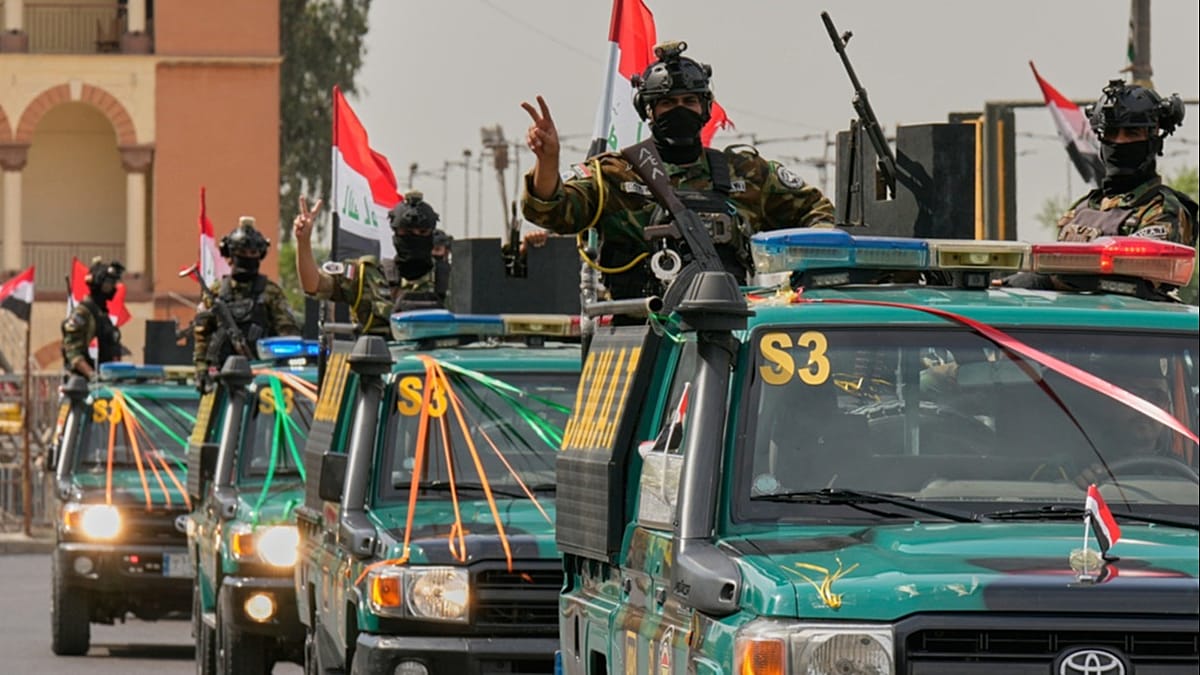
Hours after the US announcement, supporters of Iran-aligned factions gathered in a flag-draped square in Baghdad to celebrate. Speeches were delivered from a stage decorated with model drones, and a military spokesperson for Kataeb Hezbollah said the groups had been in talks with the government about "regulating" their weapons but had "not yet received a response." As such, he said, they were "not bound by any timeline or agreement" to surrender their arms and retained "the right to directly respond to any American or Zionist violation of Iraq's sovereignty."
Prime Minister al-Zaidi has vowed to ensure that armed factions hand over their weapons. His government initially set 30 September as a disarmament deadline but later withdrew it as negotiations continued. Several Iran-backed groups have refused to disarm, and senior politicians are now seeking a compromise. The factions' demands extend beyond the withdrawal of foreign troops to include an end to American political and economic interference in Iraq.
Kataeb Hezbollah has described the departure of "the occupation forces" as "a start towards achieving full sovereignty," but the group also issued a veiled threat to the government, warning that "a government that doesn't work for the good of its people will be brought down by all possible means."
Pro-Iranian militias have long demanded the exit of US troops, targeting them with drones and missiles over the years and drawing retaliatory strikes that killed several faction commanders. During the recent Middle East war that began with US-Israeli strikes on Iran, Tehran and its allies intensified attacks on US-led forces in the Kurdistan Region.
The end of the coalition mission comes at a time of heightened regional tension, with Iran warning that oil exports could be at risk and the EU expanding its Mediterranean naval mission to counter Russia's shadow fleet. The situation in Iraq remains fragile, and the coming months will test whether the country can maintain its sovereignty without the security umbrella that the US-led coalition provided.