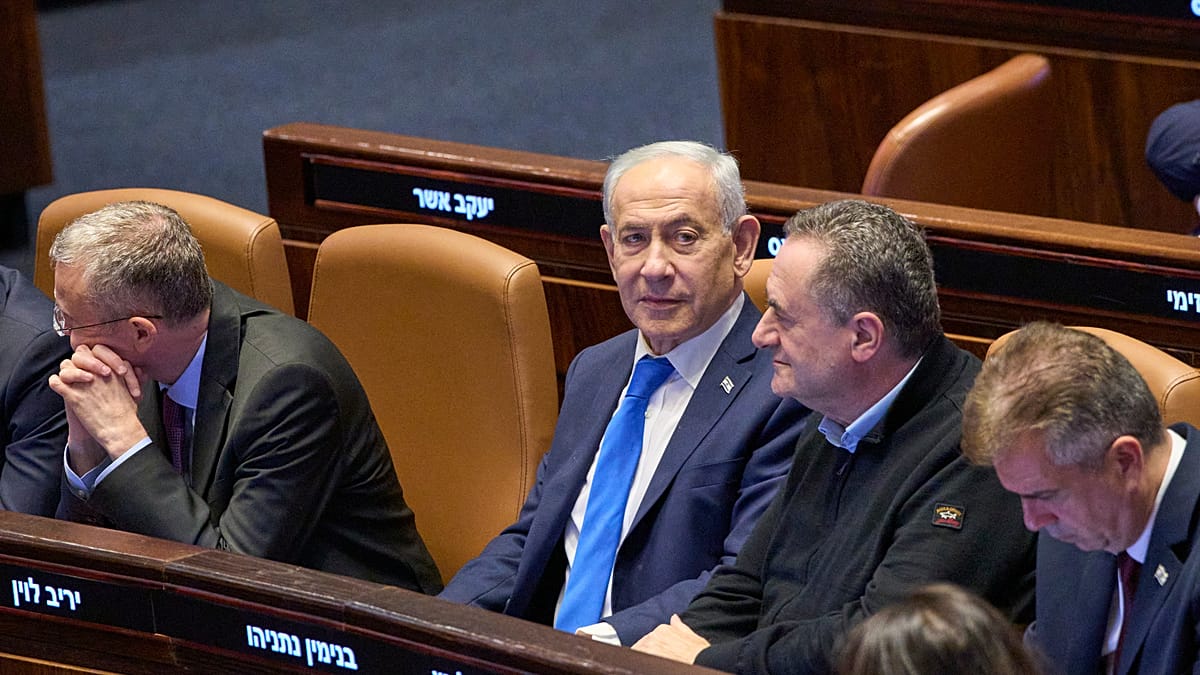
The long-running corruption trial of Israeli Prime Minister Benjamin Netanyahu took a surprising turn on Sunday when the Jerusalem District Court suggested that prosecutors should drop the most serious charge against him. In a rare intervention, the judges questioned the strength of the evidence in the so-called Case 4000, which alleges that Netanyahu used his official position to benefit the telecoms company Bezeq in exchange for favourable coverage on the Walla news website.
Case 4000 is the only one of the three cases against Netanyahu that includes a bribery charge, making it the most consequential. The court's comments, while not a formal acquittal, could significantly weaken the prosecution's position and reshape the political landscape in Israel, where coalition negotiations have been deadlocked since the 27 October election.
Judges question evidence and legal basis
In their written remarks, the judges pointed to inconsistencies in the testimony of Shlomo Filber, a former director-general of the Communications Ministry and a key state witness. They expressed doubt about whether the prosecution had proved a clear quid pro quo between regulatory decisions and coverage on Walla. The court also suggested that the conduct described in Case 2000, which involves alleged negotiations with Arnon Mozes, publisher of the Yedioth Ahronoth newspaper, may not constitute a criminal offence under Israeli law.
For Case 1000, which concerns allegations that Netanyahu accepted expensive gifts—including champagne, cigars, and jewellery—from wealthy businessmen, the judges recommended that prosecutors seek a negotiated settlement. They stressed that their comments were not a ruling on the merits of the case and that no charges have been formally dismissed.
Netanyahu has consistently denied any wrongdoing in all three cases since his trial began in May 2020. His legal team has welcomed the court's remarks, with his lawyer calling for criminal mediation to resolve the proceedings. Attorney General Gali Baharav-Miara said prosecutors would carefully review the judges' comments before deciding on next steps.
The timing of the court's intervention is politically sensitive. Israel has been unable to form a government since the election, with opposition leader Gadi Eisenkot holding the mandate to build a coalition. His four-party bloc controls only 48 of the Knesset's 120 seats, far short of the 61 needed for a majority. A weakening of the prosecution case could bolster Netanyahu's hand in negotiations and reduce one of the biggest legal uncertainties hanging over his political future.
For European observers, the case is a reminder of the complex legal and political dynamics in the Middle East, where judicial independence and the rule of law are under constant scrutiny. The outcome of Netanyahu's trial could have broader implications for regional stability and for Israel's relations with its European partners, which have often been strained over issues of democratic governance and human rights.
As the legal process unfolds, European capitals will be watching closely, particularly given the potential for renewed instability in the region. The court's suggestion to drop the bribery charge does not end the trial, but it marks a significant moment in a case that has already lasted more than four years. The prosecution now faces a difficult choice: whether to follow the judges' advice or press on with charges that may be difficult to prove.



