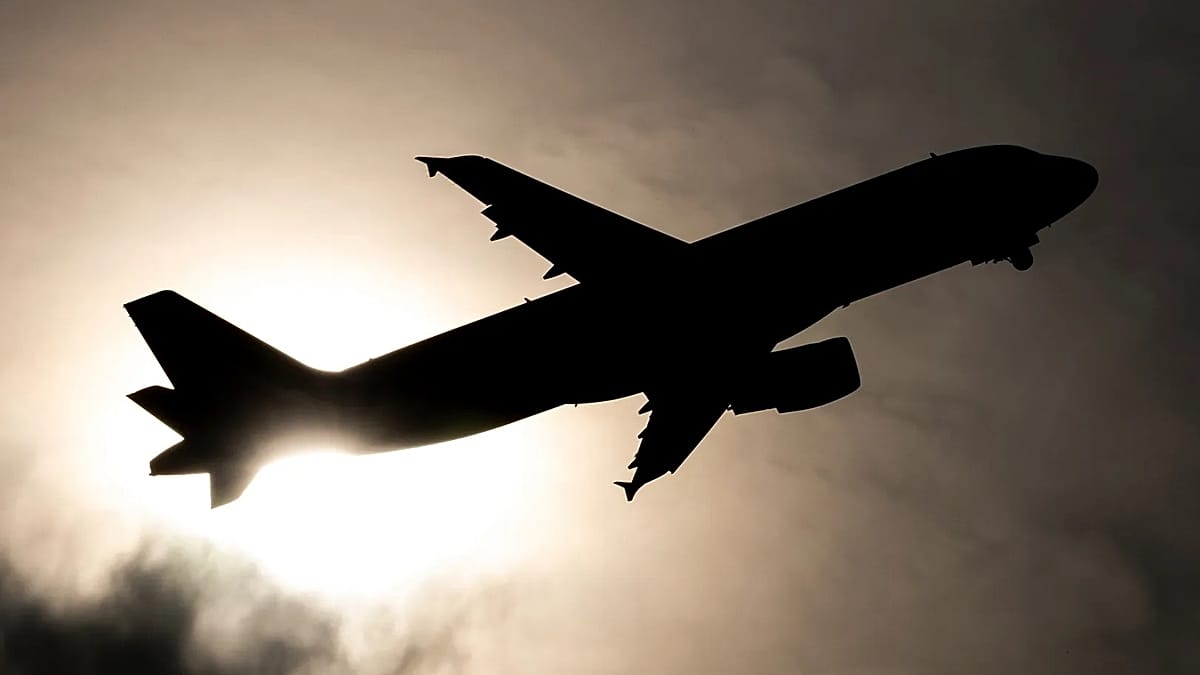
The escalating crisis in the Strait of Hormuz, through which roughly 40% of global commercial jet fuel transits, is driving up the cost of paraffin and squeezing airline margins. For travellers eyeing Spain this summer, the question is no longer merely about price but about feasibility: can you reach the Iberian Peninsula without boarding a plane?
The short answer is yes, but the practicality depends heavily on your starting point, your schedule, and your tolerance for longer journeys. As global shipping reroutes reshape trade corridors, the aviation sector is feeling the heat, and Spain—a country deeply dependent on air travel for both tourism and internal connectivity—is particularly exposed.
Iberia Holds the Line, but Low-Cost Carriers Struggle
Iberia's president, Marco Sansavini, sought to reassure the Madrid Leaders Forum on Tuesday. The airline will maintain its full summer schedule, avoid additional fuel surcharges, and keep its strategic investments through 2030 intact. “It’s not by chance,” Sansavini said, attributing the resilience to years of financial restructuring that allow Iberia to absorb shocks better than many rivals.
The scale of the challenge is stark. The total fuel bill for IAG, Iberia’s parent group, is projected to rise from €7 billion to €9 billion by 2026. Sansavini warned that even an immediate end to the conflict would not bring quick relief: “Production facilities take time to recover, supply contracts are not remade overnight, and the paraffin market does not work like the petrol market at a filling station.”
What Iberia can guarantee today, low-cost carriers with thinner margins cannot. Ryanair, EasyJet, and Lufthansa may be forced to reduce frequencies or raise fares, pushing budget-conscious travellers to seek alternatives.
Rail: Spain’s Unfinished Business
For European tourists, the train is the most logical substitute for short-haul flights—low emissions, comfortable, and efficient in the continent’s core. Yet Spain remains a “railway island.” The country’s high-speed network uses a different track gauge from the standard European one, a structural legacy that forces transshipments at the border or trains with adaptable axles.
Connections with France have improved: the international Ouigo between Madrid and Lyon, and Renfe-SNCF services linking Barcelona with Paris, are operational. But the offer is sparse compared to routes like Paris–Amsterdam or Brussels–London. From the UK, direct rail links to Spain do not exist. A journey from Germany, the Netherlands, or Scandinavia to Madrid involves hours that cannot compete with a two-hour flight. The EU’s proposed single-ticket system for cross-border rail could eventually ease planning, but it will not solve the gauge problem in the short term.
Ferries: Slow but Reliable
For northern Europeans with time and a taste for the sea, ferries offer a genuine alternative. Brittany Ferries operates routes from Portsmouth and Plymouth to Santander and Bilbao, with crossings of 24 to 35 hours. Not for the impatient, but ideal for those travelling with a car or family. The cost, especially with a cabin, is not negligible, but as flight prices rise, the gap narrows. Arriving with your own vehicle adds flexibility.
From North Africa, ferries between Tangier and Algeciras or Tarifa are well-established, particularly in summer for travellers making the overland journey from sub-Saharan countries or those living in northern Europe who prefer to skirt the Mediterranean. Cruise ships stopping at Spanish ports are another option, though they require returning to the vessel.
Buses: The Budget Champion
Long-distance bus operators, led by Flixbus, connect Spain with much of western Europe at fares often under €50. Routes include Paris–Barcelona, Amsterdam–Madrid, and Milan–Valencia. Journeys last 12 to 20 hours, but the price is hard to beat. This mode has grown fastest among young and budget travellers, and in a high-fare environment, it could absorb demand that airlines cannot capture.
Electric Cars: Feasible with Planning
For those in southern France or near the Spanish border, an electric car is already viable. From Germany or Belgium, the charging infrastructure on major corridors has improved enough to make the trip feasible, though it requires careful planning. The main hurdle is the density of fast chargers on less-travelled inland stretches, where range anxiety can still be a concern. Petrol or diesel cars remain an option, but fuel costs add up.
Why Spain Is Especially Vulnerable
The jet fuel crisis underscores a structural reality: Spain is more dependent on air travel than almost any other European country. Foreign tourism is a pillar of its economy, and the Canary and Balearic Islands have no real alternative to flights for millions of visitors. While Spain can refine and guarantee fuel for its own airlines, it cannot solve the problem of tourists arriving on foreign carriers facing their own supply difficulties. As Spain leads eurozone growth in 2026 despite risks, this vulnerability could become a drag on its recovery if air travel becomes prohibitively expensive.
For now, the options are clear: train where possible, ferry for the adventurous, bus for the budget-minded, and electric car for the prepared. But none will replace the convenience of a two-hour flight—and that is precisely the challenge Spain must confront.