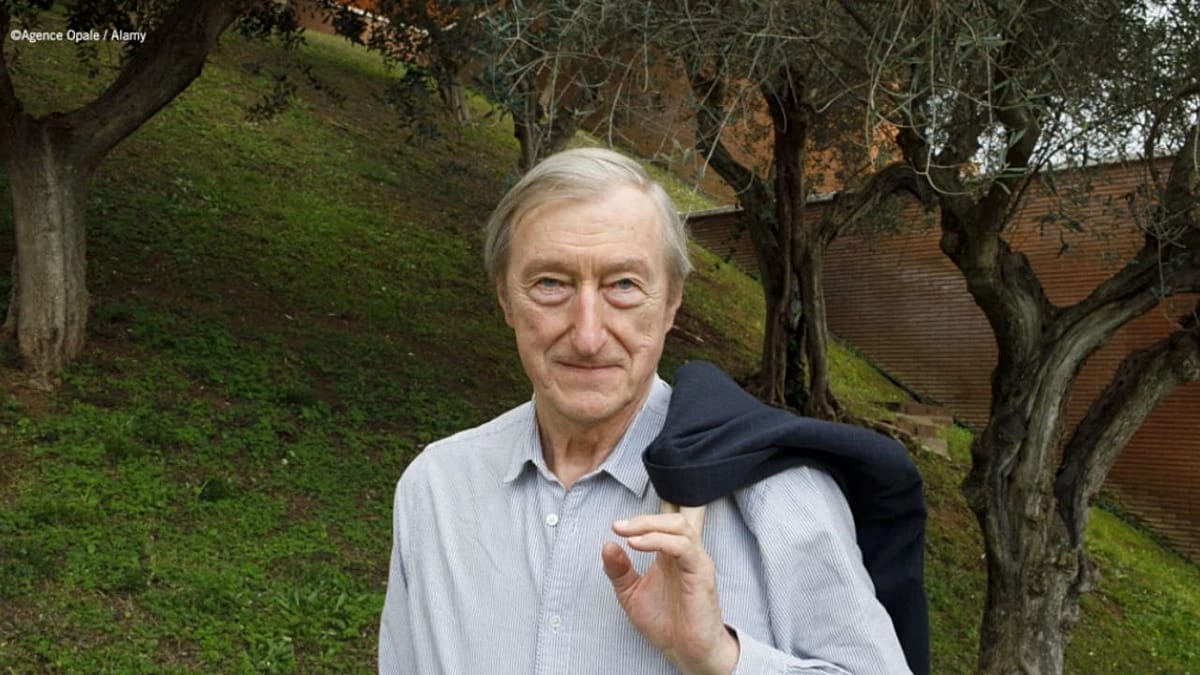
Julian Barnes, the British novelist who rose to prominence with Flaubert's Parrot, has declared that his forthcoming novel will be his last work of fiction. The announcement came during a launch event for his essay collection Farewells at Barcelona's Caixafòrum on 16 May, just months before he is due to receive Spain's Princess of Asturias Award for Literature on 23 October 2026.
Barnes, born in Leicester in 1946, will become the second British writer to receive the prize, following Doris Lessing in 2001. The award, which includes a Joan Miró sculpture, an official diploma, a badge, and €50,000, is one of the most prestigious in the Spanish-speaking world. This year's other laureates include Patti Smith in the Arts category and Studio Ghibli in Communication and Humanities, as reported by European Pulse.
A Career Defined by Blending Fiction and Essay
Barnes studied Modern Languages at the University of Oxford before working as a lexicographer, columnist, and literary and television critic. His breakthrough came with his third novel, Flaubert's Parrot (1986), which was shortlisted for the Booker Prize and established his signature style: a seamless blend of fiction and essay that set him apart from his contemporaries. He would wait 25 years to win the Booker, finally taking the prize with The Sense of an Ending in 2011.
Published in Spain by Anagrama, Barnes has also received France's Ordre des Arts et des Lettres and the E.M. Forster Award from the American Academy of Arts and Letters. His work has been translated into dozens of languages, cementing his reputation as a European writer of the first rank.
During the Barcelona event, Barnes confirmed that his next novel, titled Despedidas (Spanish for 'Farewells'), will be his last work of fiction. He stressed, however, that this does not mean he will stop writing altogether. 'I will continue with essays, criticism, and perhaps memoirs,' he said. 'But the novel form requires a stamina and a commitment that I no longer feel at 80.'
The author also revealed that he has been diagnosed with a 'manageable' form of blood cancer, a condition he described as 'something to live with, not to die from.' He added that the diagnosis had influenced his decision to step back from the demands of long-form fiction.
Barnes's announcement has resonated across the European literary world, where he is admired for his intellectual rigour and stylistic elegance. His work often explores themes of memory, history, and the unreliability of narrative—concerns that have made him a favourite among readers from London to Lisbon.
The Princess of Asturias Awards, presented annually in Oviedo, honour individuals and organisations worldwide for contributions to culture, science, and society. This year's Social Sciences prize went to the pro-European scholar Timothy Garton Ash, reflecting the awards' continued focus on European intellectual life.
Barnes's decision to end his fiction career marks the close of a remarkable chapter in European letters. His novels, from A History of the World in 10½ Chapters to The Noise of Time, have left an indelible mark on contemporary literature. As he prepares to receive his latest honour in Oviedo, readers across the continent will be reflecting on a body of work that has enriched the European literary landscape for nearly half a century.