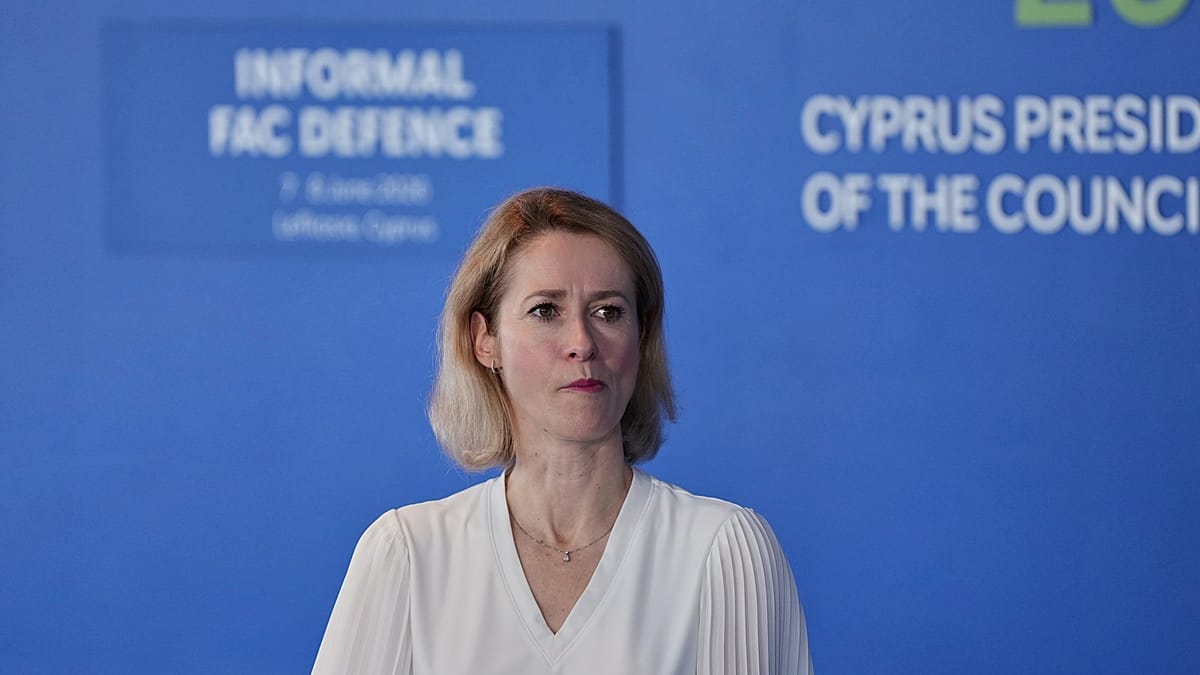
EU High Representative Kaja Kallas has urged Ireland to investigate whether alumina exports from a plant in County Limerick are indirectly fuelling Russia's war in Ukraine. Speaking in Dublin on Tuesday after talks with Irish Foreign Minister Helen McEntee and Prime Minister Micheál Martin, Kallas stressed that Europe must close all loopholes in its sanctions regime.
"Europe must close all loopholes, tighten sanctions enforcement and ensure our commitments are backed by deeds," Kallas said. "No European products should end up in drones and missiles that kill Ukrainian civilians."
The controversy centres on Aughinish Alumina, Europe's largest alumina refinery, located on the Shannon Estuary. Alumina, a white powder, is the key raw material for aluminium production, a lightweight metal widely used in military equipment, including missiles and drones that strike Ukrainian cities. According to a March investigation by the Organised Crime and Corruption Reporting Project (OCCRP), the plant sells alumina to Russian smelters owned by its parent company, United Company Rusal. Those smelters then supply aluminium to a trader that provides the metal to sanctioned Russian defence manufacturers. The weapons produced by these firms have been used to kill civilians and bombard infrastructure in Ukraine, the OCCRP reported, though the investigation traced Irish alumina to the Russian trader but not to a specific final product.
Kallas's visit came just hours after the European Commission unveiled its 21st sanctions package against Russia, targeting oil sales, banks, crypto firms, fisheries, and military personnel. Notably, alumina was excluded from the new measures, even though the EU has already banned exports of primary aluminium and refined aluminium goods to Russia. Asked why alumina was left out, Kallas acknowledged that some member states supported a ban but that unanimity remained elusive. Ukraine has also called for swift action on the raw material.
"I think this case shows that we should also look into this," Kallas said. "We have to be creative in coming up with the next sanctions because our aim is that this war will end, and it will also end if the aggressor runs out of either money or material to continue."
Ireland's EU Presidency Under Scrutiny
The timing of the allegations is particularly delicate for Ireland, which is less than a month away from assuming the rotating presidency of the EU Council. McEntee confirmed that an investigation into Aughinish Alumina has been launched and promised to share the findings with the European Commission once concluded. "I've made it very clear that our support remains firmly with Ukraine," McEntee said. "We will ensure that any decisions that need to be taken to put pressure on Russia will have the full support of Ireland."
Kallas expressed confidence in the Irish government's probe. "It's important that we get the facts straight," she said.
The controversy has generated damaging headlines for Dublin. The OCCRP report revealed that alumina exports to Russia accounted for about 45% of Aughinish's sales in 2025, with a similar share expected by the end of 2026. The plant is owned by United Company Rusal, a Russian aluminium giant that has faced Western sanctions since the 2014 annexation of Crimea, though its current ownership structure remains complex.
Ireland's position is further complicated by its reliance on foreign direct investment and its reputation as a transparent, rule-of-law state. The Aughinish case echoes broader concerns about EU sanctions enforcement, where loopholes allow dual-use goods and raw materials to reach Russia via third countries or corporate structures. Ireland faces scrutiny over alumina exports to Russia amid EU presidency, as the bloc seeks to tighten its sanctions regime.
The issue also highlights the challenge of targeting Russia's military-industrial complex without disrupting legitimate trade. Alumina is not a finished weapon component, but its role in aluminium production makes it a strategic material. The EU's 21st sanctions package focuses on oil cap and shadow fleet, but Kallas's remarks suggest that raw materials like alumina may be next on the agenda.
For now, the ball is in Ireland's court. The investigation's outcome could set a precedent for how the EU handles similar cases, especially as member states grapple with the economic and political costs of fully enforcing sanctions. As Kallas noted, closing loopholes requires not just political will but also concrete action. "Europe must close all loopholes," she reiterated, "and ensure our commitments are backed by deeds."