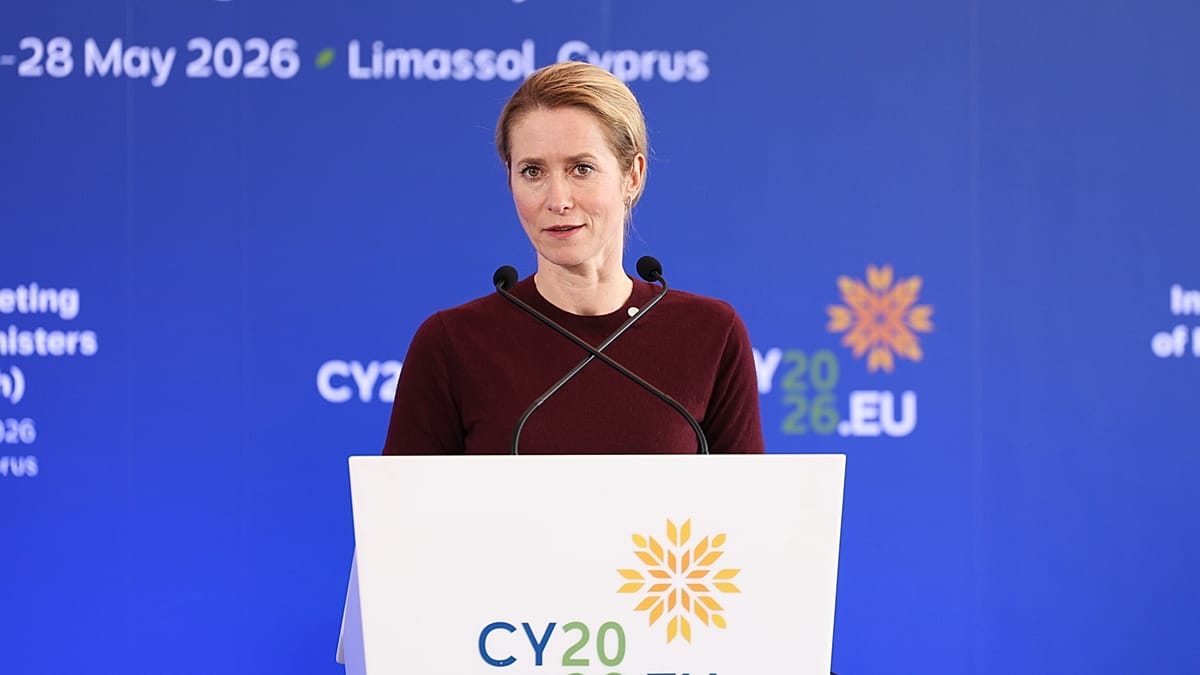
LEMESOS, Cyprus — The European Union will not position itself as a neutral mediator in the conflict between Ukraine and Russia, nor will it attempt to supplant the United States in peace negotiations, EU High Representative Kaja Kallas declared on Thursday.
Speaking after an informal meeting of EU foreign affairs ministers in Lemesos, Cyprus, Kallas addressed the ongoing debate over whether the bloc should appoint a special envoy for talks with Moscow. The issue has sharply divided member states and sparked intense speculation about potential candidates.
“One thing is very clear: Europe will never be a neutral mediator between Russia and Ukraine, because we are on Ukraine's side and we are defending our own security interests,” Kallas said. “We can't be neutral, treating them equally, because we have been clearly on Ukraine's side.”
Kallas argued that Ukraine needs the EU to help rebalance negotiations and extract concessions from Russia. The US-led peace process has stalled since the outbreak of the conflict in the Middle East, which has diverted Washington's diplomatic focus. However, Kallas stressed that the EU is not stepping in to replace the United States.
“All our efforts have to be complementary to US efforts. And the ministers were also very clear about this,” she explained. “We are not coming in instead of the United States, but we are actually addressing the issues that they haven't been addressing in these talks.”
Ukraine's Call for Concrete Steps
Kyiv has grown increasingly frustrated with the stalemate in negotiations and has urged European leaders to take a more hands-on approach. Ukrainian Foreign Minister Andrii Shyiiba, who attended the meeting in Cyprus, called for the EU to focus on “precise, doable steps,” such as demilitarising the Zaporizhzhia nuclear plant and establishing humanitarian corridors.
“We do not need to start by choosing a person or a group to lead the effort,” Shyiiba said. “We need to clarify the mandate, and it must represent one united European voice.”
Amid the exasperation, US Secretary of State Marco Rubio suggested the peace process might soon resume after weeks of inactivity. “The US stands ready and prepared to help do whatever we can to help facilitate the end of this war, and hopefully the opportunity will present itself at some point,” Rubio said.
Thursday's meeting significantly toned down the buzz over appointing a special EU envoy for direct talks with Russia. Finnish President Alexander Stubb, European Council President António Costa, former Italian Prime Minister Mario Draghi, and former German Chancellor Angela Merkel have all been suggested for the high-risk role. Instead, Kallas emphasised the need for the EU to articulate a common position outlining the concessions Russia must make, the conditions to be met, and the red lines that cannot be crossed.
These include the non-recognition of Russian-occupied territories; cessation of sabotage operations, cyberattacks, election interference, and airspace violations; payment of reparations; return of abducted Ukrainian children; release of journalists; and withdrawal of Russian troops from Georgia and Moldova. Limitations on Russia's ability to rearm should also be considered, Kallas said, particularly if a peace deal caps the size of the Ukrainian army, as earlier drafts hinted.
The High Representative has compiled these concessions in a confidential document under discussion since February, though it remains unclear whether all 27 member states will endorse it unanimously.
Looming over the conversation is Russia's relentless bombardment of civilian areas in Ukraine. Last weekend, a large-scale attack on Kyiv destroyed residential buildings, supermarkets, energy facilities, and even the Chornobyl Museum. The assault was followed by a Kremlin warning that foreign citizens, diplomats, and international organisations should leave Kyiv “as soon as possible.” EU countries issued summons in protest of what they perceived as intimidation.
“The dynamics of the war are shifting in Ukraine's favour. Russia is on the back foot militarily, economically but also diplomatically. But as the latest strikes on Kyiv have shown, Russia still shows no genuine interest in peace,” Kallas said.
For more on the intensifying attacks, see Russian Drone Barrage Hits Kharkiv Residential Area as Attacks Intensify. The debate over the envoy role has also drawn warnings from EU ministers, as reported in EU Ministers Warn Against Falling Into Russia's Trap Over Envoy Debate. Meanwhile, Ukraine's former prime minister has cautioned that any EU envoy sent for talks could be recruited by Putin, detailed in Ukraine's Ex-PM Warns Putin Will Try to Recruit Any EU Envoy Sent for Talks.