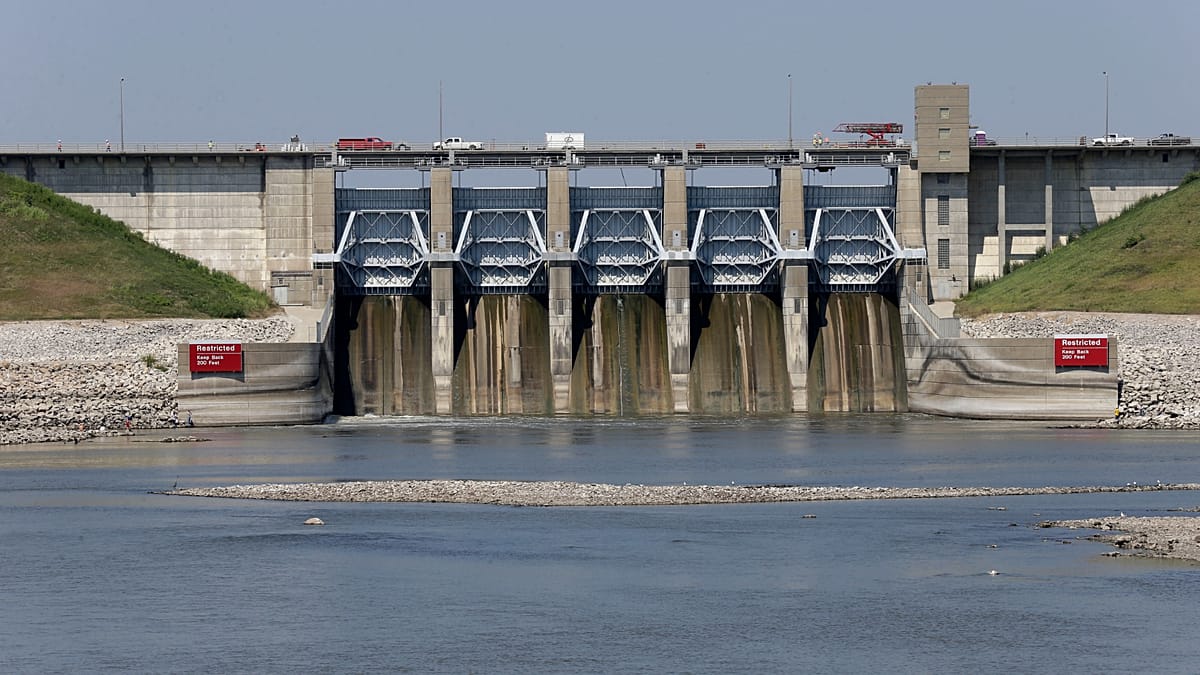
In a significant step for regional energy cooperation, Kazakhstan, Kyrgyzstan, and Uzbekistan have agreed to jointly build a hydropower plant with a capacity of nearly 2,000 MW on the Naryn River in Kyrgyzstan. The project, known as Kambarata HPP-1, is expected to supply enough electricity for up to 1.5 million homes, roughly equivalent to the output of two large nuclear reactors.
Kyrgyz President Sadyr Japarov announced the initiative at the Regional Ecological Summit in Astana on 23 April, calling it a project of strategic importance. “Negotiations are now actively under way to finalise an intergovernmental agreement, with support from the World Bank and other financial institutions,” he said. The next round of talks is scheduled for April 2026 in Tashkent, Uzbekistan.
Kyrgyzstan’s Broader Renewable Push
Beyond the flagship Kambarata plant, Kyrgyzstan is also advancing smaller hydropower projects. In 2026, the country plans to commission 13 small hydropower plants with a combined capacity of over 81 MW. At the same time, it is developing solar and wind projects totalling 6,050 MW. Last year, the country’s first major solar plant—a 100 MW facility in the Chuy region—came online.
These efforts reflect a broader trend across Central Asia, where water and energy security are increasingly intertwined. The region’s glaciers, particularly in Tajikistan, supply more than 60% of its water resources, making hydropower a natural focus. Tajikistan already generates up to 98% of its electricity from renewables and aims to become a fully “green” nation by 2037, according to Energy Minister Daler Juma.
Kazakhstan’s Nuclear Return
Kazakhstan, meanwhile, is diversifying its energy mix. The country currently operates 162 renewable energy facilities, with green energy accounting for 7% of its total output as of 2025. This year, it will commission 10 new projects, including four wind farms, five solar plants, and one hydropower plant. At the Astana summit, Prime Minister Olzhas Bektenov signed an agreement with a Chinese company to build a 500 MW wind farm in the Karaganda region, an investment worth $645 million (€551 million) that is expected to cut annual CO₂ emissions by 1.3 million tonnes.
Kazakhstan also holds the world’s largest uranium reserves, supplying around 40% of global demand. President Kassym-Jomart Tokayev confirmed the country’s return to nuclear energy, following a 2024 referendum. “We are currently working on a project to build our first nuclear power plant,” he said. Three nuclear facilities are planned, developed by China’s National Nuclear Corporation and Russia’s Rosatom. The move revives a Soviet-era legacy: the BN-350 fast-neutron reactor once operated in Aktau on the Caspian Sea.
Uzbekistan’s Solar and Waste-to-Energy Ambitions
Uzbekistan is taking a different path, focusing on solar and wind rather than hydropower. The country already operates around 15 solar plants and 5 wind farms, and President Shavkat Mirziyoyev announced that Uzbekistan has met its Paris Agreement target of a 35% emissions reduction, setting a new goal of 50% by 2035. “Around 30% of Uzbekistan’s energy is generated from green sources, with that expected to exceed 50% by the end of the decade,” he said.
Uzbekistan is also investing in waste-to-energy technology, planning 11 incineration plants that will process up to 5.5 million tonnes of waste annually and generate over 2.2 billion kWh of electricity. At the summit, Mirziyoyev proposed a unified investment portfolio for climate projects across Central Asia, aiming to replace fragmented initiatives with a coherent regional strategy.
Turkmenistan’s Gradual Shift
Turkmenistan, rich in natural gas, has been slower to adopt renewables despite more than 300 sunny days per year. A hybrid solar and wind plant with a capacity of 10 MW is under construction in the Balkan province, but the country’s energy sector remains heavily reliant on fossil fuels.
The Kambarata HPP-1 project, along with the broader renewable expansion across Central Asia, signals a growing willingness among these nations to collaborate on energy infrastructure. For European investors and policymakers, this trend offers both opportunities and challenges, as the region seeks to balance economic growth with environmental commitments. The World Bank’s involvement underscores the international interest in supporting these transitions, which could reshape energy flows and trade dynamics across the continent.