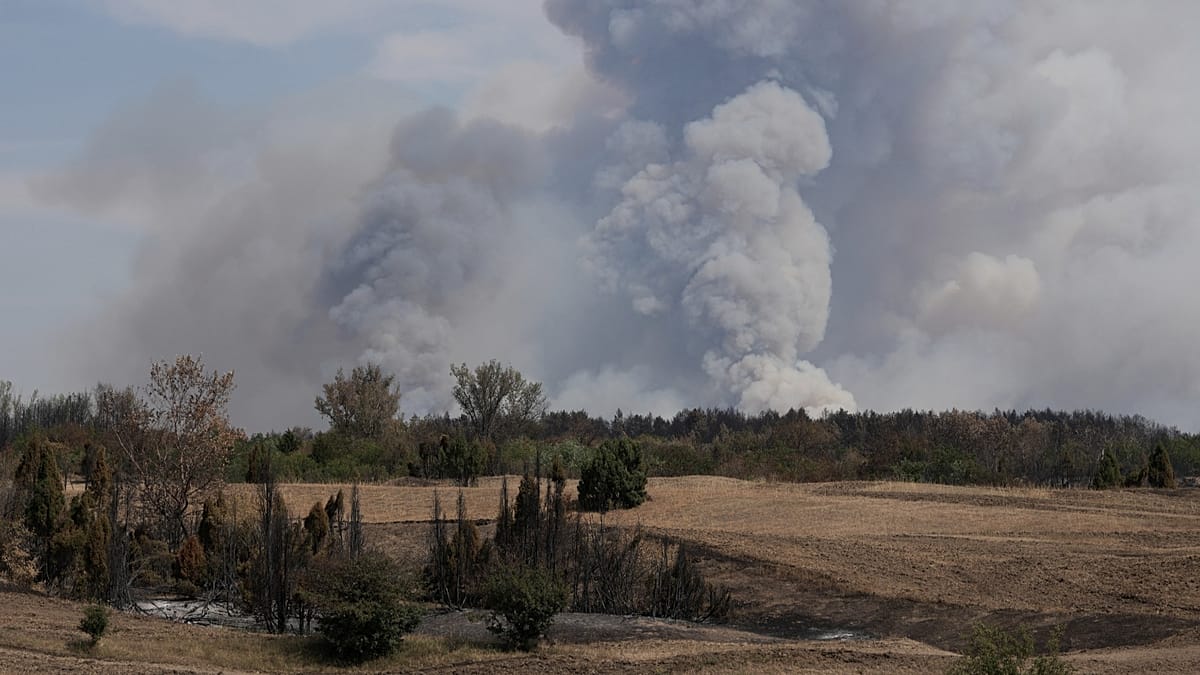
A wildfire that has been raging for weeks through a vast nature reserve in eastern Serbia forced the evacuation of a small hamlet on Thursday, as emergency crews struggled to contain the blaze amid a return of extreme heat across the Balkans.
The fire, burning since early August in the Deliblatska Peščara forest reserve, about 60 kilometres east of Belgrade, has consumed large tracts of pine and undergrowth. On Thursday, with temperatures reaching 39°C in parts of the country, state broadcaster RTS reported that a settlement on the reserve's edge was evacuated after strong winds pushed flames toward homes.
Interior Minister Ivica Dačić acknowledged the severity of the situation. “The situation remains difficult,” he said, though he noted that no damage to property had been reported so far.
An Ilyushin Il-76 waterbombing aircraft, capable of carrying 42,000 litres of water, arrived from Russia late on Wednesday following a request from Belgrade. Journalists watched as the plane made multiple passes over the fire on Thursday afternoon, dousing parts of the blaze while local residents looked on. Despite the aerial assault, Dačić warned that the fire remained dangerous.
“Few people truly grasp the seriousness of the situation, due to the sand, the heat and the extreme temperatures,” he said.
Balkan heatwave returns
Meteorological warnings for extreme conditions have been issued across most of the Balkans, as authorities brace for a return of the sweltering heat that has gripped Europe this summer. The region has seen dozens of fires in recent days, stretching emergency services from Croatia to North Macedonia.
The Serbian blaze is part of a broader pattern of wildfires across the continent. In neighbouring Hungary, the Danube's dropping water levels have forced emergency measures to keep the Paks nuclear plant running, while wildfires have forced evacuations in Germany and France. Earlier this summer, Spain and France battled blazes that burned 17,000 hectares in Aragon, and Portugal deployed over 2,000 personnel to fight its own fires.
The European heatwave has already contributed to thousands of deaths, and scientists attribute the increasing frequency and intensity of heatwaves to human-caused climate change. The Deliblatska Peščara, often called the “European Sahara” for its sandy terrain, is particularly vulnerable to fire under such conditions.
Local authorities have urged residents to remain vigilant and follow evacuation orders. The hamlet's residents were moved to safety, but the fire continues to burn out of control in parts of the reserve, which is home to rare species and is a popular destination for hikers and nature enthusiasts.
As the heat persists, the risk of new fires remains high. The Serbian government has called for international assistance, and the Russian waterbomber is expected to continue operations in the coming days. However, officials caution that the combination of sand, heat, and wind makes the fire unpredictable and difficult to extinguish.