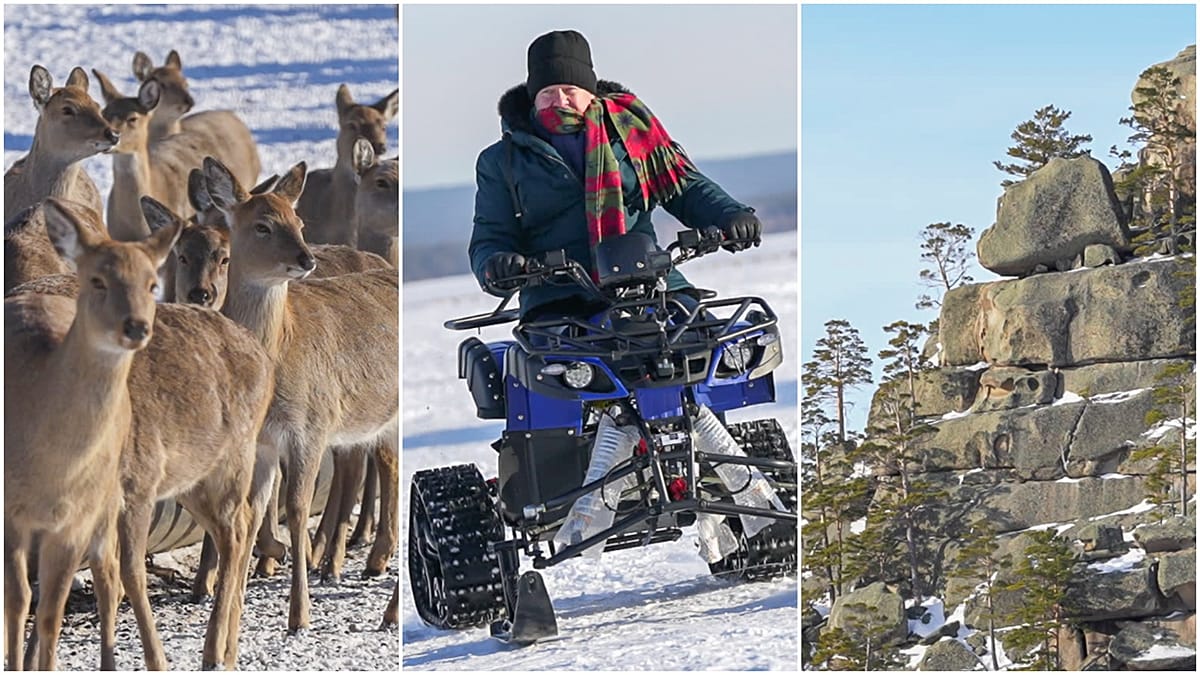
In the vast northern steppes of Kazakhstan, roughly three hours from the capital Astana, lies Burabay State National Natural Park—a dramatic landscape of forested mountains and fourteen lakes that emerges like a mirage from the flat expanse. This protected area, part of the UNESCO World Network of Biosphere Reserves, spans a territory comparable in size to a small European nation and hosts over 300 animal species. For residents of Astana, it serves as a primary retreat from urban life, welcoming up to 1.5 million visitors each year and ranking among Kazakhstan's top three tourist destinations.
A Landscape Shaped by Myth
The park's striking geology, featuring numerous capes and rock formations rising from the water, is intertwined with local folklore. The most famous, Zhumbaktas, is a mushroom-shaped rock whose name translates to 'Unresolved Riddles' or 'The Sphinx'. The very name Burabay is said to derive from a legendary white camel named Bura, which according to myth protected the local people before being mortally wounded by poachers and retreating into a lake, where it is believed to reside still.
Another tale speaks of Okzhetpes, or 'Unreachable to Arrows', a cliff where a captive woman of exceptional beauty is said to have challenged her captors to strike her handkerchief with an arrow to win her hand. These stories are not mere relics but form part of the cultural texture that visitors encounter alongside the physical terrain.
Winter's Allure and Wellness Tourism
During the long winter, when temperatures can plunge to -40°C, the frozen lakes and snow-draped forests become a hub for activity. Visitors can ride snowmobiles, embark on horse, reindeer, or dog-drawn sleigh rides, try ice-fishing, or hike through the silent woods. The region has also cultivated a significant niche in medical and wellness tourism, with several sanatoriums offering therapies. "We have a quite developed medical tourism here," confirms Andrey Podgurskiy, Head of the Akmola Region Tourism Department. "Among them are 14 recreational or medical centers for children. And in that, we are the leaders in Kazakhstan."
This focus on health extends to local agriculture. Farms around the lakes breed Altay deer, known as maral, prized for the purported healing properties of their spring antlers. The blood-rich antlers, containing 13 amino acids, are used in traditional medicines and baths believed to alleviate neurological conditions, skin diseases, and osteoporosis. "Tourists can come here and see our deer," says deer farm manager Radik Ashymov. "The most important thing is that people breathe fresh, clean air, the air here is without pollution." Many such farms now offer expanded experiences, including mini-zoos, meals in traditional Kazakh yurts, and spa treatments.
Extreme Sports and Seasonal Challenges
Despite the harsh cold, organized events on the ice are growing. The recent "Burabay Ice" race, organized by the group Extreme Athletics, attracted over a thousand participants from 15 countries to run 7, 15, or 21 kilometers across a frozen lake in -15°C winds. "You can only run over a lake in winter," notes organizer Pavel Tencer, highlighting the unique appeal. The park's management is actively developing diverse tourism strands, from agro-tourism to sports and eco-tourism, with a calendar of ice-based events in winter and water activities in summer.
While the main village of Burabay offers a variety of dining options—from national dishes like beshparmak and plov to international cuisine—many terrace-based restaurants close during the coldest months. The nearest substantial towns, Schuchinsk and Kokshetau, provide health and emergency services.
Accessibility has greatly improved. A modern highway with a 140 km/h speed limit and the new "Burabay Express" train service, featuring modern carriages, connect the park to Astana in just under three hours, facilitating its role as a major recreational hub. This development mirrors broader regional trends in infrastructure and tourism investment seen across Central Asia, a region of growing strategic interest to European energy and foreign policy. As highlighted by recent diplomatic movements, regional cooperation on resources and connectivity is intensifying.
For the informed European traveler, Burabay presents a destination where extreme natural beauty, adventure, and ancient narratives converge, offering a starkly different but deeply compelling seasonal escape. Its evolution from a local sanctuary to an internationally promoted resort underscores the dynamic changes reshaping tourism and cultural exchange across the Eurasian continent.