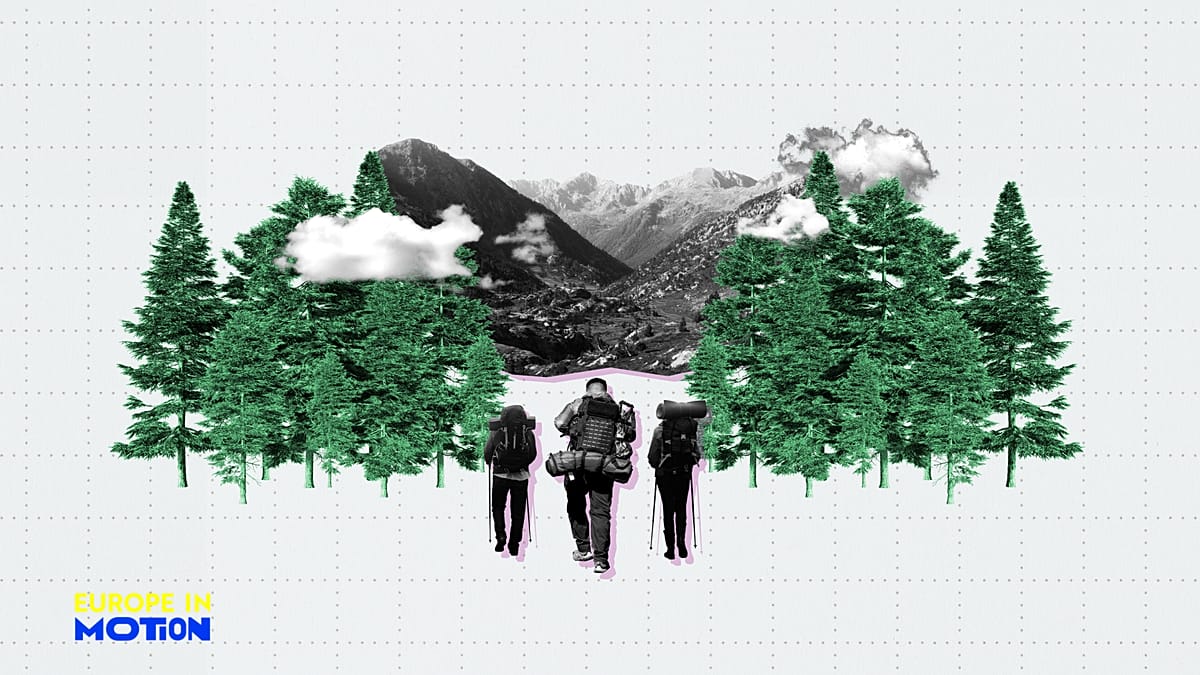
For travellers seeking genuine wilderness, a new analysis has identified Europe's most pristine national parks. The ranking, compiled by the British cycling tour website Love Velo, evaluates 75 protected areas across the continent based on criteria including the number of protected zones, biodiversity levels, and the absence of artificial light pollution. The results spotlight destinations where nature remains largely undisturbed.
Top of the Wilderness Rankings
Securing the top position is Bulgaria's Rila National Park. Situated at an average altitude of 1,400 metres, the park contains 28 distinct protected areas. Its most famous feature is the Seven Lakes, a series of glacial basins set within dense emerald-green pine forests. The park's rugged mountain terrain and remote trails also make it a challenging destination for cyclists.
In second place is Spain's Sierra Nevada National Park, a landscape where African and European ecosystems converge. The park's extreme elevation gradient allows for a remarkable journey from snow-capped peaks to Mediterranean beaches within roughly a hundred kilometres. This topography offers cyclists both gentle valley routes and demanding high-altitude ascents.
Slovenia's Triglav National Park ranks third. A hub for adventure, it offers white-water rafting on the 138-kilometre Soča River and extensive hiking trails through the Julian Alps. Following closely in fourth is another Spanish entry, the National Park of Cabañeros in Castilla-La Mancha. Though smaller, it is a biodiversity hotspot, home to over 220 bird species including the endangered Spanish imperial eagle and the black vulture. The park is considered one of Europe's finest remaining examples of Mediterranean woodland and scrubland.
Austria's Hohe Tauern National Park completes the top five. Encompassing 185,600 hectares, it is the largest national park in the Alps and a central European giant. It is dominated by more than 300 glaciers spread across peaks exceeding 3,000 metres, including Austria's highest, the 3,798-metre Grossglockner.
Nordic Scale and Alpine Heights
When it comes to sheer size, the Nordic countries are unsurpassed. Finland's Urho Kekkonen National Park (255,100 hectares) and Lemmenjoki National Park (285,000 hectares) rank ninth and thirteenth respectively. They are dwarfed, however, by Sweden's vast protected areas: Fulufjället National Park spans approximately 38 million hectares and Abisko National Park nearly 8 million. A defining characteristic of these northern parks is the total lack of artificial light, offering visitors unparalleled opportunities for stargazing far from urban glow.
For altitude enthusiasts, France and Italy are premier destinations. Each country boasts two national parks with average elevations above 2,000 metres: France with Parc National de la Vanoise (2,378m) and Parc National des Écrins (2,056m), and Italy with Parco Nazionale del Gran Paradiso (2,135m) and Parco Nazionale dello Stelvio (2,041m).
Conservation in a Pressured Landscape
Germany placed six parks in the top 75, including Berchtesgaden, Harz, and the Black Forest (Schwarzwald). The report notes these parks were slightly penalised in the ranking due to a larger human footprint compared to more remote reserves.
The analysis underscores the growing pressures facing Europe's natural sanctuaries, from overtourism to the impacts of climate change. In response, the European Union has enacted significant legislation. The Nature Restoration Law, which entered into force in August 2024, represents a landmark shift. It is the bloc's first regulation that legally obliges member states not merely to protect, but to actively restore degraded ecosystems. This legal framework is part of a broader European push to safeguard biodiversity, a mission that sometimes intersects with other policy areas, such as when new governments review past projects for their environmental and fiscal impacts.
The ranking serves as both a guide for responsible travellers and a reminder of the continent's fragile natural heritage. It highlights the quiet corners of Europe where wilderness still thrives, from the glacial lakes of Bulgaria to the star-filled skies of Swedish Lapland.