Kazakhstan’s President Kassym-Jomart Tokayev has arrived in Brussels for a strategic visit aimed at deepening ties with the European Union. The Central Asian nation, which borders both Russia and China, is positioning itself as a dependable partner for energy and critical raw materials while opening new avenues in artificial intelligence, logistics, and green technologies.
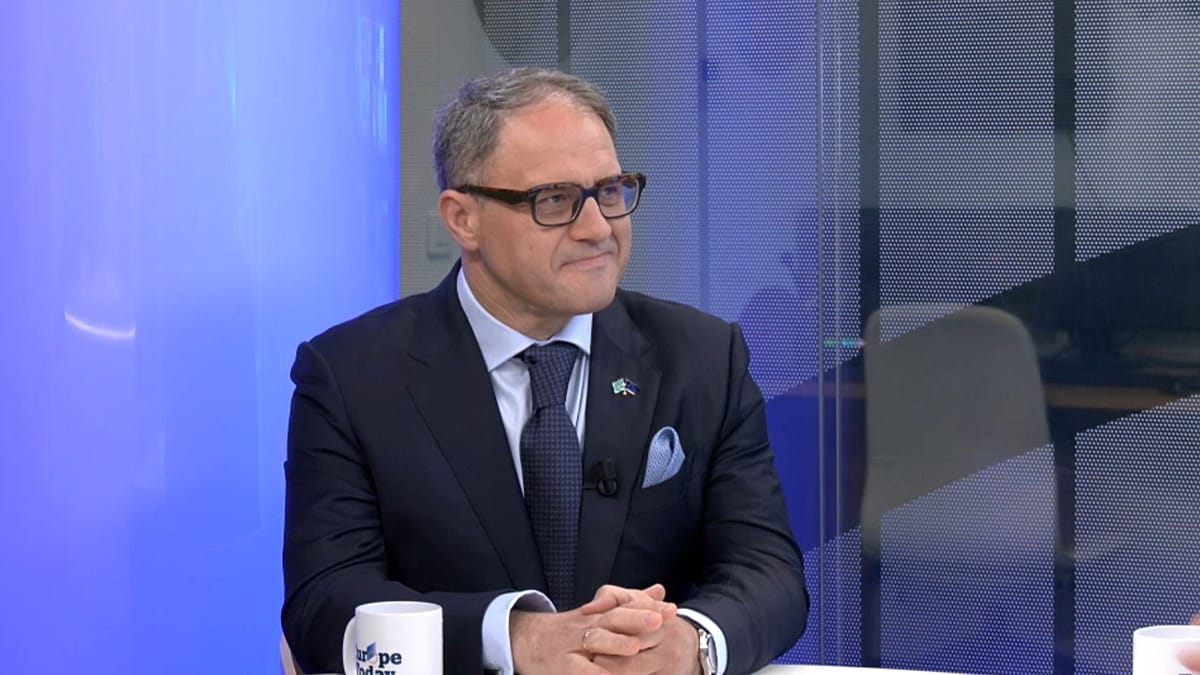
“We are in the heart of Eurasia. We border Russia, we border China, but we would like very much to strengthen our mutually beneficial ties with the European Union,” Kazakhstan’s Ambassador to the EU, Roman Vassilenko, told Euronews in an exclusive interview. He described the EU as one of his country’s “key strategic partners globally” and stressed that despite existing cooperation, “we can do much more.”
Tokayev’s visit comes as the EU and Central Asia deepen engagement, with Brussels increasingly looking to diversify its supply chains and reduce dependence on Russia. Kazakhstan already supplies around 65 million tonnes of crude oil to Europe annually, making it the bloc’s third-largest provider. Vassilenko said that figure could rise to roughly 100 million tonnes within four to five years, pending investment in production and transport infrastructure.
Critical minerals and green hydrogen
Beyond oil, Kazakhstan is pitching itself as a key partner in critical raw materials. The country produces 21 of the 34 minerals listed as strategic under the EU’s Critical Raw Materials Act. Rather than simply exporting these materials, Astana wants European companies to invest in local processing and technology transfer. “You bring investment and technologies. You not only extract but process critical raw material in Kazakhstan, and we both reap benefits from that,” Vassilenko said.
One major project has already been designated a strategic initiative by the European Commission. According to Commission President Ursula von der Leyen, it is expected to produce enough graphite for around 100,000 electric vehicle batteries annually once operational.
Kazakhstan also plans to start producing roughly 2 million tonnes of green hydrogen annually from 2030, in partnership with a German-Swedish company. That could make it a significant future supplier of clean energy to Europe, complementing the EU’s push for decarbonisation.
The country is also promoting itself as an emerging financial hub. The Astana International Financial Centre now hosts around 5,800 companies from around the world, a sign of growing attractiveness to international business, the ambassador noted.
Tokayev’s visit also highlights the so-called Middle Corridor trade route, which bypasses Russia and connects Central Asia to Europe via the Caucasus. This route has gained strategic importance as Western sanctions on Russia and instability in other regions push traders to seek alternatives. For more on this, see Kazakhstan's Tokayev in Brussels to Advance Middle Corridor Trade Route.
Energy security remains at the centre of EU-Kazakh relations. As Europe continues efforts to reduce its reliance on Russian energy, Kazakhstan has emerged as one of Brussels’ most important alternative suppliers. However, the country’s ability to expand exports is challenged by domestic production levels and transportation infrastructure. Vassilenko expressed confidence that supplies could increase significantly over the coming years.
The visit also comes amid broader geopolitical shifts. The EU is grappling with a record trade deficit with China, partly driven by yuan undervaluation, as reported in Yuan Undervaluation Deepens EU's Record Trade Deficit with China. Diversifying supply chains away from Beijing is a priority for many European capitals, and Kazakhstan offers a land bridge that avoids both Russian and Chinese dominance.
Tokayev’s message in Brussels is clear: despite already strong relations, there is significant room for growth. European companies have invested around $210 billion (€184 billion) in Kazakhstan, largely in the energy sector. But the ambassador argued that the biggest untapped opportunities lie in transport and logistics, critical raw materials, AI, green hydrogen, renewable energy, and finance.
As the EU seeks to bolster its strategic autonomy, Kazakhstan is positioning itself as a reliable partner that can help meet Europe’s energy, raw material, and technology needs. Whether this translates into concrete deals remains to be seen, but the visit signals a mutual desire to move beyond the status quo.