Kazakhstan is testing an unusual pairing: cryptocurrency mining and oil-field gas. Under a new government initiative, miners will be allowed to build their own power plants fuelled by associated petroleum gas — the methane-rich byproduct of oil extraction that is often burned off because it is too costly to transport or store.
The move is designed to tackle two problems at once. For years, oil companies in Kazakhstan have flared this gas, paying environmental fines and facing limits on production. Crypto miners, meanwhile, have struggled to secure reliable and affordable electricity since the country's mining boom in 2021 exposed the fragility of its Soviet-era power grid.
That boom brought a wave of miners, but also blackouts and power shortages. The government responded by restricting access to electricity and introducing an auction system that, in practice, offered little surplus power. Combined with taxes and licensing hurdles, many miners left or went underground.
Now the authorities are trying to lure them back. By linking miners directly to oil fields, they hope to create a win-win: miners get cheap, dedicated power without straining the national grid, and oil producers can sell gas they would otherwise flare.
How the scheme works
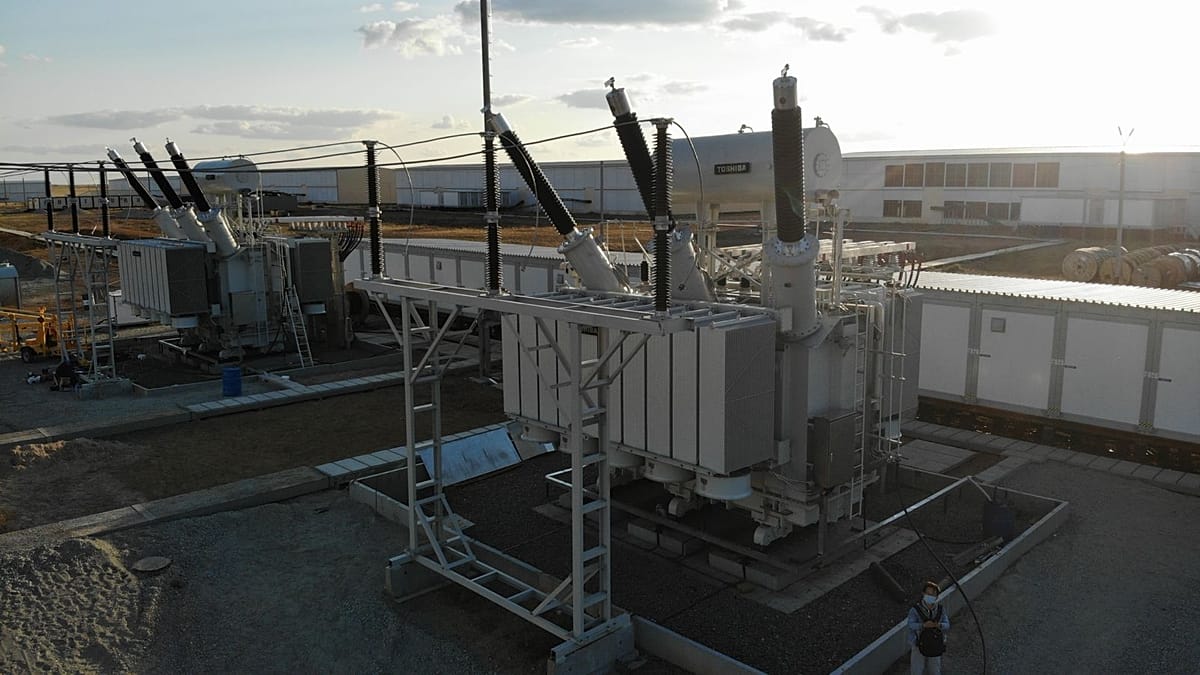
The economics are straightforward. A typical oil field producing 100,000 cubic metres of gas per day can generate around 13–15 megawatts of electricity using gas-piston units. That is enough to power a full-scale industrial mining farm, which typically consumes between 5 and 20 MW.
According to Daniyar Mubarakov, head of the Blockchain and Digital Mining Association, Kazakhstan flared roughly 300–340 million cubic metres of associated gas in 2024. Converted into electricity, that would have yielded an estimated 1.2–1.3 terawatt-hours — enough to power hundreds of thousands of homes.
For miners, the appeal is stability. "With a personal power plant, the miners can lock in the cost of electricity for years and not depend on grid tariffs or power capacity limits," said Batyr Bauyrzhan, technical director of WES LLP, a technology partner offering integrated solutions for gas conditioning and power generation. "For mining, this is the key factor determining the payback period."
Oil producers also stand to gain. "For years, associated gas was a problem for us: we had to flare it, pay for emissions, and limit oil production," Bauyrzhan said. "For us, the gas that was previously flared has no alternative cost, so we are prepared to sell it at a price significantly lower than the market price of commercial-grade gas."
The infrastructure itself is paid for by the miners, so oil companies face no upfront costs. The main benefit, Bauyrzhan added, is not saving on fines but removing the production constraints tied to gas disposal.
Challenges and costs
Building a power plant is not trivial. Mubarakov estimates that a new station costs between €1.7 million and €2.2 million per megawatt and takes more than three years to complete. That is why most miners prefer to work through specialised engineering firms rather than build from scratch.
"The processing of associated petroleum gas, gas-piston units, their servicing, and the securing of permits and approvals from the subsoil user constitute a distinct engineering specialisation," Bauyrzhan said. "A mistake at this stage costs more than the services of a professional contractor."
Miners also evaluate sites based on internet connectivity and water availability for cooling. Large-scale operators typically look for fields capable of generating at least 5 MW, to justify the infrastructure investment.
The Kazakh Ministry of Energy says around 40–60 oil fields currently flare associated gas. Vice Minister of AI and Digital Development Gizzat Baitursynov has indicated that both ministries are working on the project, though details on timelines and regulations remain scarce.
This initiative comes as Europe grapples with its own energy challenges, from battery storage in Bulgaria to Brussels seeking new powers to cut electricity in crises. While Kazakhstan is not part of the EU, its energy policies have ripple effects on global markets and on European efforts to secure cleaner power for data centres.
Whether the scheme will attract miners back in significant numbers remains to be seen. But for a country that once chased miners away, the shift in approach is notable — and it could offer a template for other oil-producing nations looking to turn waste gas into a resource.