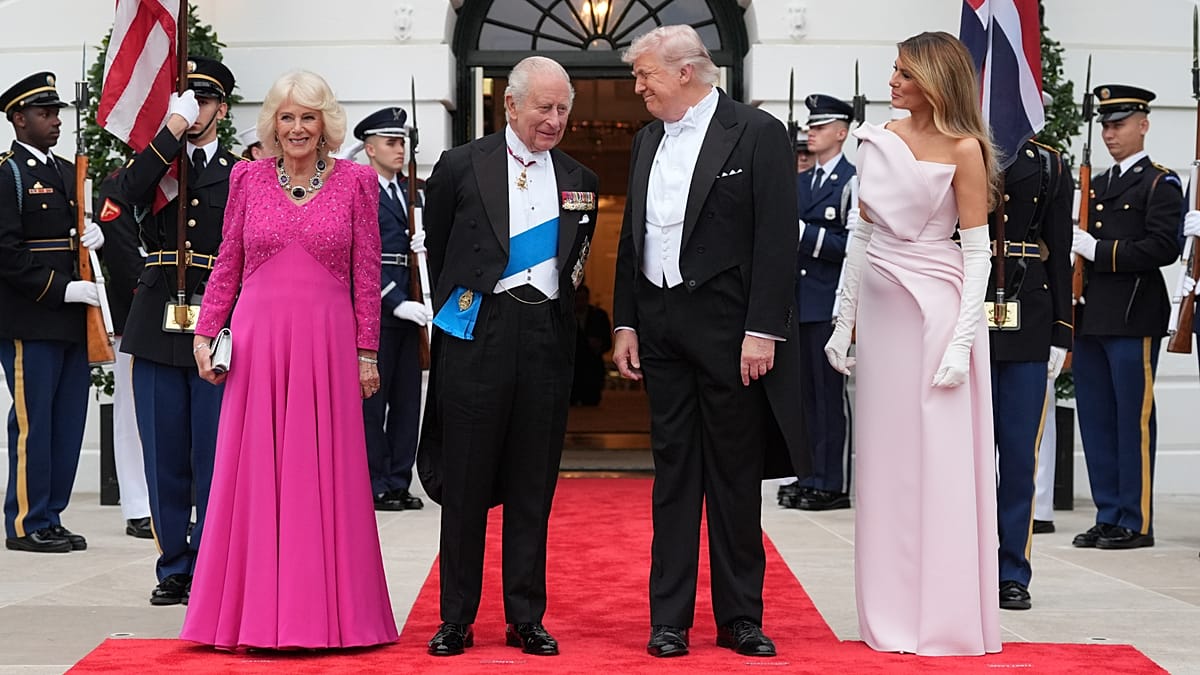
During a lavish White House state dinner on Tuesday evening, King Charles III underscored the enduring significance of the transatlantic partnership, calling it “one of the most consequential alliances in human history.” The monarch’s remarks, delivered in a largely jovial tone, came as part of a four-day visit to Washington marking the 250th anniversary of American independence.
The British sovereign’s address echoed themes from his earlier speech to Congress, where he highlighted the deep historical and cultural ties binding the United Kingdom and the United States. Yet beneath the warm rhetoric lay subtle warnings about the dangers of retreating from global engagement. “We ignore the clarion calls to become ever more inward-looking at our peril,” Charles said, a clear reference to rising isolationist sentiment on both sides of the Atlantic.
The visit unfolds at a delicate moment in UK-US relations. President Donald Trump has publicly criticised Prime Minister Keir Starmer over London’s opposition to the Iran war, and tensions have been palpable. Charles, for his part, made no direct mention of the conflict but pointedly emphasised the importance of multilateral alliances such as NATO, which Trump has repeatedly questioned. He also called for continued support for Ukraine in its defence against Russia’s full-scale invasion. “Together, we can meet the challenges of an increasingly complex and contested world,” he added.
Jokes and Subtle Digs
Charles leavened his serious message with humour. He quipped about Trump’s recent comment that without US help in World War II, Europeans would be speaking German. “Dare I say that, if it wasn’t for us, you’d be speaking French,” the king retorted, drawing laughter from the assembled guests. He also noted the “readjustments” to the White House East Wing, where Trump has demolished part of the building to construct a $400 million ballroom. “I am sorry to say that we British, of course, made our own attempt at real estate redevelopment of the White House in 1814,” Charles said, referencing the burning of the building by British troops during the War of 1812.
The monarch also joked that the dinner was “a very considerable improvement on the Boston Tea Party,” a reference to the 1773 colonial protest against British taxation. Trump responded in kind, joking about his Scottish-born mother’s “crush on Charles” and taking a light jab at British weather.
In his earlier address to Congress, Charles noted that the Magna Carta has been cited in more than 160 US Supreme Court cases, a remark that drew applause from Democratic lawmakers and subtly underscored the principle that executive power is subject to checks and balances. The king’s visit comes amid broader strains in the transatlantic relationship, with Trump’s administration pursuing policies that have unsettled European allies. For a deeper look at the context, see our analysis of King Charles III's US State Visit Highlights Strained UK-US Ties.
The state dinner itself was a display of diplomatic pageantry, but the underlying message was clear: the UK and US remain bound by shared values and interests, even as the geopolitical landscape shifts. Charles’s toast reaffirmed the alliance as “indispensable,” a term that carries weight at a time when some in Washington question the value of traditional partnerships. For more on the tensions surrounding the visit, read our report on Trump Tells King Charles III: 'No Closer Friends' Than UK Amid Iran War Tensions.
The king’s visit also highlights the broader challenge facing Europe: how to maintain unity and influence in a world where the US commitment to multilateralism is uncertain. As the continent grapples with its own internal debates over defence spending and strategic autonomy, Charles’s words serve as a reminder of the ties that bind the two sides of the Atlantic. For a perspective on NATO’s resilience, see Can a NATO Member Be Suspended? The Alliance's Legal Framework Explained.