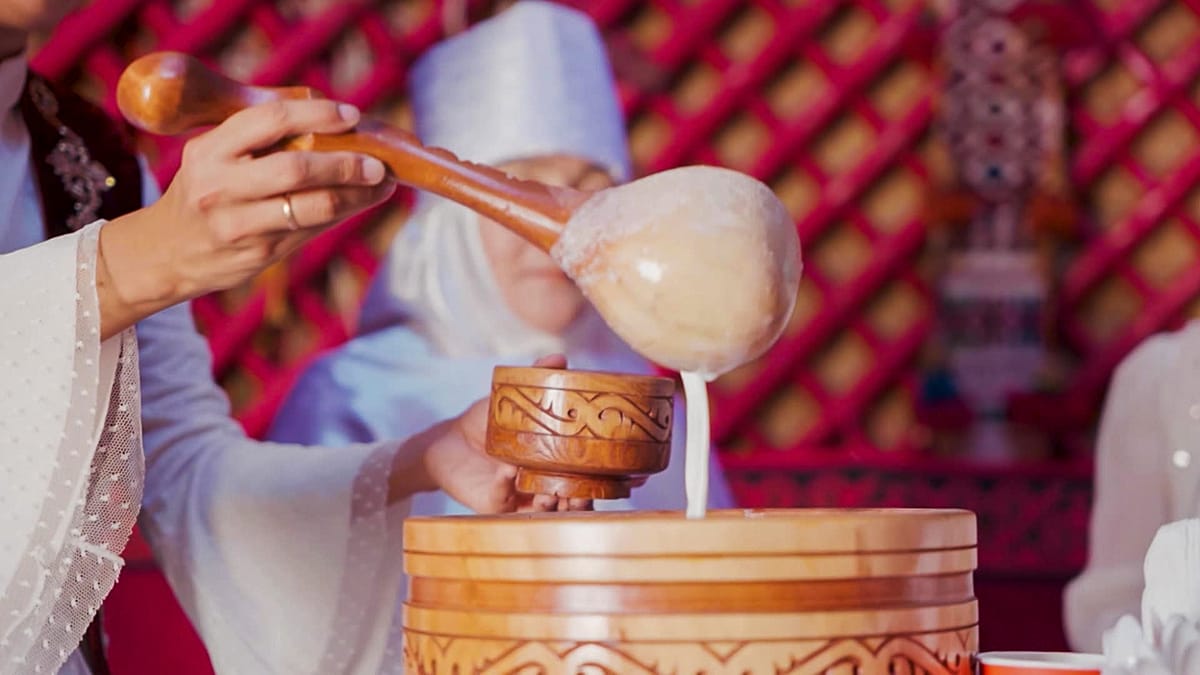
Kymyz, a fermented drink made from mare's milk, has been a staple of Central Asian cuisine for thousands of years. From the Kazakh steppes to the Mongolian plains, peoples such as the Kazakhs, Bashkirs, Kalmyks, Kyrgyz, Mongols, and Yakuts have long regarded it as a cherished part of their heritage. Even the ancient Greek historian Herodotus, writing in the 5th century BC, noted the Scythians' method of processing mare's milk, marking the first Western reference to this unique beverage.
Kazakhstan holds a special place in the history of kymyz. Archaeologists working at the Copper Age Botai culture site in northern Kazakhstan have uncovered evidence of the world's earliest horse domestication, along with traces of horse milk on pottery. This suggests that the tradition of consuming mare's milk dates back over 5,000 years in the region.
Beyond its historical significance, kymyz has long been valued for its nutritional properties. Nomadic warriors relied on it for energy during campaigns, and today, scientists are exploring its potential health benefits. Gaukhar Konuspayeva, a professor of food biotechnology who has studied camel and horse milk for over two decades, explains: "According to our research, mare's milk is very rich in vitamins A, B1, B2, B5 and B6. But what makes kymyz unique is its fatty acid composition and the presence of prebiotic bacteria."
From Soviet farms to modern revival
During the Soviet era, kymyz production was industrialized, with state farms in Central Asia maintaining large herds of mares for dairy purposes. This ensured the drink remained widely available, even as many traditional practices were transformed. Today, kymyz is experiencing a renaissance, with bottled versions appearing in supermarkets and cafes across Kazakhstan.
The preparation of kymyz is an art form, with each farmer adding their own touch. The freshest mare's milk, known as saumal, is highly prized but must be consumed within hours of milking. In the village of Zhanaarka in the Ulytau Region, Aiman Kutzhanova, a school deputy principal who raises horses with her husband, demonstrates the traditional milking process. "Horses are sacred animals. They choose the person who milks them," she says. "Even if I come wearing different clothes, they won't let me milk them."
After milking, the milk is either drunk fresh or used to make kymyz. The traditional method involves stirring the milk in deep wooden vessels called kubi, which are coated with butter before use. In the past, leather sacks filled with mare's milk were hung from yurts or saddles, allowing the milk to be shaken during the day. Today, variations include versions with honey, smoked flavors, herbs, and even horse meat.
Celebrating a nomadic tradition
The start of the mare-milking season has long been a time of celebration for Kazakh nomads, marking the move to summer pastures. This tradition, known as Kymyz Muryndyk, is still observed in regions like Ulytau and Almaty, where festivals bring together families, farmers, and visitors to honor the first kymyz of the season.
In the capital, Astana, the annual BaiKymyz Festival has become a major event, drawing producers from across the country to compete for the title of best kymyz. The festival was inspired by Germany's Oktoberfest, as its founder Zhumazhan Kaltayev explains: "I went to Oktoberfest in Munich in 2020. I saw that it was a family celebration, and I also saw how much it could contribute to the local economy. We didn't have anything like that in Kazakhstan." The competition now includes categories for nutritional quality, with a prize fund of 45 million tenge and a car as the Grand Prix.
Kymyz is also finding new life in urban settings. The rise of kymyz-khana, or kymyz houses, offers city dwellers and tourists a chance to sample traditional and innovative varieties. These establishments are part of a broader effort to preserve and promote nomadic culture, as Kaltayev notes: "People really liked our festival because it is not just about the drink. It represents our national identity, our culture, our spirit and our history."
As kymyz continues to evolve, it remains a testament to the enduring legacy of Central Asia's nomadic peoples. Whether enjoyed in a rural village or a modern café, this ancient drink carries with it centuries of tradition and a taste of the steppe.