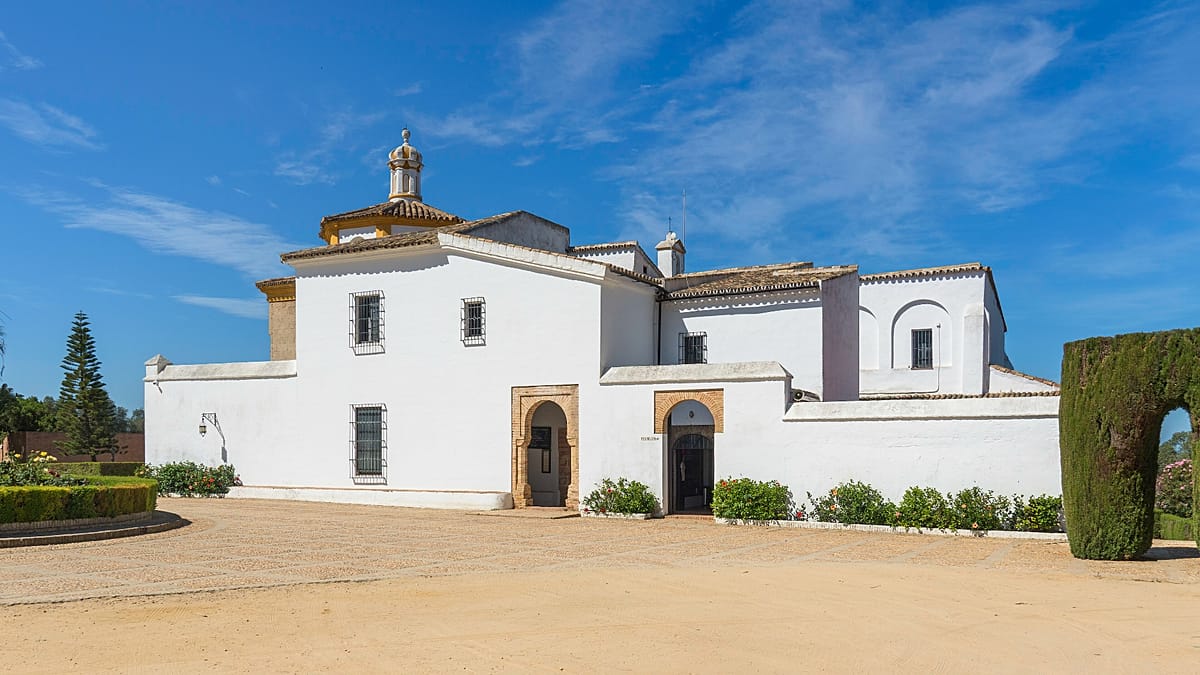
On a low hill where the Tinto and Odiel rivers meet before flowing into the Atlantic, the monastery of Santa María de La Rábida stands as a quiet witness to one of the most consequential decisions in European history. Without the friars who lived there and the faith they invested in a persistent navigator, Christopher Columbus might never have sailed from the nearby port of Palos de la Frontera toward what he believed would be the Indies.
The Franciscan presence at La Rábida dates to the early 13th century, when the first friars established a hermitage on the Huelva estuary. For centuries it remained a place of retreat and prayer, far from the political intrigues of the Iberian courts. But in the late 1480s, a down-on-his-luck sailor arrived at its gates, and the monastery's role in history was transformed.
A sailor seeking a royal sponsor
Columbus had spent years trying to persuade a European crown to fund his plan: a westward route to the spice-rich Indies. He had approached Portugal, France, and Italy without success. In Castile and Aragon, the Catholic Monarchs were preoccupied with the final stages of the Reconquista, the campaign to take Granada from the Nasrid kingdom. His proposal seemed destined for the archives.
At La Rábida, however, Columbus found more than shelter. The Franciscan friars, especially Fray Juan Pérez, a former confessor to Queen Isabella I of Castile, listened to his arguments and agreed to intercede at court. Their mediation helped secure the audience that led to Isabella's decision to finance the expedition. The queen's support was not merely financial; she later insisted that the Indigenous peoples encountered in the new lands be treated as free subjects of Castile, a stance reflected in her will and often cited as an early step toward modern human rights.
The Virgin of Miracles and the moment of departure
Inside the monastery's chapel, the image of Santa María de la Rábida, also known as Our Lady of Miracles, is still venerated. According to tradition, Columbus prayed before this statue just before setting sail on 3 August 1492. Visitors today can stand in that same chapel, where the silence seems to echo the uncertainty of a voyage that many contemporaries dismissed as madness.
The Pinzón brothers: the missing piece
Securing royal backing was not enough. Columbus needed a crew willing to sail into the unknown, and that is where the Pinzón family of Palos de la Frontera proved decisive. Martín Alonso Pinzón, a respected navigator, lent his reputation to the project and helped recruit sailors who had initially balked at the plan. He commanded the caravel La Pinta, while his brother Vicente Yáñez Pinzón took charge of La Niña. A third brother, Francisco Martín Pinzón, served as master on La Pinta. Without their maritime expertise and local influence, the expedition might never have left port.
Today, replicas of the three ships—La Pinta, La Niña, and Columbus's flagship, the Santa María—are moored at the Wharf of the Caravels in Palos, offering visitors a tangible link to that historic departure.
A legacy of exchange and shadow
The encounter that began at La Rábida triggered the greatest biological and cultural exchange in modern history. Crops that became staples in Europe—potatoes, tomatoes, sugar cane, cocoa—crossed the Atlantic for the first time. But the legacy is also one of conquest and suffering, as European powers imposed their rule on the Americas. The monastery itself remains a symbol of both the ambition and the contradictions of that era.
For those interested in the broader context of transatlantic connections, the story of La Rábida is a reminder of how a small place can alter the course of continents. The monastery is a stop on the direct flight routes from Europe to the Americas, and its history resonates with contemporary debates about migration, cultural exchange, and the legacies of colonialism.
As Europe reflects on its relationship with the Americas, La Rábida stands as a monument to the moment when two worlds first met—a meeting that was as much about faith and persistence as it was about navigation and politics.