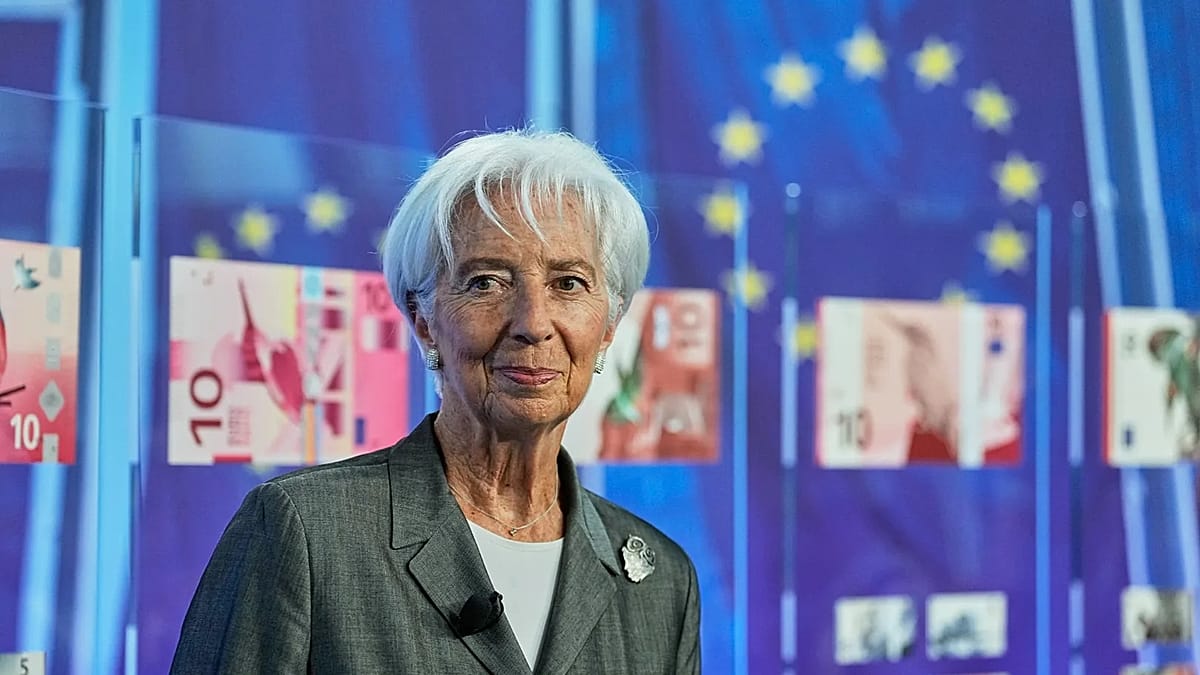
Christine Lagarde, president of the European Central Bank, may be preparing for a second act: leading the World Economic Forum. According to the Swiss daily Neue Zürcher Zeitung (NZZ), Lagarde has emerged as a leading candidate to become the WEF's president, possibly as early as 2027.
The report, citing unnamed sources, says Lagarde was described as a "putative candidate" during a board meeting near Geneva. She sits on the WEF's Board of Trustees and, when asked about the prospect, reportedly told fellow members she is "ready to serve." The board has not yet fixed a date for the transition, but the current co-chairs, BlackRock CEO Larry Fink and André Hoffmann, vice chairman of Roche, are expected to remain in charge through the annual Davos meeting in January.
The succession discussion was reportedly led by Tharman Shanmugaratnam, president of Singapore, who stressed that the matter should be "resolved internally." The WEF has not commented publicly, and neither the ECB nor the WEF responded to requests for comment from Euronews.
From Frankfurt to Davos?
Lagarde's eight-year term as ECB president runs until October 2027, which aligns neatly with the reported WEF timeline. But speculation about her future has been building for months, partly because of her own remarks about possibly joining the French presidential election campaign. In July, she told Euronews she would not run for the French presidency herself, but she has not ruled out other roles.
If confirmed, the move would mark a significant shift from monetary policy to global agenda-setting. The WEF, best known for its annual meeting in Davos, has increasingly focused on geopolitical and technological challenges, including artificial intelligence and climate change. Lagarde has been vocal on such issues, recently arguing that the EU must end market fragmentation or lose the AI race.
Her potential appointment would also be notable for the WEF's governance. The forum has faced criticism over its perceived elitism and lack of transparency, and a former central banker might help burnish its credibility. However, some observers question whether a sitting ECB president should take on an external role while still in office, even if the transition would occur after her term ends.
The NZZ report suggests that the board is keen to avoid a public contest and prefers to settle the matter quietly. That may reflect the sensitivity of the decision, given the WEF's global profile and the political implications of choosing a European leader at a time when the forum is trying to broaden its appeal beyond the West.
For now, Lagarde's immediate focus remains the ECB, where she has steered the eurozone through a period of high inflation and economic uncertainty. Her legacy is still being written, but a move to Davos would add a new chapter to a career that has already spanned law, politics, and international finance.