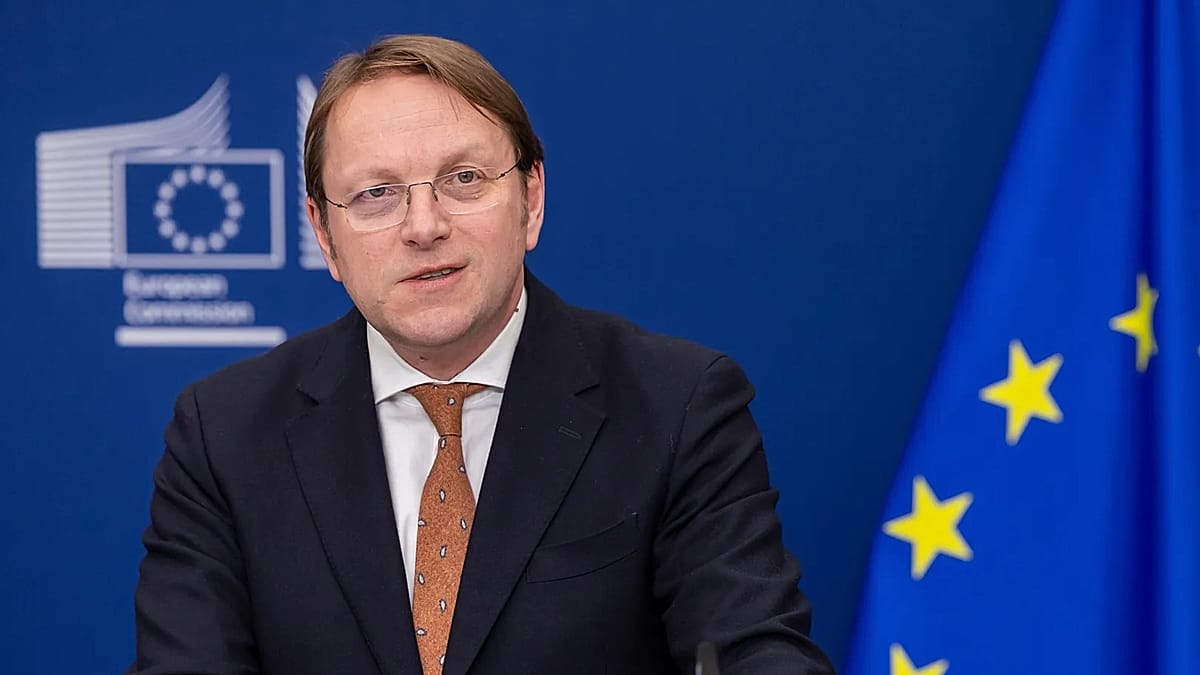
A confidential European Commission document, leaked to Euronews, has confirmed that Hungary's Permanent Representation in Brussels ran a network of intelligence officers posing as diplomats between 2012 and 2018. The officers targeted Hungarian nationals working at the Commission, seeking detailed information on topics of interest to the Hungarian government. The revelation has reignited calls for the resignation of EU Commissioner Olivér Várhelyi, who served as Hungary's permanent representative from 2015 to 2019.
The document, signed by Budget Commissioner Piotr Serafin, informs members of the European Parliament about the findings of an internal investigation. It states that the intelligence officers used their official positions for a mission that went beyond typical diplomatic tasks. Specifically, they approached Commission officials of Hungarian nationality to collect information on work within the Commission related to Hungarian government priorities. The letter notes that no serious security breaches were intercepted.
Renewed Pressure on Várhelyi
Várhelyi, appointed EU Commissioner by then-Prime Minister Viktor Orbán in 2019, has consistently denied any knowledge of the spy network. However, the leaked document has intensified scrutiny. Péter Magyar, Hungary's new prime minister and a former diplomat who worked under Várhelyi at the Permanent Representation, has suggested the commissioner is not being fully truthful.
Alberto Alemanno, an EU law professor at HEC Paris, argues that the confirmation of the spy ring indicates Várhelyi was unfit for the role from the start. Commissioners must be independent, experienced, and adhere to European values, Alemanno said, adding that Várhelyi's actions as permanent representative breached the principle of loyal cooperation. He concluded that Várhelyi was not fit for the job and continues to be unfit.
German Green MEP Daniel Freund echoed this sentiment, stating that the leaked document disqualifies Várhelyi. Either he was directly involved, or as head of the Representation, he had no control over his staff. Either scenario makes him unsuitable to serve as a European Commissioner, Freund told Euronews. The European Parliament's Budgetary Control Committee had already criticized Várhelyi in April for failing to meet expected standards.
In October 2023, dozens of MEPs called for Várhelyi's resignation. A subsequent move to establish a parliamentary inquiry committee was blocked by the centre-right European People's Party (EPP), to which both Commission President Ursula von der Leyen and Magyar belong. At the time, the EPP argued that attacking Várhelyi could benefit Orbán during the Hungarian election campaign.
Political Calculations in Brussels
Since the April elections, Magyar has pushed to remove officials appointed by his predecessor, including Hungarian President Tamás Sólyom. Yet Várhelyi has largely escaped scrutiny. One EU diplomat, speaking anonymously, told Euronews that Brussels is wary of setting a precedent by revoking a commissioner after a change of government in a member state. By not acting, they are emboldening populists, the diplomat added.
The removal of a commissioner could prove delicate ahead of upcoming French and Spanish elections. If a commissioner is removed following a political change in their home country, other member states might follow suit. This political calculus has left Várhelyi in place despite mounting evidence.
The leaked document also raises broader questions about the integrity of EU institutions. The spy ring operated for six years, targeting Hungarian staff within the Commission. While the Commission has stated no serious security breaches occurred, the affair underscores vulnerabilities in the EU's diplomatic and administrative apparatus. For many in Brussels, the Várhelyi case is a test of the Commission's willingness to uphold its own standards.
As the European Parliament prepares for further debates, the pressure on Várhelyi is unlikely to subside. The leaked document provides concrete evidence of the spy ring, shifting the burden of proof onto the commissioner. Whether von der Leyen will ask for his resignation remains uncertain, but the affair has already damaged trust in the Commission's oversight.