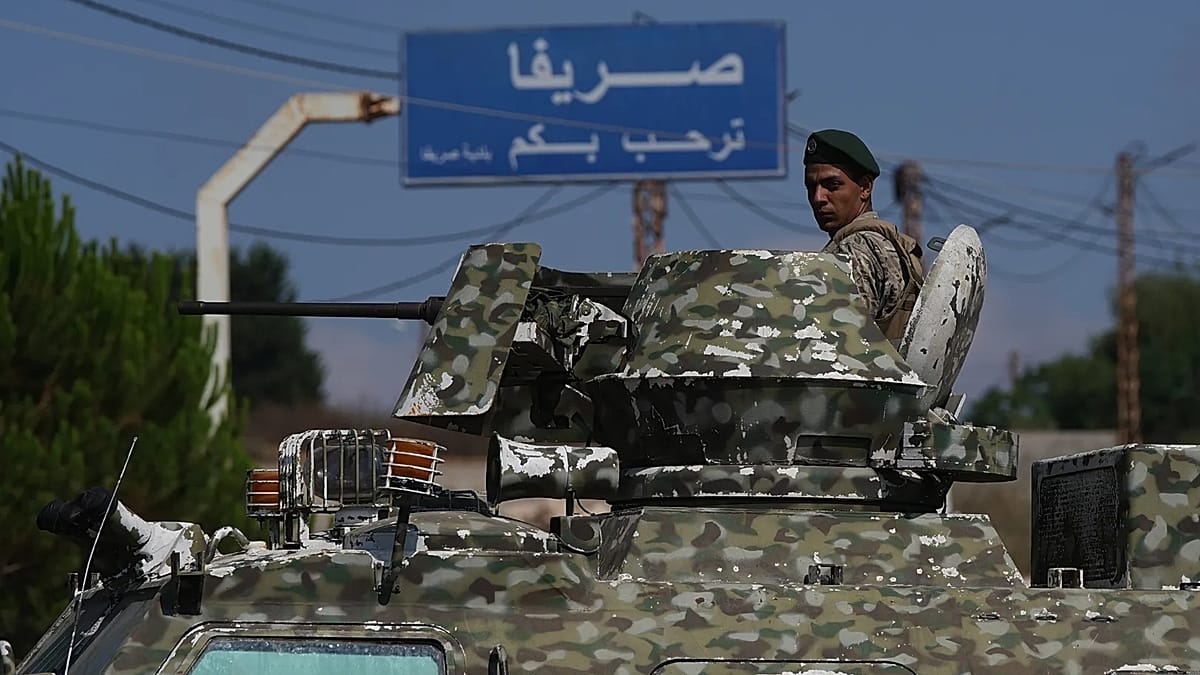
The Lebanese Armed Forces announced on Tuesday that it had started deploying troops to Zawtar al-Gharbieh in the Nabatieh region, a village designated as one of three “pilot zones” under a US-brokered framework agreement with Israel. The move is part of a broader plan to disarm Hezbollah and pave the way for an eventual Israeli withdrawal from southern Lebanon.
The announcement came as Lebanese President Joseph Aoun prepared for a high-stakes meeting with US President Donald Trump in Washington, concluding a four-day visit aimed at securing long-term calm for the war-torn country. Aoun’s visit follows months of conflict and occupation after Israel invaded Lebanon during its war with Iran-backed Hezbollah militants.
Pilot Zones and Partial Occupation
Under the framework agreement signed on 26 June, Israel committed to withdrawing its forces from southern Lebanon while Hezbollah disarms in the region. The deal also outlines steps toward a future peace arrangement between the two countries, which have been in a state of war since Israel’s establishment nearly 80 years ago and have never held formal diplomatic ties.
To date, Israeli troops have only controlled the outskirts of Zawtar al-Gharbieh, while the other two pilot villages—Froun and Srifa—remain under Lebanese military control. The Lebanese army already has a presence in those areas. In a statement, the military said it was preparing for Israel to withdraw from Zawtar al-Gharbieh and had begun deploying troops there on Tuesday.
The Israeli Defense Forces (IDF) said they “will adjust [their] force posture in one of the pilot areas in order to enable the Lebanese Armed Forces to carry out their mission,” without specifying the location. An IDF spokesperson added that withdrawals have not yet begun and declined to provide a timeline.
Diplomatic Stakes and European Implications
Aoun’s meeting with Trump comes as Lebanon and Israel hold rare direct talks mediated by Washington. Lebanon hopes these negotiations will result in Israeli troops withdrawing from large swaths of the south, but tangible progress remains elusive. Israeli Prime Minister Benjamin Netanyahu has previously stated he has no intention of removing forces from the region, arguing that without a domestic front against Hezbollah, the IDF must maintain its presence to secure northern Israel.
The situation has drawn attention from European capitals, particularly as the EU debates a potential ban on trade with Israeli settlements. EU foreign ministers have largely backed a full ban, though unanimity rules have stalled a final decision. The conflict’s spillover effects—including refugee flows and regional instability—remain a concern for Brussels and member states such as France, which has historical ties to Lebanon.
The US State Department confirmed on Monday that operations in the three pilot villages had begun, but provided no further details. The Lebanese army’s deployment is seen as a critical test of the agreement’s viability, with European observers watching closely for signs of progress.
As Aoun prepares to meet Trump, the outcome could shape not only Lebanon’s future but also the broader geopolitical balance in the Eastern Mediterranean—a region where European interests in energy security, migration control, and diplomatic stability are deeply intertwined.