Ljubljana, the compact capital of Slovenia, has been selected as one of the European Capitals of Tourism for 2027, a designation awarded by the European Commission. The city topped the category for municipalities with more than 100,000 inhabitants, impressing the jury with its “commitment to knowledge sharing, continuous learning and resident-focused initiatives.” The Commission also noted an “ambitious programme of activities planned for 2027.”
For travellers, the honour is a timely invitation to explore a city that balances history, green spaces, and a lively urban culture. Here’s a practical guide to making the most of a visit.
The river as the city’s living room
The embankments of the Ljubljanica River are often described as the heart of Ljubljana’s social scene. The tourist board, Visit Ljubljana, highlights the “densely scattered lively cafés offering outdoor seating” that line the water. But the riverbanks are more than just a pretty backdrop: they are an archaeological site with roots in Roman times, where excavations have uncovered artefacts spanning prehistory to the early modern period.
In summer, the river becomes a playground. Stand-up paddleboarding and guided kayak tours offer a different perspective of the old town, allowing visitors to drift past historic facades and under the city’s iconic bridges.
Exploring on foot or by bike
Ljubljana’s old town is largely car-free, making it ideal for strolling or cycling. The historic centre clusters around Prešeren Square, where a monument honours the Slovenian poet France Prešeren. Nearby, the Triple Bridge—a set of three linked bridges—is a signature sight, with stairways leading down to poplar-lined terraces along the river.
A short walk brings you to the Central Market, housed in a striking colonnade designed by the architect Jože Plečnik. Here, vendors sell fresh fruit, balcony flowers, local cheeses, and dry-cured meats. The indoor section includes a fish market with a small restaurant, perfect for a casual lunch.
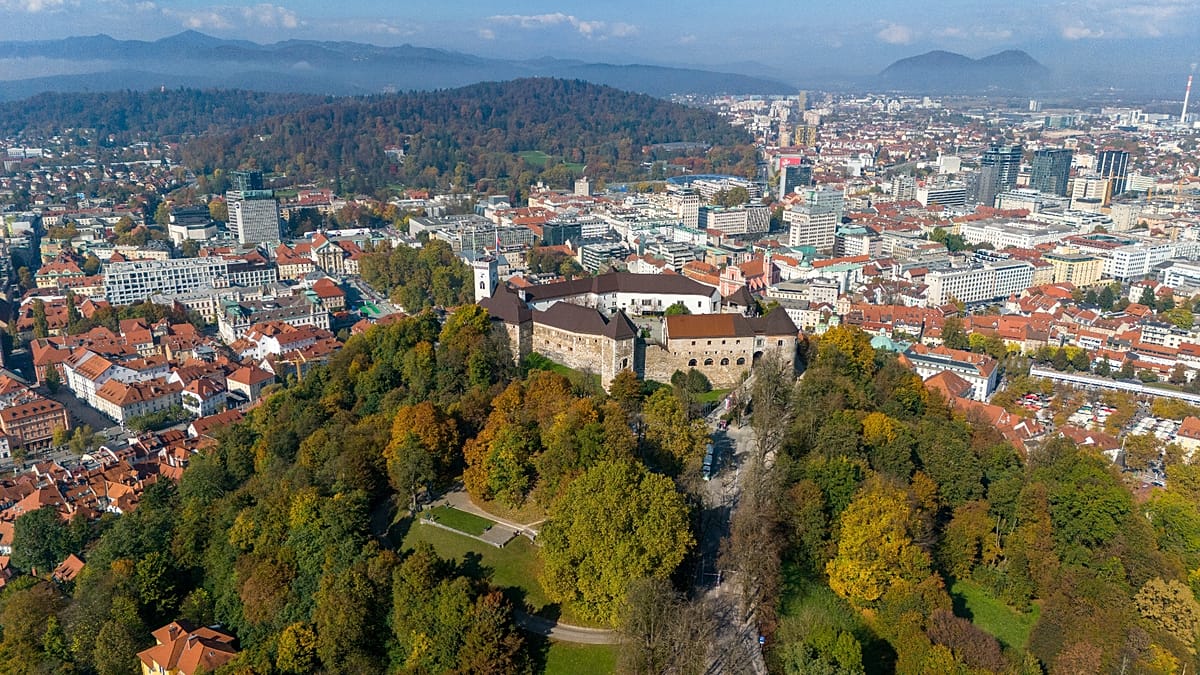
Overlooking the old town, Ljubljana Castle sits on Castle Hill, about 400 metres above sea level. The fortress, which has stood for roughly 900 years, now hosts exhibitions and cultural events throughout the year. The climb from the centre is short, and the views over the red rooftops are well worth the effort.
Architecture and art
For those interested in the man who shaped much of Ljubljana’s modern look, Plečnik House is a must. This complex of two houses once belonged to Jože Plečnik, the architect behind the National and University Library and the Church of St. Michael. The museum displays his original sketches, plans, photographs, and models—including projects that never came to fruition.
Art lovers should not miss the National Gallery, which holds the country’s largest collection of fine art from the High Middle Ages to the 20th century. The permanent collection features nearly 600 works by Slovenian and European artists, including a dedicated exhibition of the modernist painter Zoran Mušič.
Another landmark worth a photo stop is the Dragon Bridge, built between 1900 and 1901. Its four dragon statues have become a symbol of the city, and the bridge offers a scenic vantage point over the Ljubljanica.
Where to stay
Ljubljana offers a range of accommodation, from luxury hotels to farm stays. The InterContinental Ljubljana has 165 rooms and suites; the one-bedroom suite with castle views includes a fireplace, a private sauna, and a dining area, all on the 19th floor with panoramic city views. Guests can also use the Serenity Spa & Gym and dine at the B-Restaurant, which serves Slovene cuisine.
For a more rural experience, Pri Lazarju tourist farm, just outside the city, dates back more than 300 years. Guests can join in with barn and pasture work, take guided tours of local landmarks such as the Besnica River, or hike the Borovničeva trail.
The Ljubljana Resort Hotel & Camp is the only campsite within the capital, located five kilometres north of the centre. The three-acre site sits by the River Sava and offers fly fishing, an outdoor pool, a fitness centre, beach volleyball courts, and a restaurant.
Slovenian cuisine to try
Slovenia’s culinary traditions are best experienced in a gostilna—a family-run restaurant serving classic dishes. A “typical Ljubljana lunch” dates back to the 19th century, when locals would head to a gostilna on the outskirts at weekends. The meal has changed little: expect boiled beef tongue with traditional “bleki” noodles in soup, or Vodnik’s lamb’s lettuce salad, named after Valentin Vodnik, whose “Kuharske bukve” (The Cookbook) was the first cookbook written in Slovenian, published in 1799.
Another local favourite is “Leteči žganci” (flying žganci), a dish of fried chicken legs and wings that became popular among port workers in the 17th century. Žganci itself is a boiled flour dish, often associated with poverty and survival. Since 2013, the city’s “Odprta kuhna” (open kitchen) has become a popular weekend food market, offering a taste of these and other Slovenian specialities.
Ljubljana’s 2027 designation is part of a broader European trend towards sustainable tourism, as seen in Europe's shift from visitor numbers to lasting value. The city’s focus on resident well-being and knowledge sharing aligns with that philosophy, making it a model for other destinations. For those planning a visit, the coming years will bring an array of cultural events and initiatives, cementing Ljubljana’s place as a must-see European capital.