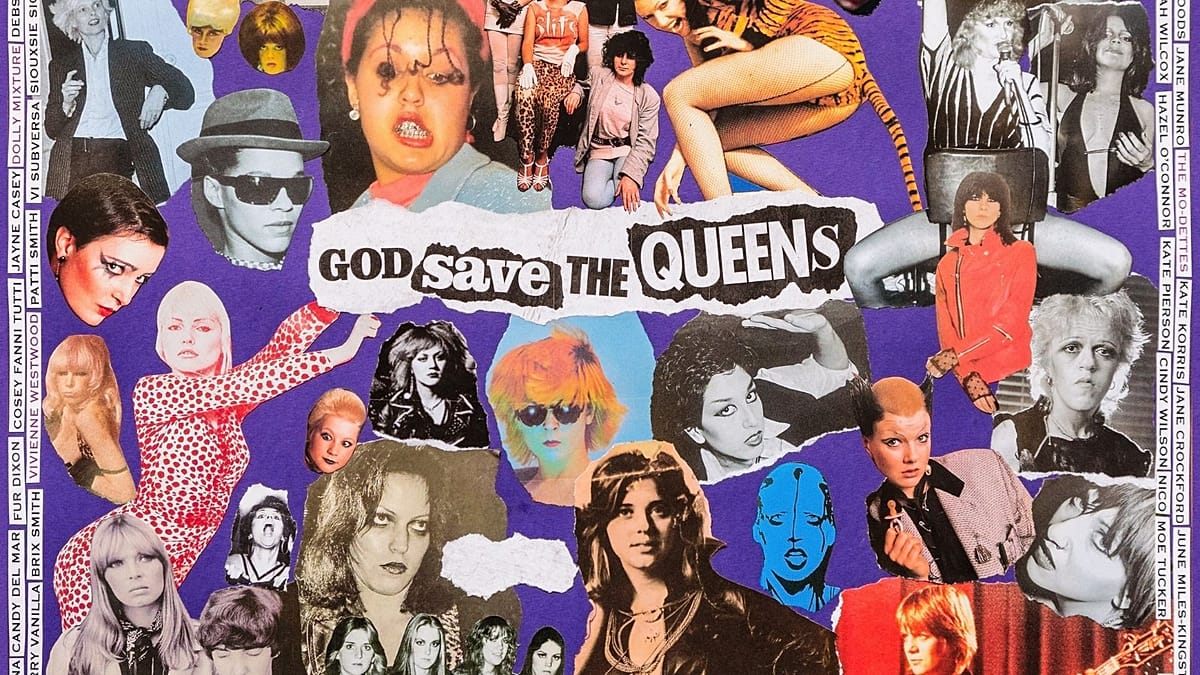
Punk's origin story is often told through a handful of male names: the Ramones, the Sex Pistols, the Clash. But a new exhibition in London argues that the genre's foundation is unmistakably female. Opening this Friday at the Museum of Youth Culture, Up Yours! God Save The Queens marks “50 years of She Punk” and reclaims the movement's history from a male-dominated narrative.
Curated by Lauren Estelle Jones, Celeste Bell, and Vivien Goldman, the show brings together rare archival material, unseen photographs, and contemporary artworks. It prioritises the women who shaped punk culture—from Patti Smith and Debbie Harry to Poly Styrene and The Slits—and challenges the idea that punk can be reduced to a few safety pins and leather jackets.
The timing is deliberate. This year marks the 50th anniversary of the Ramones' debut album, often cited as punk's Year Zero. But as the exhibition makes clear, the movement had deeper roots, and women were central from the start. Artists like Patti Smith, Siouxsie Sioux, Nina Hagen, and Viv Albertine were not side figures; they were pioneers who shattered conventions and pushed boundaries.
Five essential albums from the 1970s
To accompany the exhibition, here are five albums from the 1970s that every punk fan should know—records that paved the way for later acts like Bikini Kill, Hole, and PJ Harvey.
Patti Smith – Horses (1975)
Smith's debut redefined the New York scene before punk had a name. A regular at CBGB, she merged Beat poetry with raw rock energy. Tracks like 'Free Money' and 'Break It Up' are classics, but the nine-minute 'Land' showed she was creating a new space for female artists. Her radical cover of Them's 'Gloria' remains a statement of intent.
Blondie – Blondie (1976)
Debbie Harry, another CBGB regular, brought a visual edge to punk. While Blondie later leaned into new wave and pop, their debut had unmistakable DIY energy. Opening with 'X Offender'—originally titled 'Sex Offender' but renamed for radio—the album is a bold, foot-stomping gem that dragged pop into the 70s with a snarl.
X-Ray Spex – Germfree Adolescents (1978)
Poly Styrene, the first multiracial frontwoman of a UK punk band, wore braces and homemade Day-Glo clothes while singing anti-consumerist lyrics. The album tackles feminism, identity, and consumer society. The reissue includes the anthem 'Oh Bondage Up Yours!', whose chant—“Some people think little girls should be seen and not heard, but I think 'Oh bondage, up yours!'”—became a rallying cry for British punk and a feminist statement that influenced the riot grrrl movement.
The Slits – Cut (1979)
Another British gem, Cut blended punk with reggae and dub, and its cover—featuring the band in mud, bare-breasted—was a deliberate provocation. Frontwoman Ari Up and guitarist Viv Albertine challenged gender norms both on and off stage, and the album remains a touchstone for its fearless experimentation.
Siouxsie and the Banshees – The Scream (1978)
Siouxsie Sioux emerged from the Bromley Contingent, the Sex Pistols' fan club, but quickly forged her own path. The Scream is a dark, jagged debut that helped define post-punk. Siouxsie's stage presence and vocal range made her an icon, and the album's influence can be heard in countless goth and alternative bands.
The exhibition runs at the Museum of Youth Culture in London. It is a timely reminder that punk's legacy is not just about noise—it's about who gets to make it. As curator Vivien Goldman puts it, “Punk was a revolution, and women were its driving force.”
For more on women's contributions to culture, see how two major museums are spotlighting women in art.