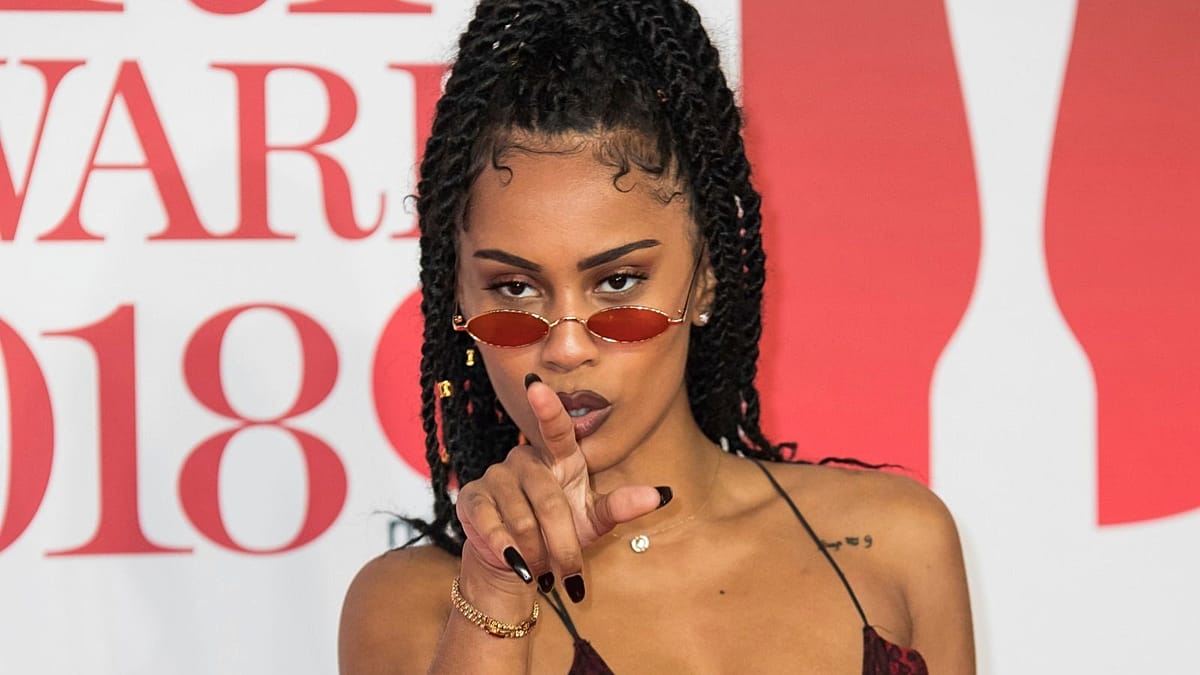
Angolan-Portuguese singer and rapper IAMDDB has accused Israel's government of appropriating her identity in an AI-generated propaganda video that was shared on the country's official social media channels. The clip, which has since been removed, featured a woman bearing a strong resemblance to the Manchester-based artist reciting lyrics about Jewish indigeneity, including lines such as: “Colonisers? Say the name. Jews from Judea, it's in the damn name, same Hebrew letters, same culture, same prayers remain.”
The video was reportedly created by Eyal Be, an Israeli-born director based in New Jersey, and was captioned: “‘GO BACK WHERE YOU CAME FROM!’ We did”. Activist Rafael Shimunov first drew attention to the resemblance, noting that the woman in the video wore an outfit nearly identical to one IAMDDB had worn in a 2018 photoshoot for Crack magazine. Shimunov posted on X: “There is nothing more funny than Israel stealing the identity of a British Angolan-Portuguese singer to create a fake Israeli in an AI video about indigeneity. Her name is IAMDDB.”
IAMDDB, whose real name is Diana Adelaide Rocha De Brito, responded on X: “Hiya yeah so - why did you steal my identity for something I 100% did not consent to?” In a subsequent official statement, she said: “It has come to my attention that AI-generated visuals resembling me have been used in a video shared by the official Israeli government account. I want to make it absolutely clear that I did not authorise, approve, participate in or consent to my image being used in this video. I have no involvement in its creation or its message.”
The artist, who has built a career blending jazz, R&B, and hip-hop, stressed that her art is rooted in principles of love and humanity. “I have always approached my music and my art from a place of love, freedom, humanity and connection. I do not support genocide, the killing of innocent people, or the suffering of women, children or families. My heart is with every innocent person experiencing loss, displacement and violence, especially the Palestinian people who have endured unimaginable suffering,” she said.
A past performance and a changed perspective
IAMDDB acknowledged that she had performed in Israel in the past, but said that was before she fully understood the situation. “Had I understood then what I understand now, I would have made a different decision. That performance should not be taken as an endorsement of any government's actions, past or present,” she explained. Her remarks reflect a broader shift among European artists who have faced criticism for performing in Israel amid the ongoing conflict.
The incident also raises fresh concerns about the use of artificial intelligence to create convincing but unauthorised depictions of real people. IAMDDB said she is “taking advice and exploring the appropriate steps to protect my image, my work and my rights.” This case is part of a growing pattern of AI-generated content being used for political messaging, often without the consent of the individuals portrayed.
The video's removal by Israeli authorities came only after public backlash, but the damage was done. For many observers, the episode underscores the ethical and legal grey areas surrounding deepfake technology, especially when deployed by state actors. As AI tools become more accessible, the potential for misuse in propaganda and disinformation campaigns is likely to increase, prompting calls for stricter regulation across Europe and beyond.
For IAMDDB, the violation is deeply personal. As a British-Angolan-Portuguese artist, she has often drawn on her multicultural heritage in her music. Having her image co-opted for a message she vehemently opposes is, in her words, a form of identity theft. The singer's case has resonated widely, with many on social media expressing solidarity and condemning Israel's actions.
This is not the first time Israel has faced accusations of using AI for propaganda purposes, but it is one of the most high-profile instances involving a European artist. The incident also comes amid heightened tensions in the region, with Donald Trump's recent endorsement of Benjamin Netanyahu adding another layer to the political landscape. Meanwhile, European leaders continue to grapple with how to respond to the conflict, as seen in debates over Ukraine and broader geopolitical alignments.
For now, IAMDDB is focused on protecting her rights and ensuring that her image is not used without permission again. Her case may set a precedent for how artists and public figures challenge unauthorised AI-generated content, a legal frontier that is still being defined. As she put it, “I have no involvement in its creation or its message.”