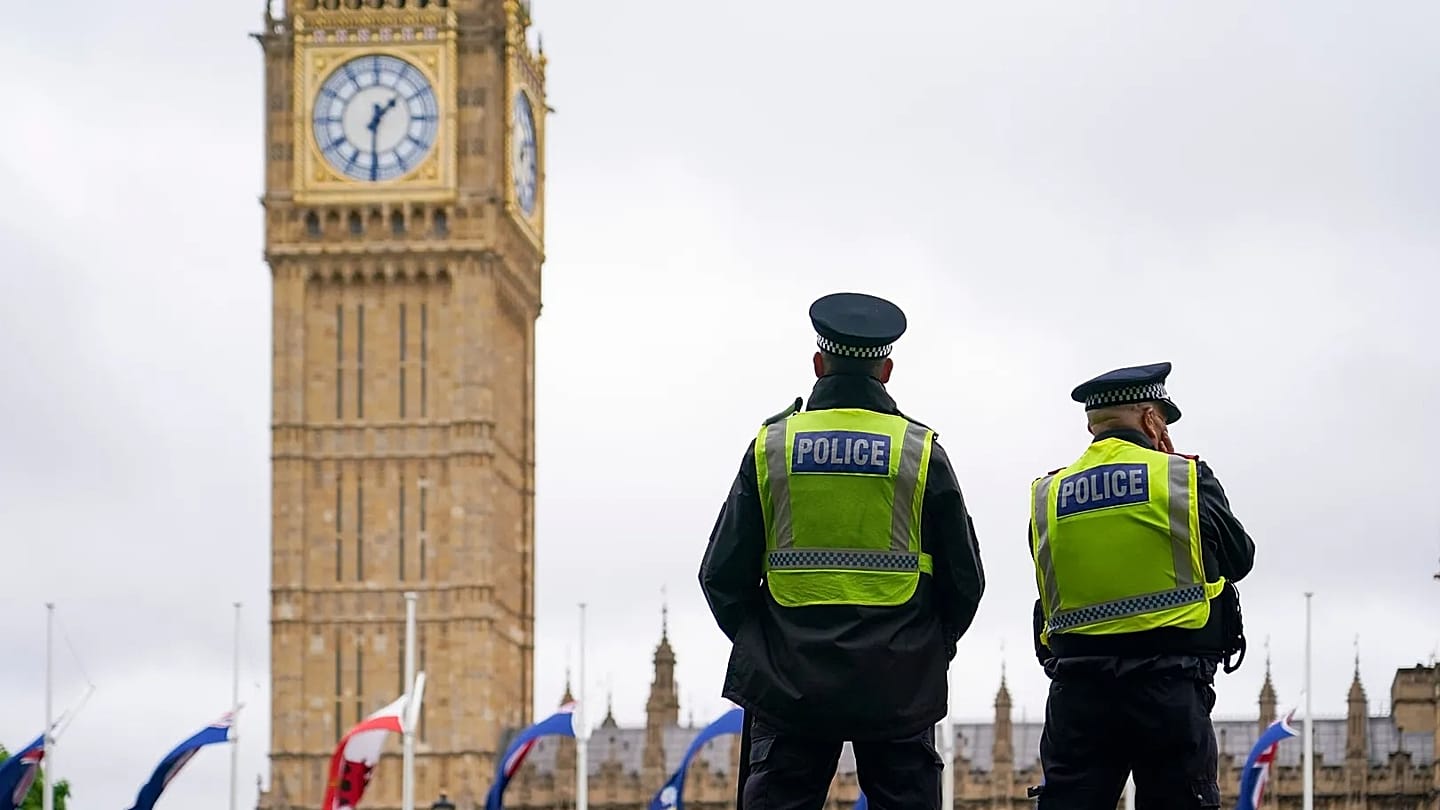
The Metropolitan Police in London has announced plans to significantly expand its use of drones and live facial recognition (LFR) technology, a move that has drawn sharp criticism from civil liberties campaigners. The force argues that the tools will enhance public safety and operational efficiency, but critics warn of a slide toward mass surveillance.
Operational Expansion and Justification
According to the Met, drones will be deployed for a wider range of tasks, including monitoring large public events, searching for missing persons, and supporting armed response units. The force already operates a fleet of unmanned aerial vehicles, but the new strategy envisions a more systematic integration into daily policing. Live facial recognition, which uses cameras to scan crowds and match faces against a watchlist, will be used at major gatherings such as concerts, protests, and sporting events.
Assistant Commissioner Matt Twist stated that the technology is a 'proportionate and necessary' response to modern threats. 'We are not interested in monitoring law-abiding citizens,' he said. 'Our focus is on serious criminals, wanted individuals, and those who pose a risk to public safety.' The Met insists that all deployments will comply with existing legal frameworks and include strict oversight.
London has been a testing ground for LFR for several years, with trials at events like the Notting Hill Carnival and in areas such as King's Cross. The force claims that the technology has led to arrests for offenses including robbery, assault, and terrorism-related crimes. However, independent reviews have highlighted persistent issues with accuracy, particularly for women and people of color, and a lack of clear legal basis.
Civil Liberties Concerns
Big Brother Watch, a UK-based civil liberties organization, has condemned the expansion. 'This is a dangerous escalation of surveillance powers without proper democratic debate,' said director Silkie Carlo. 'Drones and facial recognition are blunt instruments that erode privacy and chill free assembly. The Met is normalizing a level of monitoring that would be unthinkable in most European democracies.'
The group points to a 2023 report by the UK's biometrics commissioner, which found that LFR deployments often failed to meet legal standards for necessity and proportionality. Similar concerns have been raised across Europe. In Brussels, mass protests over alleged police brutality have also highlighted tensions around policing tactics, as covered in our report on the demonstrations.
The debate in London echoes broader European discussions about the balance between security and privacy. While countries like France have used drones for crowd control during protests, Germany's Federal Constitutional Court has imposed strict limits on facial recognition. The European Union's Artificial Intelligence Act, still under negotiation, seeks to ban real-time biometric surveillance in public spaces except for narrowly defined threats.
Critics also note that the Met's expansion comes amid a broader push by the UK government to enhance police surveillance powers. The Police, Crime, Sentencing and Courts Act 2022 already gave officers more leeway to impose conditions on protests, and the Public Order Act 2023 further tightened restrictions. 'We are seeing a cumulative erosion of civil liberties,' said Carlo. 'Drones and LFR are just the latest tools in a growing surveillance state.'
The Met has countered that its approach is more transparent than in many other countries. It publishes data on LFR deployments and has established an independent ethics panel. However, campaigners argue that these safeguards are insufficient. 'Transparency after the fact is not the same as democratic consent,' said a spokesperson for Liberty, another UK rights group.
Internationally, the use of drones in policing has been controversial. In Ukraine, drones have been used extensively in the war against Russia, as noted in Ukraine's defence minister's comments on Crimea. But the transfer of such technology to domestic policing raises different questions. 'What works on a battlefield does not necessarily belong on a British high street,' said Carlo.
The Met's plans are likely to face legal challenges. Big Brother Watch has already taken the force to court over previous LFR trials, winning a ruling in 2020 that the use of the technology was unlawful due to a lack of clear legal framework. The force subsequently revised its policies, but critics say the new expansion still falls short.
As London prepares for a summer of major events, including the Notting Hill Carnival and various political demonstrations, the debate over surveillance is set to intensify. The Met insists that its goal is to keep the public safe, but for many Londoners, the price of that safety may be too high.